

A resort stay doesn’t have to include meals. At resorts without mandatory meal plans in Malaysia, a room-only booking covers your accommodation, and you pay separately for meals. À la carte dining may be available, depending on the resort’s dining arrangements.
You may want the freedom to shape each day, whether that means taking your time over breakfast, finding a meal elsewhere, or dining at the resort when it suits you. This guide explains room-only stays, how they differ from breakfast, half-board and full-board plans, and what to check if you want to order meals individually. It also shows how to consider dining costs without assuming they’re included in the room rate. Clear terms before booking leave more room for unhurried mornings and plans that change with the tide.
Key Takeaways
- A room-only stay covers accommodation, with meals paid for separately; read the rate details to see exactly what is included.
- À la carte dining lets you order meals individually where the resort offers it, so dining access and restaurant arrangements matter as much as the room rate.
- Meal plans differ: breakfast-only, half-board and full-board each include different meals, so identify the plan before comparing stays.
- Peak-season and public-holiday booking terms can affect the available rate or package; look closely at the conditions attached to your dates.
- Consider dining times, included drinks and any stated restrictions alongside extra charges to choose a stay that fits your plans.
Room-only stays and meals
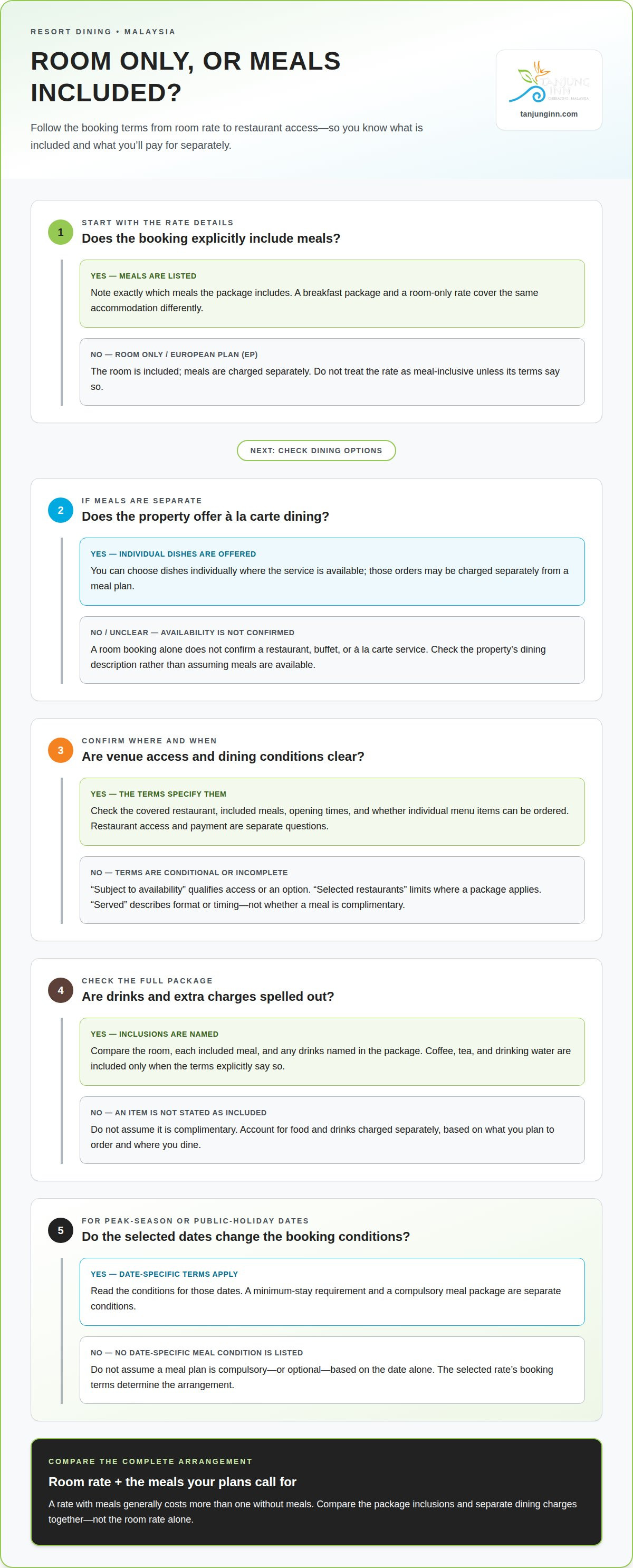
A room-only stay covers accommodation, not meals. The European Plan, often shown as EP, follows this arrangement: the room is included, while dining is charged separately. For example, a booking may provide a bed and room facilities without breakfast. The rate name gives you the broad distinction, while the inclusions explain what you’ll actually receive. Read both before treating a room rate as meal-inclusive.
Separate dining gives you more choice over when and where to eat. You might have breakfast elsewhere, then return for lunch or dinner. If the property has dining facilities, you may be able to buy meals separately instead of having them bundled into your room package. This can suit changing plans, but it doesn’t mean every resort has a restaurant, buffet or à la carte service.
When comparing rates, list the room, each included meal and any drinks named in the package. A rate with breakfast differs from a room-only rate, even if both offer the same room type. Check whether coffee, tea and drinking water are included with meals or charged separately. “Complimentary” means something is included only when the booking terms explicitly say so.
Pay attention to the wording. “Subject to availability” can qualify an inclusion or dining arrangement, while “selected restaurants” limits where a package applies. A buffet may be included in one rate but sold separately in another. Treat these as distinct dining arrangements, not interchangeable promises. A room-only rate and a breakfast package, for instance, may cover the same accommodation while setting different expectations for breakfast.
Compare the full arrangement rather than assuming a room-only rate always costs less. Meals aren’t included in the room rate, but separate food and drink charges depend on what you order and where you dine. A rate that includes a full-course meal will generally cost more than one without meals. Compare the room rate plus the meals your plans call for.
For resorts without mandatory meal plans in Malaysia, the practical question is whether dining is optional with the room rate you select. Check whether breakfast, lunch and dinner are included, then note any meals or drinks named in the package. If dining is separate, you’ll pay for what you order. This distinction helps individuals and groups plan without confusing accommodation with an inclusive meal arrangement.
À la carte dining access
À la carte dining means choosing individual dishes instead of receiving meals as a fixed package. It can offer flexibility, whether you want dinner after a slow afternoon or a lighter meal between outings. Availability depends on the property’s dining arrangements. A room booking alone doesn’t establish that restaurants are open to every guest or serve meals throughout the day.
Separate the dining question into two parts: whether you can use a restaurant, and how you pay for what you order. A meal plan may cover set meals, while à la carte dishes are ordered individually and charged separately. A property may offer both, but menus, opening times and eligibility can differ by restaurant. Many hospitality venues rely on clear printed menus, decal notices, and promotional signage—crafted by commercial print specialists like Xưởng In Nam Du—to keep guests informed about what is included. This matters when breakfast is included but dinner isn’t.
Read the booking details carefully. “Subject to availability” means access or a particular dining option may depend on circumstances, rather than being an unconditional inclusion. “Served” may describe a meal’s format or timing, not whether it’s complimentary. Count coffee or drinking water as included only when the terms say so.
Restaurants may distinguish between resort guests and other diners. A resort might reserve certain dining experiences for guests with a specific package, or limit a meal plan to selected restaurants. These conditions affect where you can eat, even if the property has several dining venues. Check the covered restaurant, included meals and whether you can order individual menu items.
At an island resort, consider how far away other food options are. Weather can also affect travel plans and the timing of outings, making on-site dining convenient. But location doesn’t guarantee à la carte service. Look for a restaurant menu or dining description attached to your booking instead of inferring what’s available from a scenic setting.
Booking directly can make rate details easier to compare, especially when a package combines accommodation with daily breakfast or another meal. Compare the package description with the room terms: note which meal is included, where it is served and whether dinner must be ordered separately. This helps you avoid mistaking breakfast inclusion for full dining access.
Use this short checklist before settling on a rate:
- Identify whether the booking includes daily breakfast, dinner, or no meals.
- Find out whether individual dishes are offered in the restaurants.
- Read any conditions on opening times, selected venues, or availability.
- Separate complimentary items from food and drinks charged to guests.
If you’re choosing accommodation while keeping dining plans flexible, consider the Director Chalet for 4 Pax as a lodging option. Treat the room choice and restaurant arrangements as separate decisions, and let the booking terms define what each includes.
Do Malaysian resorts require meal plans during peak season or public holidays?
A peak-season or public-holiday date alone doesn’t show whether a meal plan is compulsory. The rate’s booking terms determine that. Resorts may offer different packages on different dates, so read the conditions for your selected stay rather than assuming every room rate works alike.
Distinguish a date restriction from a meal requirement. A booking might require a minimum stay while leaving meals optional; another rate might bundle meals with accommodation. These are separate conditions. For example, if a holiday package lists breakfast and dinner as included, those meals are part of that package. A room-only rate works differently.
Compare rates for the same dates and room type. Check whether breakfast, lunch or dinner is included in each offer, and whether a meal is described as included or required. A booking page that presents a package as the only rate for those dates differs from one offering a choice of meal plans. The package terms set the expectation.
For a group, check how the conditions apply to each guest on the reservation. One rate may include breakfast, while another covers accommodation only. Don’t assume a guest can opt out of a listed package unless the terms say so. Note whether the meal arrangement applies to every registered guest or is tied to the room rate.
Use this short review before selecting a holiday stay:
- Match the dates and room type across the rates shown.
- Record each meal explicitly named in the chosen package.
- Look for minimum-stay terms separately from meal inclusions.
- Read whether the meal condition applies to all guests in the booking.
- Keep the selected rate description with your booking details.
A rate labelled “breakfast included” doesn’t mean dinner is included. By contrast, full board means the stay includes all three meals. Wording matters, especially when holiday offers use short labels or combine several conditions in one description. Read the complete terms before treating a meal as optional or included.
If flexibility matters, focus on the exact rate for your chosen dates, not the season’s name. A public holiday may coincide with a package offer, but the label doesn’t explain which meals are included. The rate description does. This helps you distinguish a compulsory meal arrangement from a separate dining charge, without assuming every Malaysian resort follows the same booking policy.
What extra fees or dining restrictions should I check before booking a Malaysian resort?
Start with the booking’s meal list, separating included meals from anything you order separately. A room rate may cover accommodation without breakfast, lunch or dinner; food ordered at a restaurant then costs extra. Compare the rate description with its dining terms. This prevents you from mistaking an included breakfast for a full meal package.
Read the charge details beside each dining option. If the terms list meals, drinks or restaurant access separately, note which apply to your booking and which are optional. For example, a package may include breakfast but exclude dinner from the room rate. Treat tea, coffee and drinking water as included only when the terms say so.
Restrictions can affect the practical value of a meal arrangement. Look for named restaurants, service times, reservation conditions and limits on which guests can use a dining offer. A package tied to one restaurant may not cover another venue at the same resort. If the booking mentions a buffet, check whether it applies to every meal or only the meal named.
For family or group bookings, review how meal conditions apply to each person. The rate may specify which guests receive an included meal, while separately ordered food is charged under the resort’s dining terms. Don’t assume everyone in the room receives the same inclusion unless the booking says so. Compare the room rate and guest details together.
Use this practical list while reviewing the terms:
- Mark every meal named as included, such as breakfast or dinner.
- Separate included drinks from drinks ordered with a meal.
- Note restaurant names, dining times, and any reservation conditions.
- Identify whether restrictions apply to particular guests or packages.
- Keep separately charged meals distinct from the accommodation rate.
Location can affect how useful resort dining is. On an island, for example, the distance to other dining options may make on-site meals convenient, but location doesn’t establish which meals are included. Check the terms for your resort and selected dates. Weather may also affect plans to travel elsewhere, so understand the dining choices available on the property before relying on an outside meal.
Compare the complete arrangement, not just the room label. A room-only rate with individually ordered meals differs from a package that combines accommodation and food. The deciding details are the named inclusions and listed charges. Reading them carefully gives you a clearer picture of dining costs and restrictions before confirming your Malaysian resort booking.
Meal plan
A meal plan describes which food is bundled with accommodation. In Malaysia, booking labels can distinguish a room with breakfast from one covering several meals. The name may be brief, so read the inclusions alongside it. “Breakfast included,” for example, doesn’t mean lunch and dinner are covered.
Bed-and-breakfast, sometimes shortened to B&B, combines accommodation and breakfast. The Continental Plan also includes daily breakfast with the stay. These labels describe a similar basic meal arrangement, but the booking terms specify what the resort actually provides. If you plan to head out early, breakfast timing may matter as much as whether it’s included.
Half-board usually covers breakfast and one other meal, often dinner. The Modified American Plan, also called half-board or half-pension, includes breakfast and a choice of lunch or dinner. This can suit guests whose plans vary from day to day. Check which meal the selected plan covers instead of assuming all half-board rates work the same way.
Full-board includes breakfast, lunch and dinner. The American Plan, also called full-pension or full-board, bundles these meals with the hotel stay. This can make daily dining more predictable, but the plan’s name doesn’t explain every detail. Check the listed meals, dining venues and any stated drinks.
An all-inclusive plan can combine accommodation, meals and drinks, sometimes with extras such as activities or spa treatments. “Can include” matters: not every property includes the same extras. Read the package description to understand its scope. Separate listed inclusions from optional items or services with their own charge.
Use this quick comparison when choosing:
- Breakfast-only: accommodation with breakfast.
- Half-board: breakfast and one other meal, usually dinner.
- Full-board: breakfast, lunch, and dinner.
- All-inclusive: accommodation, meals, drinks, and sometimes additional activities or treatments.
Compare the meal plan with your likely routine. If you expect to dine away from the resort at midday, a breakfast-focused rate may suit you. If you plan to eat on the property, a broader package may be a better fit. Choose based on the meals you expect to use and what the rate includes.
Choose your accommodation first, then match its booking terms to the dining pattern you want. Explore accommodation options for a Malaysia stay shaped around your travel plans.
Villa Resorts’ Full Board plan includes water, tea and coffee during mealtimes. This illustrates why it’s worth checking the inclusions attached to each rate: meal coverage may be clear, while drink details still matter. Review what’s provided before booking, especially if those details affect your dining plans.
Tanjung Inn
Tanjung Inn offers accommodation options for travellers planning a stay around their own dining preferences. Its villas include the Grand Villa for 6 Pax, Family Villa 5 for 5 Pax, Family Villa 4 for 4 Pax, and Family Villa 3 for 5 Pax. These options give groups different room choices while they plan meals separately.
Use the distinctions between room-only rates and meal plans to guide your booking decision. Tanjung Inn’s villas provide accommodation, while the terms for your stay set out its arrangements. Choose a villa that suits your group, then consider dining as a separate part of your trip.
Contact Tanjung Inn to discuss your accommodation needs.
Shape a stay around your own rhythm
Choosing among resorts without mandatory meal plans in Malaysia can leave room for unhurried mornings and changing plans. Start with who is travelling and what kind of accommodation suits your group. Then decide how you want dining to fit your day, rather than letting meal arrangements dictate the whole stay.
At Tanjung Inn, accommodation choices include the Grand Villa for 6 Pax, Family Villa 5 for 5 Pax, and Family Villa 4 for 4 Pax. These options offer different arrangements for travelling companions. Consider which room best suits your group, then make your dining plans with the booking details in view.
Contact Tanjung Inn about your stay and take the next step toward a restful stay.
Frequently Asked Questions
Which resorts in Malaysia do not require guests to buy a meal plan?
Choose a resort rate whose booking terms specify that meals aren’t compulsory. Meal policies vary between Malaysian resorts and dates. Tanjung Inn offers villa and chalet accommodation, not all-inclusive meal plans. For any stay, rely on the conditions attached to the specific rate, not a general description of the property or destination.
Which Malaysian resorts offer room-only rates or optional meals?
Room-only and optional-meal arrangements depend on the rate offered for the dates and accommodation you select. Tanjung Inn provides villa and chalet accommodation, with dining handled separately from an all-inclusive meal plan. When choosing a stay, look for a rate that states whether meals are included or optional, and review the dining terms separately from the accommodation description.
What are the room-only prices at Malaysian resorts without mandatory meal plans?
Room-only rates vary with the selected accommodation, travel dates, and booking conditions, so there isn’t one price that applies across Malaysian resorts. Compare the total room rate for your chosen stay, then account separately for meals you plan to order. Tanjung Inn’s accommodation prices aren’t provided here, so no amount should be assumed for its villas or chalets.
Are meals included in resort rates, and what do optional meal plans cost?
Some rates include meals, while others cover accommodation only. The booking’s inclusion list tells you which applies. Meal-plan costs also vary by resort and arrangement, so there’s no single figure for Malaysia. Read the rate details for the named meals and any stated drinks. Treat food not included in the booking as a separate dining choice, not an automatic part of the room rate.
How can I confirm a resort booking has no mandatory meal plan?
Read the selected rate’s full terms before completing your booking, then compare the confirmation with that description. Look for wording that identifies included meals, required packages and separate dining charges. If the confirmation names a meal package, treat it as part of the booking conditions. Keep the rate description with your reservation so the dining arrangement is clear during your stay.


