

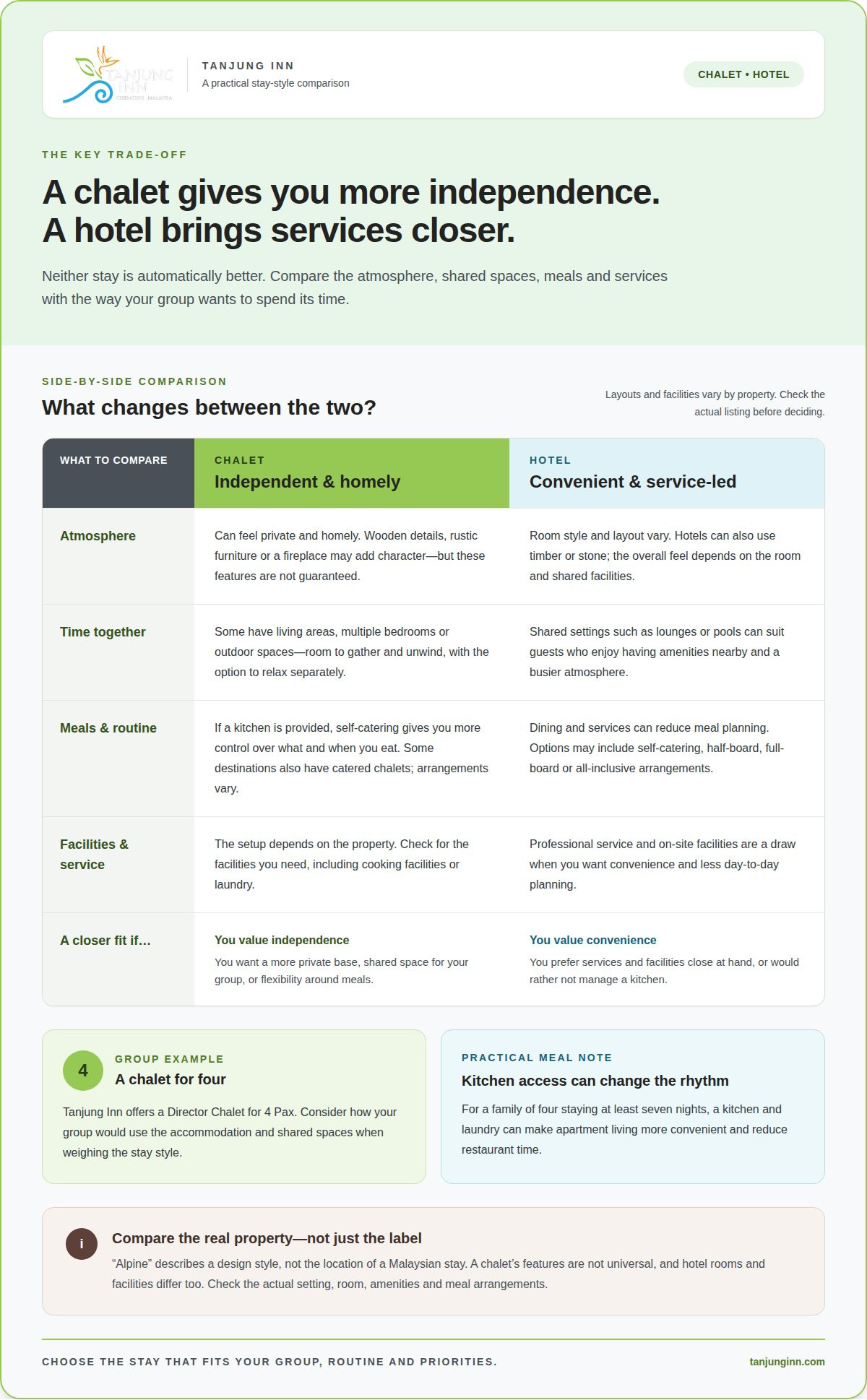
The benefits of staying in a chalet vs hotel are clearest when you match the stay to your travel style: a chalet can offer a more private, homely base with shared living space and the freedom to prepare meals, while a hotel brings professional service and on-site facilities. Neither is automatically better. The right choice depends on whether you value independence or convenience most.
It’s easy to see the appeal of a hotel after a day outdoors: meals and services are close at hand, and you can leave much of the planning to staff. A chalet offers a different rhythm, with room to gather, unwind and shape the day around your group.
This guide compares atmosphere, shared spaces, meal arrangements and service, then offers a practical way to decide. You’ll be able to weigh each option against your group, routine and idea of a restful getaway.
Key Takeaways
- Choose a chalet for a more private, homely atmosphere; choose a hotel when convenient services and on-site facilities matter more.
- Consider how your group prefers to spend time together: shared living areas can make a chalet feel more relaxed and communal.
- Self-catering gives you more control over when and what you eat, while hotel dining can reduce meal planning.
- Weigh the practical trade-offs, including your preferred routine, group size and the services you’ll use during your stay.
- Use the decision guide to find the stay that best suits your mountain-trip priorities.
Alpine atmosphere and interior design
“Alpine” describes a design style, not the location of a Malaysian stay. Traditional chalet interiors may use wooden beams, stone fireplaces and rustic furniture to create a sheltered, tactile atmosphere. In Malaysia, consider these features as design inspiration, and choose accommodation based on its actual setting and facilities.
Consider how each detail affects the room. Exposed timber adds visual warmth, a stone fireplace creates a focal point, and rustic furniture makes a lounge feel informal. Together, these details suggest a chalet character, but they are not universal features. Hotels can also use timber or stone, and their atmosphere depends on the room layout and shared facilities.
For a Malaysian getaway, compare accommodation without assuming that a chalet sits in a European resort. A chalet might feature traditional wooden details and a peaceful setting; a hotel might place a comfortable room alongside shared services. Focus on what the room and property actually offer, then consider how they fit your plans.
Hotel interiors can vary just as much. For example, one hotel room may centre on a private sleeping area, while another gives more emphasis to a sitting space or connecting rooms. Dining arrangements can also shape the experience: a hotel may offer self-catering, half-board, full-board or all-inclusive options. Those choices affect how guests spend time inside, not just how the room looks. Compare the whole stay rather than judging by a single decorative feature.
| Option | Design character | Example setting | Atmosphere |
|---|---|---|---|
| Chalet | Wooden beams, stone fireplace, rustic furniture | A quieter, more private retreat | Homely and characterful |
| Hotel | Room style and layout vary | Near shared services and dining | Convenient and service-led |
Choose by naming your priority first: select chalet-style character if a private, material-rich retreat appeals; choose a hotel if shared services and dining suit your plans better. Then compare the actual room, setting and amenities in Malaysia. A thoughtful match brings the right mood closer, without mistaking a design style for a promise about location or facilities.
Chalet atmosphere and shared living spaces
A chalet can make shared time part of the holiday. Layouts vary, but some offer separate living areas, multiple bedrooms or outdoor spaces for families and groups. These features can provide room to gather after a day out, as well as space to relax separately. Check the property details rather than assuming every chalet has the same layout.
Picture a family returning from a day outdoors. Some settle into the lounge, while another person reads or rests nearby. With a shared area within the accommodation, everyone can spend time together without needing to meet in a hotel’s communal spaces. An outdoor area can offer another place to pause. The value depends on how your group likes to spend time between activities.
Hotels offer a different kind of shared setting. Facilities such as pools, bars, lounges, hot tubs and saunas are typically shared with other guests, which can suit travellers who value having amenities close by and enjoy a busier atmosphere. A chalet may appeal to a group seeking a quieter place to relax. Compare the facilities on offer and the atmosphere you prefer.
Think about your group’s daily rhythm. If everyone enjoys gathering after an outing, a shared living area can make that easy. Separate bedrooms can help people with different schedules rest without disrupting one another. Friends travelling together may also value a comfortable place to talk and unwind.
- Prefer private time together: consider how a chalet’s living areas and bedrooms could suit your group’s routines.
- Prefer shared amenities: a hotel may suit you if facilities such as lounges or pools are part of the plan.
- Prefer flexible gatherings: shared chalet spaces can make an easygoing evening simpler to arrange.
For a group of four, Tanjung Inn offers a Director Chalet for 4 Pax. Consider how your group would use its accommodation when deciding which stay style feels right. Explore chalet accommodation for groups as you weigh the options.
Chalet facilities and self-catering
On a ski holiday, a kitchen can give guests more control over breakfast and mealtimes. Many hotel rooms in the Alps do not have cooking facilities, so guests may rely on meals served elsewhere. Self-catering can suit travellers who want to choose their own meals and timing. Always check whether the accommodation actually includes cooking facilities.
Self-catering can also affect the trip’s overall spending. Preparing some meals may cost less than eating out for every meal, especially when guests share groceries and cooking. The value depends on what the group buys, how often it eats out and how much time it wants to spend preparing food. For a family of four staying at least seven nights, a kitchen and laundry can make apartment living more convenient and reduce restaurant time; accommodation providers such as flexiestays.com illustrate how modern serviced apartments blend this self-catering freedom with hotel-style convenience.
Not every guest wants to cook after a day outdoors. In some destinations, catered chalets offer meal preparation as part of the stay, with arrangements varying by property. These services can reduce the work involved in planning meals, but they are not a standard feature of every chalet. Check the listing to see what is included.
Use these questions to decide which setup fits your trip:
- Choose self-catering if your group wants to set meal times and prepare familiar food.
- Choose catered dining if you’d rather avoid cooking but don’t want restaurants for every meal.
- Choose a hotel if you prefer dining options and services without managing a chalet kitchen.
Facilities beyond the kitchen can shape evenings, too. Some Alpine chalets have ski storage, games rooms and spa facilities. Luxury chalets in Méribel may feature private jacuzzis, saunas, pools and spacious rooms. These are examples, not standard features across every chalet. Match the facilities to your plans: ski storage matters for equipment, while a games room may suit a family spending time indoors.
For a longer stay, decide which meals you want to prepare and keep the plan simple, leaving room for restaurant visits or outings. This can make a kitchen useful without turning every evening into a task. Hotel accommodation may require less meal planning, while self-catering offers more control over meals and timing. The better fit depends on your priorities.
Chalets as a homely alternative to hotels
A holiday can feel more restful when the accommodation lets you settle into your own rhythm. In an Alpine chalet, guests have private access to the property’s bedrooms, bathrooms, lounge, kitchen and outdoor spaces. That sense of having a place to yourselves can make travelling together feel less like following a hotel routine and more like temporarily living in a mountain home. The difference is especially clear between outings, when there’s room to return, change pace and unwind.
Consider a group with different mornings. One person can wake early for the slopes, while another rests before joining later. Separate bedrooms and bathrooms allow those routines to coexist more comfortably. A hotel can offer private bedrooms, en-suite bathrooms or interconnecting rooms, but its lounges and other on-site facilities remain shared with hotel guests. Choose based on whether comfort means private space for your party or access to services beyond your room.
That privacy also changes how evenings unfold. Friends can plan a family game night, a quiet gathering or a barbecue in an outdoor space, rather than relying on a hotel lounge or restaurant. These activities depend on the chalet’s facilities and the group’s plans, but the central advantage is control over how time together feels. A hotel’s shared spaces can bring variety and convenience; a chalet makes it easier to shape a familiar, private setting.
Some Alpine chalets offer services such as a private chef, housekeeping or concierge assistance; for mountain getaways, specialised management teams like ALPN Vacations demonstrate how private vacation rentals can provide tailored guest support alongside complete independence. These services can add comfort while preserving a private base. Hotels may provide professional service alongside shared facilities. Neither arrangement is automatically more comfortable. Consider what you want handled for you and what you are happy to organise yourself.
Facilities also influence the kind of retreat a chalet provides. Some properties have swimming pools, saunas or games rooms for guests’ private use. In a hotel, pools, spas, lounges and similar amenities are shared with other visitors. If quiet swimming or a family game is central to your ideal evening, private access can matter more than a longer list of public facilities. If you prefer a busier atmosphere, a hotel’s communal setting may feel more natural.
Use one simple test: picture the hour after you return from a day outdoors. If your group wants a quieter place to relax together, a chalet may fit; if you value professional service and shared facilities, a hotel may suit you better. The difference is not just the room, but the setting and pace you want for your holiday.
What are the main benefits of staying in a chalet compared with a hotel?
The main difference is how you spend your time. A chalet may give your group more privacy and flexibility, while a hotel may offer professional service and shared facilities. The best choice depends on whether you value an independent routine or the convenience of organised services.
Privacy matters when several people travel together. A chalet gives guests private access to its bedrooms, bathrooms, lounge, kitchen and outdoor spaces. That makes it easier for a family or group of friends to gather without sharing those rooms with other hotel guests. A hotel can still suit travellers who mainly need a comfortable room and prefer its common facilities.
Flexibility is another consideration. If accommodation includes cooking facilities, chalet guests can choose when to prepare meals and may follow their own schedule. Hotel dining arrangements can be more structured, depending on the property. The better fit depends on whether your group enjoys organising its plans or prefers services arranged for guests.
For larger groups, the total chalet cost can be divided among guests, potentially making the per-person cost lower than paying individual hotel rates. The result depends on the number of guests and the property’s total cost, so group size is central to the comparison. A chalet may also suit travellers bringing a car: many ski chalets have parking, while hotels may not. That can support independent travel around a resort.
Use these criteria to make a clear choice:
- Choose a chalet if your group values privacy, a flexible schedule and shared time in one property.
- Choose a hotel if professional service and on-site amenities matter more than private group spaces.
- Compare group needs by considering room arrangements, meal preferences, transport plans and how costs will be shared.
Some chalets offer services such as a private chef, housekeeping or concierge assistance, while hotels have their own service arrangements. These options vary by property, so compare what is actually included. A short trip focused on convenience may favour a hotel; a group holiday built around shared time and an independent routine may suit a chalet.
For a group deciding between these styles, start with the experience you want each day, then match the accommodation to it. Explore chalet stays for your group as you consider a more private mountain-trip base.
Tanjung Inn
Tanjung Inn offers chalet and villa accommodation in Cherating, Pahang, for travellers weighing a private stay against hotel facilities. Its options suit different group sizes, including the Grand Villa for 6 Pax, Family Villa 5 for 5 Pax, Family Villa 4 for 4 Pax, and Family Villa 3 for 5 Pax. These choices give families and groups a practical starting point: consider how many people are travelling, then decide whether a shared base fits the way you want to spend your trip.
If a more private setting feels right for your plans, explore the available accommodation and choose an option that fits your group. For a relaxed discussion about your stay, contact Tanjung Inn.
Choose the stay that fits your kind of escape
Before booking, picture an ordinary day of your trip, not only its best moment. Think about where you’ll relax after exploring, how meals fit your plans and whether you prefer shared facilities or a quieter base. These preferences make the benefits of staying in a chalet vs hotel clearer for your group.
A hotel may suit a trip built around convenience and professional service. A chalet may feel more natural when travelling together and keeping your own pace matter most. Weighing the benefits of staying in a chalet vs hotel means asking which setting supports the holiday you actually want, rather than choosing by habit.
If a chalet stay feels like the better fit, take the next step with Tanjung Inn. Contact Tanjung Inn today to discuss your stay and accommodation options for your group.
Choose a setting that makes room for quiet mornings, unhurried evenings and time well spent together.
Frequently Asked Questions
Chalet or hotel: which one to choose?
Choose a chalet for a more independent stay, or a hotel when you want services and facilities organised around your visit. Think through a typical day: who handles meals, where your group spends time after outings, and how much privacy matters. For example, a couple on a brief trip may value hotel convenience, while friends planning shared evenings may prefer a chalet. Start with your routine, then compare accommodation.
In summary: is a ski chalet worth it?
A ski chalet is worth considering when your group will use its private spaces and values a flexible routine. It can be less appealing if you want meals, support and recreation arranged on-site. For instance, a group returning at different times from the slopes may appreciate having its own base. Decide by weighing how much independence you’ll use against the convenience of hotel services.
What are the disadvantages of a chalet holiday?
A chalet holiday can involve more planning and responsibility. Depending on the arrangement, guests may need to plan some practical details themselves. That can be inconvenient for travellers who want staff to handle practical arrangements. For example, a group with different dietary preferences may need to plan groceries or restaurant visits in advance. A hotel is often the simpler fit when ease and service matter more than independence.
Which is better for families or groups: a chalet or a hotel?
A chalet may suit families or friends seeking a shared base, while a hotel can work better when individual services matter most. Separate bedrooms, where available, can help different age groups follow their own routines. Hotels may offer interconnecting rooms, children’s clubs or childcare services, depending on the property. Consider your group’s ages, schedules and preference for shared activities.
How do chalets compare with hotels for privacy, space, and amenities?
Chalets can provide private use of the accommodation’s rooms and outdoor areas, while hotel amenities are generally shared with other guests. The exact balance depends on the property. For example, a chalet with a games room offers a different kind of leisure space from a hotel lounge. Compare the amenities you’ll actually use, rather than choosing based on a long facilities list alone.
Are chalets in Malaysia usually self-catering, and what facilities are included?
A chalet in Malaysia isn’t automatically self-catering; cooking arrangements depend on the accommodation. At Tanjung Inn, listed facilities include air conditioning, a garden, garden views, a gazebo, parking, a shower, a water heater and a working table. These features support a comfortable stay, but do not indicate that guests can prepare meals. Treat cooking facilities as a separate feature when comparing places to stay.
What are the disadvantages of staying in a chalet instead of a hotel?
The main trade-off is reduced convenience if you depend on hotel services. A chalet may require more coordination around meals, transport and group plans, while hotel staff can assist with arrangements such as excursions or equipment hire in Alpine resorts. A chalet can also feel less suitable when your group wants a central location and shared facilities. Match the setting to the support and access your trip needs.


