

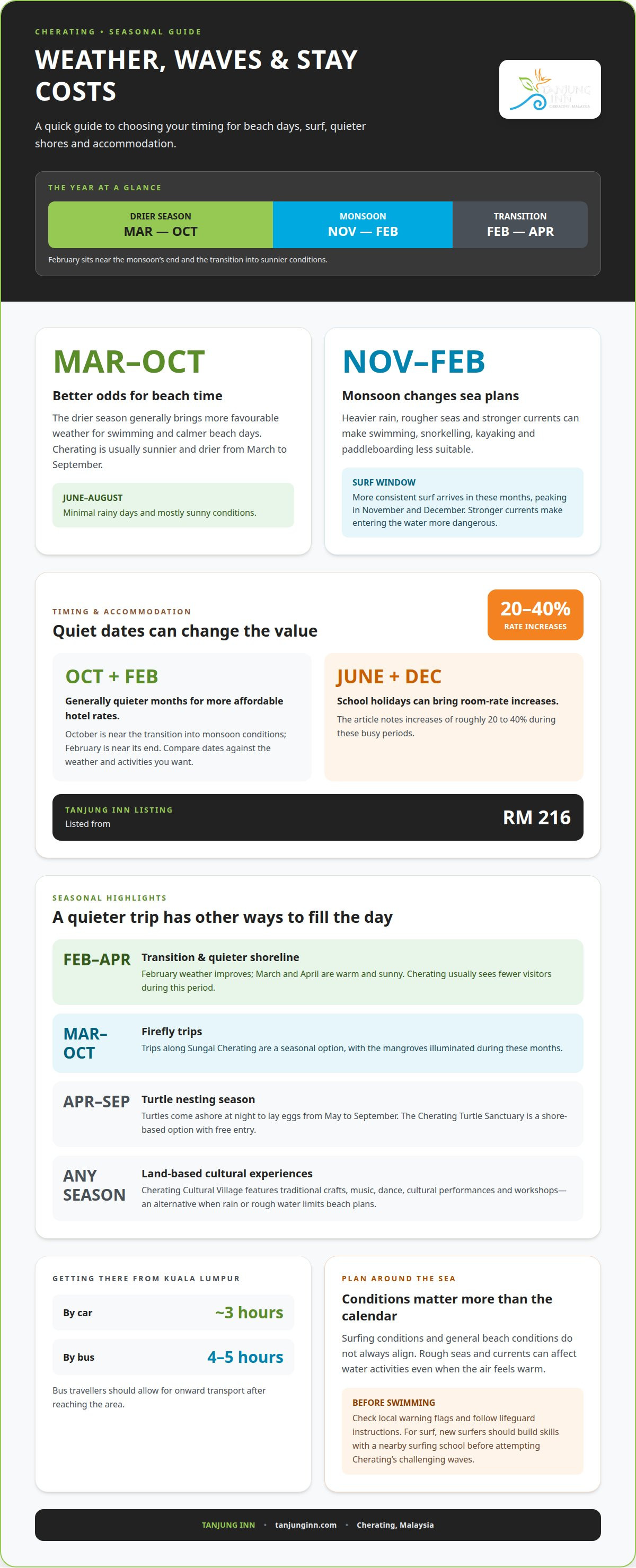
A getaway to Cherating’s off-season brings greener surroundings, quieter stretches of sand and, in October or February, more affordable stays at Tanjung Inn. But the sea sets the terms: the drier season runs from March to October, while the monsoon from November to February brings heavier rain and rougher seas, making swimming and other water activities less suitable. These contrasts are key reasons to visit Cherating off-season, especially for travelers nationwide seeking a slower coastal escape where dependable beach weather matters less than peaceful downtime.
It’s natural to wonder whether a quieter visit still leaves room for surfing, snorkelling or a peaceful day by the water. This guide explains what to expect from sea activities across the seasons, how off-season timing can affect accommodation rates and crowds, and how rain brings fresh green life to the coastal scenery surrounding Tanjung Inn. Take the season gently, and the shoreline has more than one way to welcome you.
Key Takeaways
- Use the dry season, from March to October, for sunnier beach days; monsoon weather can bring rougher seas that affect swimming and water activities.
- Surfing conditions and general beach conditions don’t always align, so consider the season and sea conditions when planning your time in the water.
- October and February can be quieter times to look for more affordable accommodation in Cherating.
- For a calmer shoreline and lush coastal scenery, consider quieter periods such as February to April or September.
- June and December school holidays can bring room-rate increases of roughly 20 to 40%, so timing your visit can shape both the crowds and your accommodation budget.
1. Is Cherating good for swimming, surfing, or snorkeling?
Off-season in Cherating, Malaysia, most often means monsoon season, from November to February. Heavy rain and rough seas can shape beach plans during these months. The drier season runs from March to October, so “off-season” doesn’t describe one consistent kind of weather. February to April is a seasonal transition: February weather improves, while March and April are warm and sunny.
For swimming and calmer beach days, March to October generally brings more favourable weather. Cherating is usually sunnier and drier from March to September, and June to August has minimal rainy days and mostly sunny conditions. These patterns make the dry season a more suitable time to plan time in the water. Still, check local warning flags and follow lifeguard instructions before swimming.
Monsoon conditions affect surfing and other sea activities differently from dry-season conditions. Cherating’s more consistent surf arrives from November to February, peaking in November and December. Those waves can suit experienced surfers, but stronger currents in wet months make entering the water more dangerous. Rough seas can also disrupt snorkelling, swimming, kayaking and paddleboarding. New surfers should build their skills with a nearby surfing school before attempting Cherating’s challenging waves.
February to April brings a gradual shift, not a guaranteed run of clear beach days. February weather improves, while March is warm and sunny and April is also described as sunny. Cherating usually sees fewer visitors from February to April, which can make the shore feel quieter. Sunnier conditions in March and April can also create more opportunities for beach time and mangrove outings.
For a snapshot of late-November conditions, the displayed forecast lists 31° / 25° for tomorrow, November 24 at 30° / 24°, November 25 at 29° / 24°, and November 27 at 31° / 24°. Those temperatures don’t indicate whether the sea is safe for swimming. Rain, surf and currents matter too. Read the day’s beach warnings and follow lifeguard directions before entering the coastal water.
Can you see sea turtles or visit a turtle sanctuary during the off-season? Cherating’s turtle nesting season runs from April to September, and turtles come ashore at night to lay eggs from May to September. The Cherating Turtle Sanctuary is a shore-based option to explore, and entry is free. Turtle nesting, however, falls outside the November-to-February monsoon period.
Are there local festivals or cultural experiences during off-season? Cherating Cultural Village offers experiences centred on traditional crafts, music, dance, cultural performances and workshops. These provide a land-based way to explore local culture alongside the coastal scenery. They’re separate from sea activities, giving your itinerary another focus when monsoon rain or rough water limits beach plans.
2. Lower hotel rates and travel deals
October and February are generally quieter months for finding more affordable hotel rates in Cherating. October sits near the transition into monsoon conditions, while February falls near their end. Seasonal timing can influence demand and accommodation rates. Compare dates across these months, then weigh potential savings against your preferred weather and activities. A lower rate is useful only if the trip still suits your plans.
Accommodation costs also depend on travel dates, room type, and local demand. A simple room and a larger family stay serve different needs, so compare the space and arrangements you need rather than choosing by rate alone. June and December school holidays can raise room rates by roughly 20 to 40%. Those busy periods may change the value of an otherwise attractive deal.
Plan the journey from Kuala Lumpur as part of your budget. Driving to Cherating takes about three hours, while a bus journey takes approximately four to five hours. Compare the time, convenience and transport costs for your group before choosing. If travelling by bus, allow for onward transport after reaching the area rather than assuming your ride ends near your accommodation.
Seasonal closures can shape a getaway as much as room rates. During the monsoon, from November to February, many hotels, restaurants, tours and activities may close or pause. So, are restaurants, shops and attractions open during the off-season? Some tourism businesses operate seasonally, and availability can vary; many restaurants and tours may be on hiatus during wetter months.
Build flexibility into your travel plan. A day planned around swimming, for example, may need a land-based alternative if weather disrupts sea conditions. Cherating Cultural Village offers traditional crafts, music, dance, performances and workshops, giving your trip a cultural focus. Firefly trips along Sungai Cherating are another seasonal option, with the mangroves illuminated from March to October.
Use a few practical steps to make comparisons clearer:
- Compare October and February dates, including weekdays and school-holiday periods.
- Match the room type to your group, then compare the total stay rather than one night.
- Check whether your intended restaurant, tour, or attraction operates during your dates.
- Keep a flexible plan for swimming and other weather-dependent activities.
These checks help you judge a hotel deal in context. A quieter date may bring a gentler pace, but seasonal closures and travel time from Kuala Lumpur matter too. Choose dates that balance accommodation, transport and the Cherating experiences you want most.
Tanjung Inn was listed from RM 216.
3. Off-season greenery and quieter beaches
What are the advantages of visiting Cherating off-season compared with peak season? February to April and September usually bring fewer visitors, giving beach walks and pauses along the shore a quieter feel. Reasons to visit Cherating off-season include this slower pace and Cherating’s lush coastal greenery during monsoon season. The trade-off is that November to February brings rougher seas, and some activities may pause. Choose these periods for a gentler visit, not a guaranteed schedule of water sports.
Quieter beaches can change the rhythm of a day. Instead of planning around a busy stretch of sand, take time to walk, watch the waves or notice the colours along the shore. In February to April and September, fewer visitors can mean more room to enjoy those simple moments. A relaxed beach visit can centre on scenery and fresh air, even when swimming isn’t the main plan.
Monsoon rain nourishes the surrounding landscape, giving Cherating’s coastal vegetation a vivid green presence. Cloud, rain and rougher seas create a moodier scene than the bright blue skies of drier months. That contrast is part of the appeal, but a beautiful view doesn’t signal safe swimming conditions. Enjoy the green shoreline from the sand when water conditions are unsettled, and let the weather shape the day.
Which Cherating attractions and activities are available off-season? Options depend on timing: calm river conditions support mangrove boat trips from March to September, while fireflies light the mangroves along Sungai Cherating from March to October. Many tours and excursions pause during wet months. The Cherating Turtle Sanctuary and Cherating Cultural Village offer land-based attractions to consider when a beach outing or boat trip doesn’t suit the day.
Beach relaxation and water sports call for different expectations. The July-to-September mid-year period suits family beach holidays and calmer seaside weather, while monsoon conditions can make swimming and other sea activities less suitable. Stronger currents during wet months make entering the water more dangerous. Read beach warning signs or flags before swimming, and follow lifeguard instructions.
For travellers who value quiet coastlines, the reasons to visit Cherating off-season go beyond having more room on the sand. Match your plans to the season: combine a September beach day with a mangrove outing, or focus on coastal views and land-based attractions during wetter months. This gives your visit a clear rhythm without depending on sea activities every day. Cherating’s green scenery and quieter shore can still make space for rest.
4. Cherating’s coastal scenery
Cherating rests on Malaysia’s east coast, where sandy beaches meet clear blue waters. The shoreline’s simple contrast of pale sand, sea, and green vegetation gives the village a quietly distinctive character. Cherating Beach is not only a place for swimming or surfing; it’s also a landscape to experience slowly. Walk along the shore, notice how the light shifts across the water, and let the sound of the waves set an unhurried pace.
The sea changes its appearance with the weather, making the coast feel different across the seasons. In calmer conditions, blue water and open horizons invite long views from the sand. During monsoon weather, cloud, rain and rougher seas create a moodier coastal scene. These changing views are part of Cherating’s appeal, but scenery doesn’t indicate safe swimming conditions. Treat the sea and its warning flags separately from the view.
Beyond the beach, nearby mangrove forests bring another texture to the coastal landscape. Their tangled roots, shaded waterways and dense greenery contrast with the open sand at Cherating Beach. The mangroves are also habitat for wildlife, including monkeys and birds. A river journey offers a different perspective from the shoreline, with trees enclosing the waterway and wildlife appearing among the branches. Observe quietly and give animals room.
Surfing adds movement to Cherating’s coastal scenery. Waves draw the eye toward the open sea, while surfers provide a sense of scale against the broad horizon. The east coast’s monsoon season can bring stronger surf, but rough conditions also affect water safety. Choose a beach walk or a view from shore when the sea is unsettled. Enjoying the coast doesn’t require entering the water.
Cherating’s location also makes the surrounding landscape part of the visit. The village is about 45 km north of Kuantan, giving travellers a coastal setting distinct from the city. Near the shore, watch for the meeting of beach, vegetation, and sea; in the mangroves, notice how sheltered waterways replace the open horizon. Each setting offers a different way to experience Cherating’s natural character.
Turtle life adds a seasonal dimension to the coast. Turtles come ashore at night to lay eggs from May to September, while the nesting season runs from April to September. The Cherating Turtle Sanctuary offers a land-based way to learn about turtles and their protection. Take care on evening beach walks during nesting months, keep a respectful distance and avoid disturbing wildlife. Cherating’s scenery is best enjoyed gently, whether from the beach, village or mangrove edge.
5. School-holiday crowds and room prices
Malaysia’s school-holiday calendar matters when choosing a Cherating getaway. June and December holidays bring higher room rates, while peak tourist seasons are the time to book accommodation in advance. For a more relaxing stay, compare your travel dates with school breaks before settling on a room. That small planning step helps you weigh quieter surroundings against the convenience of travelling during a holiday.
October needs a little thought. It can be a quieter month for finding more affordable hotel rates, yet Cherating is usually busier in September and October because of cooler weather. These patterns can overlap: a month may offer opportunities for lower rates while still attracting visitors. Compare the specific dates you have in mind rather than assuming every October day feels equally quiet.
December brings another reason to plan carefully. The Cherating International Surfing Competition usually takes place during the monsoon peak, which coincides with Malaysian school holidays. The event can add interest for visitors drawn to surfing, while the holiday period affects demand for rooms. If you prefer a slower beach stay, choose dates outside the school break and event period.
Compare dates before booking. Look at October or February for quieter-month accommodation possibilities, then compare those dates with the June and December school holidays. Consider what matters most: a calmer holiday, easier access to seasonal attractions or travel during a particular school break. Book early for peak tourist periods, especially when your dates are fixed.
Season also shapes what a relaxing itinerary can include. Firefly trips along Sungai Cherating run from March to October, while turtle nesting season spans April to September. These experiences make different months appealing for different reasons, but they don’t remove the need to consider holiday crowds. Match the experience you hope to enjoy with its season, then choose dates that suit your preferred pace.
For families, room choice and timing work together. A school holiday may make travel more convenient, but higher demand can narrow the range of suitable rooms. Travellers with flexible dates can compare quieter periods; those tied to school calendars should plan accommodation ahead. This keeps the focus on the whole stay, not just the nightly rate.
Choose your Cherating dates around the balance you want between holiday convenience, seasonal attractions, and a quieter coast. Plan your Cherating stay with those priorities in mind.
Once your preferred dates are clear, treat the room search as part of trip planning, not a final task. Visitors to Cherating are advised to book accommodation in advance, especially during peak tourist seasons. If you have a fixed school-break window, compare suitable room options early and decide before other itinerary details take priority. Flexible travellers can use the same approach in reverse: identify dates that fit their preferred pace, then check accommodation before committing. Keep the dates, room choice and seasonal plans aligned, and revisit the comparison if your priorities change. This makes the booking decision deliberate, whether convenience or a quieter stay matters more.
Tanjung Inn
Tanjung Inn offers a place to stay while you plan a Cherating visit around the season, sea conditions, and pace you prefer. Choose from the Grand Villa for 6 Pax, Family Villa 5 for 5 Pax, Family Villa 4 for 4 Pax, or Family Villa 3 for 5 Pax. These options give families and small groups different room configurations to consider when arranging a coastal getaway.
If you’re weighing travel dates against school holidays or quieter off-season days, matching your group size to a suitable stay can make planning simpler. Let the season guide your itinerary, then choose accommodation that fits your travelling party. For help planning your stay, contact Tanjung Inn.
Let Cherating Set the Pace
Let your next Cherating escape begin with the kind of days you want: slow mornings, time among coastal greenery or a flexible plan that follows the weather. The reasons to visit Cherating off-season matter most when they match your own rhythm. Choose a stay that gives your group room to settle in, then leave space for unhurried discoveries along the shore and through the village.
Tanjung Inn’s accommodation options include the Grand Villa for 6 Pax, Family Villa 5 for 5 Pax, and Family Villa 4 for 4 Pax. These choices can help you find a suitable arrangement for your travel party as you shape your stay around the season.
Take the next step at your own pace. Explore a stay with Tanjung Inn and begin planning a Cherating visit that feels restful, thoughtful, and yours. The coast is ready to welcome you.
Frequently Asked Questions
Is Cherating good for swimming, surfing, or snorkeling?
Yes, but the best activity depends on the sea conditions and your experience. For a family outing, choose swimming only when beach conditions are suitable, and follow local safety instructions. Surfing has a different seasonal pattern from calmer beach activities, so a surf-focused visit may not suit someone seeking easy swimming. Snorkelling also depends on water conditions and visibility. Plan activities around the day’s sea, not just the season.
What is Cherating weather like during the off-season, including rainfall and sea conditions?
Cherating’s off-season is commonly associated with the monsoon, from November to February, when frequent rain and rough seas can affect outdoor plans. Rain doesn’t necessarily fall continuously throughout the season, so a visit may still include clearer intervals. Pack for changing weather and keep flexible plans for beach walks or land-based attractions. Sea conditions matter separately from the forecast: warm air doesn’t mean rough water is suitable for swimming.
How much do Cherating hotels and resorts cost off-season versus peak season?
October and February are generally quieter months for finding more affordable hotel rates in Cherating. During Malaysian school holidays in June and December, room rates can rise by roughly 20 to 40%. The amount you pay depends on your dates, room type, and demand. Compare the full stay across different dates, since a lower nightly rate may not outweigh travel plans or seasonal closures that affect your getaway.


