

The most memorable frame in Pahang may depend less on your camera than on choosing a location that suits the day. This guide covers five Pahang nature photography locations, from waterfall views and rainforest canopy to bird and wildlife habitats, with practical tips for planning each outing.
Water, forest and open wetlands each reveal a different side of Pahang’s natural beauty. Find out what makes each spot worth photographing, what to expect from the visit and how to plan your time. Watch the light change and the landscape move. Often, the best moments come when you pause and observe.
Key Takeaways
- Match your location to the frame you want, from rushing water and rock textures to rainforest canopy and wildlife.
- At Sungai Lembing’s Rainbow Waterfall, plan around the morning light, when the rainbow is described as appearing between 9:00AM and 10:00AM.
- Explore Taman Negara Kuala Tahan for elevated forest views from a canopy walkway 45 metres above the ground.
- Allow for travel and walking time when planning nature outings, as access can involve a boat ride, a trek or a 4WD journey.
- For a place to settle between photography outings, Tanjung Inn has villa options for groups of four to six guests.
1. Fast-flowing rapids and rock formations at Chamang Waterfall
At Chamang Waterfall, frame the water against the dark rocks that shape its course. The contrast between white rapids, wet stone and surrounding greenery gives photographs depth. Start with a wide composition, placing the river in the foreground and the falls beyond it. Then move closer to capture the patterns where water breaks around individual rocks. A faster shutter can freeze splashes, while a slower exposure softens the flow. Choose the effect that best reflects the scene.
Look for small compositions as well as sweeping waterfall views. At Chamang, a rock ledge can lead the eye towards moving water, while a pool edge creates a quieter foreground. Shift your position instead of relying on one viewpoint. Even a small change can alter how rocks overlap and how the water catches the light. Watch the river’s changing surface, where ripples and foam add detail between larger features.
Jerangkang Waterfall offers a different scale for waterfall photography. It is described as having up to 47 tiers, with 39 forming a sequence of falls and pools. That repeated pattern gives photographers options: show several cascades together, or concentrate on one pool and its surrounding rock. Jerangkang is recommended between February and July, and its listed operating hours are 8:00AM to 5:00PM. Camping is associated with the site, making it possible to plan more time around the landscape; prepare for an outdoor stay and keep camera equipment protected from moisture.
For another tiered composition, Berkelah Waterfall has seven tiers and a 50-metre drop. Its sequence invites a gradual approach to framing, from the full descent to details in a single cascade. Avoid trying to include every tier in one photograph if the surrounding terrain makes the scene feel crowded. A tighter frame can give water and rock a clearer relationship.
Maran adds more variety beyond waterfalls. Pelangi Waterfall can be reached by a long hike, 4x4 vehicle or mountain bike ride, so the route shapes what equipment is practical to carry. Lubuk Yu Ecopark lies 32 kilometres from Maran and offers another setting for river and recreation-area photography. Use the river’s bends, shaded banks and open water as contrasting compositions. These locations broaden a waterfall-focused trip with varied water landscapes.
At any of these Pahang nature photography locations, build each frame around the light, water and viewpoint. Keep your lenses protected from spray, and observe how the current moves around the rocks. Chamang’s rapids bring motion to the frame; Jerangkang’s tiers and pools create rhythm; around Maran, rivers and recreation areas offer quieter scenes. Each setting rewards a different pace.
2. Rainbow viewing at Sungai Lembing's Rainbow Waterfall
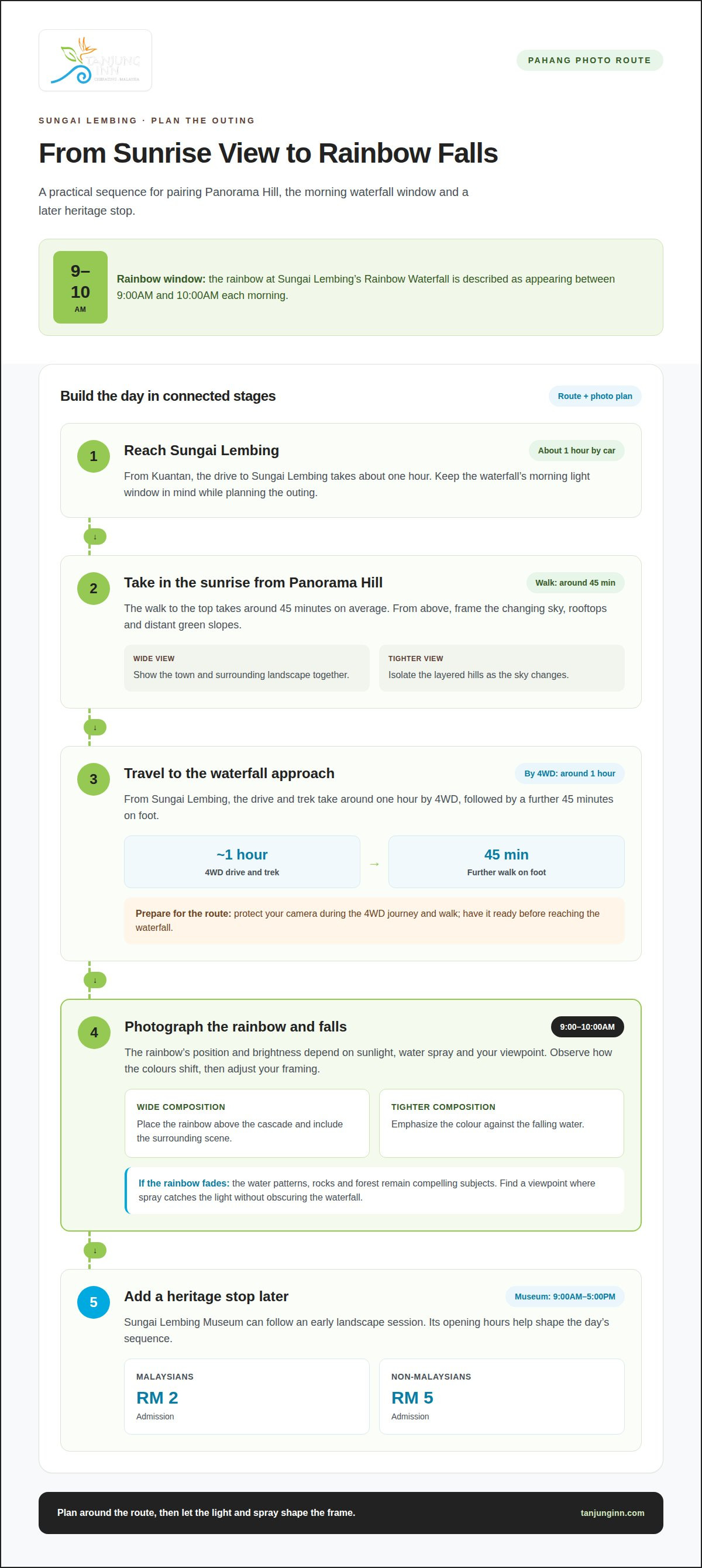
At Rainbow Waterfall near Sungai Lembing, the morning offers a special photographic moment: the rainbow is described as appearing between 9:00AM and 10:00AM each morning. Plan the outing around that window, allowing time to reach the falls and settle on a composition. A rainbow’s position and brightness depend on the relationship between sunlight, water spray and your viewpoint. Watch how the colours shift, then adjust your framing rather than rushing through a single shot.
The journey is part of the plan. From Sungai Lembing, the drive and trek take around one hour by 4WD, followed by a further 45 minutes on foot. Keep your camera protected during the ride and walk, then have it ready before reaching the waterfall. A wide composition can place the rainbow above the cascade, while a tighter frame can emphasize the colour against the falling water. Take time to observe both options.
For a clear composition, find a viewpoint where the spray catches the light without obscuring the waterfall. Balance the horizon and surrounding foliage, and keep bright highlights from dominating the frame. If the rainbow fades, photograph the falls without it: water patterns, rocks and forest remain compelling subjects. At Sungai Lembing, patience matters because the effect depends on both light and spray.
Sunrise offers another reason to linger around Sungai Lembing. Panorama Hill is a place to photograph the town and surrounding landscape from above; the walk to its top takes around 45 minutes on average. Allow enough time for the climb before composing a view of the changing sky, rooftops and distant green slopes. A wide frame conveys the setting, while a narrower view can isolate the layered hills. The ascent itself also provides changing perspectives.
Sungai Lembing Museum adds a heritage stop to a photography day. It is open from 9:00AM to 5:00PM, with admission listed at RM 2 for Malaysians and RM 5 for non-Malaysians. Visit after an early landscape session, then leave time for the waterfall or Panorama Hill rather than compressing every stop. The museum’s opening hours help shape the day’s sequence.
From Kuantan, the drive to Sungai Lembing takes about one hour. Pair the early hilltop view with the waterfall’s morning rainbow, then use the museum hours to plan a later visit. This sequence connects sunrise scenery, a forest waterfall and local heritage without losing sight of the main photographic opportunity. Pack for the 4WD journey and 45-minute walk, and keep equipment protected from water along the route.
3. Rainforest canopy views at Taman Negara Kuala Tahan
Taman Negara Kuala Tahan is described as a 130-million-year-old virgin rainforest. Its canopy walkway rises 45 metres above the ground, offering a viewpoint across layers of green foliage. From this height, tree crowns become the foreground, while distant forest forms a softer background. Start with a wide frame that shows the breadth of the canopy. Then use a tighter composition to pick out a single crown, branch or opening between leaves. The change in scale tells two different stories.
On the walkway, notice how sunlight falls across the treetops before choosing a direction. Bright leaves can draw the eye, while shaded foliage adds depth. Use branches at the edge of the frame to guide attention towards the forest beyond. If the view feels crowded, simplify the composition around one distinct shape or colour. The elevated perspective reveals overlapping treetops, but a clear focal point keeps the image calm and easy to read.
At ground level, Taman Negara offers a different way to photograph the rainforest. Look for close details such as layered leaves, textured bark and small openings in the vegetation. A low viewpoint can make a tree trunk feel taller, while a path or stream can lead the eye into the frame. Let natural patterns guide your composition instead of trying to include everything. The canopy walkway and forest floor offer two distinct perspectives in the same destination.
Pahang’s rainforest destinations also include Rompin State Park, which covers 870 square kilometres. Its broad forest setting offers a different sense of scale from the elevated view at Kuala Tahan. Rompin State Park has 250 recorded bird species, making it a compelling place to watch for birds among the forest surroundings. Rather than scanning every branch quickly, pause and observe the edges of clearings and the movement between trees. A quiet, patient approach helps you notice activity without disturbing the scene.
For bird photography in Rompin, be ready to work with changing backgrounds. A bird against open sky creates a different image from one framed by layered leaves, so adjust your angle when the subject’s movement allows. Focus on the eye when possible, and include enough foliage to show its habitat. Taman Negara Kuala Tahan and Rompin State Park suit photographers seeking rainforest views, but each has a different emphasis: canopy layers at Kuala Tahan and forest birdlife across Rompin’s expansive reserve. Both reward patient observation and attention to the greenery around each subject.
4. Wildlife and bird spotting in Taman Negara
At Taman Negara, take time to observe before lifting the camera. Pause along a forest trail and listen for movement in the canopy or undergrowth. Then scan openings between leaves, where an animal or bird may be easier to spot. Keep your camera ready, but avoid sudden movements that could disturb wildlife. A longer lens can help you frame distant subjects without approaching them. If no animal appears, photograph signs of habitat, such as a branch crossing a shaded patch of forest.
In Taman Negara, wildlife photography is as much about reading the forest as finding a subject. Watch birds move between branches and notice which background separates their shapes clearly. If a bird is partly hidden by leaves, wait for a natural change in position rather than moving closer. A quiet approach preserves the scene and gives you time to compose. Use a wider frame when the forest contributes to the story, then crop closer when the subject is unobstructed.
Tasik Bera offers a contrasting setting, with open water, wetland vegetation and forest around the lake. Its protected area covers 38,446 hectares, while its catchment spans 60,000 hectares. The lake is less than five metres deep, and the wetland supports varied wildlife. Use the meeting points between water and vegetation to build depth. A wide composition can show the relationship between lake and shore; a tighter view can focus on details among reeds or reflections.
Birdlife gives Tasik Bera another reason to slow down. The area has 200 identified bird species and 50 identified mammal species. Around 100 fish species are supported in the lake, adding another layer to its wetland ecology. Photograph from a respectful distance, and use the surrounding habitat to tell more than a close portrait can. For birds near the water, include reflections when they strengthen the composition. Keep the shoreline and vegetation in view to show the setting.
At Tasik Bera, observe the light across open water and shaded edges before choosing a viewpoint. Reflections can create a calm image, while reeds and branches add foreground texture. In Taman Negara, denser forest calls for patience and careful framing around leaves, trunks and canopy openings. These Pahang environments invite different approaches: look for movement and layered greenery in the rainforest, then use open water and wetland edges to compose broader wildlife scenes. Leave space around subjects and keep their habitat in the frame.
5. Access and visitor information for Pahang nature attractions
Plan the route before packing camera equipment, especially for Taman Negara Kuala Tahan. The boat from Jeti Kuala Tembeling takes approximately two and a half to three hours, and costs RM 55 per person. This journey takes a substantial part of the day, so allow time for the river transfer alongside your photography plans. Protect cameras and spare batteries from splashes, and keep essential equipment easy to reach. For a trip focused on early forest light, account for the boat journey when arranging your arrival.
Rompin State Park has a different access reference point: its headquarters is at Sungai Kinchin Base Camp, 35 kilometres from Kuala Rompin. Use that location when planning your approach to the park, rather than assuming the town centre is the entrance. Pelangi Waterfall near Maran can be reached by a long hike, 4x4 vehicle or mountain bike ride. The chosen route affects how much equipment is practical to carry. Lubuk Yu Ecopark lies 32 kilometres from Maran, while Gunung Tapis Park is about 16 kilometres from Sungai Lembing.
Visitor hours can shape the day as much as distance. Jerangkang Waterfall’s listed operating hours are 8:00AM to 5:00PM, so schedule arrival with enough daylight for the approach and photographs. The Sungai Lembing Museum opens from 9:00AM to 5:00PM, which can fit around outdoor stops in the same area. For Kuala Gandah National Elephant Conservation Centre, visitor hours are 10:30AM to 4:15PM; its office hours are 8:00AM to 4:30PM. Entry is free. Keep visitor hours distinct from office hours when planning a stop.
The best season and time of day depend on the subject: Jerangkang is recommended between February and July, while Sungai Lembing’s Rainbow Waterfall is described as showing its rainbow between 9:00AM and 10:00AM each morning. For other scenes, use the available light and each attraction’s visitor hours to shape your schedule.
In Pahang’s forests and wildlife areas, choose stable ground near waterfalls, keep clear of fast-moving water and give wildlife room. On hikes such as the route to Pelangi Waterfall, carry only equipment you can manage safely and stay alert to the terrain. At Taman Negara, protect your gear during the long boat transfer and avoid approaching animals suddenly. These precautions keep photography focused on safe, respectful observation. Allow time for travel and walking instead of rushing between locations.
The drive from Kuantan to Sungai Lembing takes about one hour, so allow time for the journey. The Bentong Farm is open from 10:00AM - 6:00PM on weekdays.
Tanjung Inn
Tanjung Inn offers a restful place to pause between nature photography outings during your travels in Pahang. For groups, its lodging options include the Grand Villa for 6 Pax, Family Villa 5 for 5 Pax, Family Villa 4 for 4 Pax, and Family Villa 3 for 5 Pax. Choose according to your group size, then leave space in the itinerary for unhurried time with the landscapes you've come to photograph. A slower pace can make room for changing light, quiet observation and a gentler return after a day outdoors.
For a comfortable place to stay as you plan your Pahang escape, contact Tanjung Inn.
Make room for a slower photography trip
Leave a little breathing room in your itinerary. A nature photography trip can feel richer when there’s time to pause, review the day’s frames and welcome the next morning without rushing. As you plan around Pahang nature photography locations, consider where you’d like to stay and how you want the journey between outings to feel.
If Cherating fits your travel plans, Tanjung Inn offers accommodation options for different group sizes, including family and group villas. It can be a restful base for travellers looking to balance time outdoors with a quieter place to return to. Choose the pace that suits your trip, then let the landscape unfold one frame at a time.
Contact Tanjung Inn about your stay and begin planning your Pahang escape.
Frequently Asked Questions
Where can I photograph wildlife and rainforest in Taman Negara Pahang?
Explore the forest trails and elevated viewpoints around Kuala Tahan for rainforest scenes and chances to observe wildlife. To show habitat as well as animals, include surrounding foliage, tree trunks or the forest floor. Move quietly, keep a respectful distance and wait for natural movement instead of approaching an animal. A telephoto lens can help frame a subject without disturbing the scene, while a wider view can place it within the forest.
Where can I photograph waterfalls, rivers, and landscapes in Pahang?
Chamang Waterfall, Jerangkang Waterfall, Berkelah Waterfall and Sungai Lembing’s Rainbow Waterfall each offer a distinct setting. For river and wetland compositions, consider Tasik Bera or the waterways around Maran. Choose a site based on the image you want: a close view of water and stone, a broad landscape or reflections along a lake edge. Allow time to explore different viewpoints, as a small change in angle can transform the foreground.
What are the best bird photography locations in Pahang?
Rompin State Park and Tasik Bera are options for bird photography in forest and wetland settings. At Rompin, look for birds against layered forest backgrounds; at Tasik Bera, compose around the meeting of open water and vegetation. Bring a lens suited to distant subjects, and observe quietly before choosing a position. Including some of a bird’s habitat can make the photograph more informative than a tight portrait alone.
What are the entrance fees, permits, and photography charges at Pahang nature parks?
Published admission examples vary by attraction: Kuala Gandah National Elephant Conservation Centre has free entry, while Sungai Lembing Museum admission is RM 2 for Malaysians and RM 5 for non-Malaysians. These examples aren’t a single rate for every park or activity. Plan each stop separately, distinguishing admission from transport and any activity charges. For a photography outing, use the attraction’s stated visitor information to understand the costs that apply to your visit.
How do I reach Pahang nature photography locations by public transport or car?
Choose your destination first, because access may involve a road journey, a 4WD ride, a hike or a river transfer. From Kuantan, the drive to Sungai Lembing takes about one hour; reaching Rainbow Waterfall then involves a 4WD journey and a walk. Kuala Tahan can be reached by boat from Jeti Kuala Tembeling. For public transport, plan connections around the final approach to each attraction, especially where the route continues beyond a town.


