

Outdoor learning can begin when children are very young, as soon as a parent feels ready. Teaching kids about nature on vacation works best when the child’s needs come first and outings stay short enough to hold their interest. Small discoveries count.
A shady path, a bird calling from a branch, or the fine veins of a leaf can turn an ordinary stroll into a shared moment of learning. You don’t need to make every walk a lesson. Pause, notice what catches your child’s eye, and explore at an easy pace.
This guide offers five simple ways to explore nature together in Malaysia, from noticing habitats and identifying birds and trees to trying a gentle scavenger hunt and observing wildlife. You’ll also learn how to adapt each activity to your child’s age, curiosity, and energy, leaving room for both discovery and rest.
Key Takeaways
- Begin outdoor discovery when you feel ready, keeping outings short and guided by your child’s needs and interest.
- Explore habitats by noticing the plants and small creatures around them, and handle insects or crabs gently and close to the ground.
- Help children identify birds through their colours and calls, and compare trees by their leaves and bark.
- Turn a nature walk into a scavenger hunt with clues that encourage careful looking and creative thinking.
- Invite children to draw or write what they observe, so changing details in the natural world become easier to notice.
1. What are the best outdoor summer activities for kids to learn about nature?
Outdoor activities can begin when babies are very young, as soon as a parent feels ready. Start in a quiet garden or on a shaded path, then follow your child’s cues: pause when they become tired, hungry, or unsettled. For young children, keep each outing short enough to hold their interest, with one simple focus, such as a leaf, a bird call, or a patch of moss.
In Malaysia, a nature outing can begin in a garden, park, or beside a pond. Before setting out, invite children to choose something to look for, such as a seed, a bird, or a tree with a rough trunk. Short outings are a gentle starting point. Gradually increase the distance or difficulty as your family gains confidence, and take breaks rather than pushing towards a particular destination.
What rules apply to visiting Malaysian national parks and wildlife reserves with children? Rules differ by site, so read posted instructions and follow marked routes where provided. Keep children close, avoid feeding or touching wildlife, and respect barriers and restricted areas.
What are the entrance fees and opening hours for Malaysia’s family-friendly nature attractions? Fees and hours vary by attraction and can change. Use the attraction’s official visitor information to plan your arrival and budget, rather than assuming every park follows the same schedule.
Which national parks, nature reserves, and wildlife centres in Malaysia are family-friendly? Choose a site with a manageable route, places to pause, and plants or wildlife children can observe without approaching. A short nature trail, garden, or visitor area may suit young children better than a long, demanding walk.
Pack drinking water, a hat, light clothing that covers the skin, comfortable shoes, snacks, and a change of clothes for a humid or rainy day. Add a small notebook and pencil to record discoveries. Pause in the shade, drink regularly, and shorten the outing if a child seems uncomfortable in the heat.
Outdoor environmental learning doesn’t need a classroom. Ask children to compare two leaves, notice where a beetle hides, or explain what a plant might need to grow. Planting a seed in a pot offers an activity to return to: children can water it and observe how its leaves change over time.
Record what children learn with a simple drawing or a few words after each outing. A bird journal might show the bird’s colour and where it appeared; a travel diary can capture a favourite nature moment. These notes help children revisit details they may have missed outdoors.
For outdoor art, make a leaf rubbing by placing paper over a fallen leaf and gently colouring across it. A supervised baking soda and vinegar volcano can demonstrate how mixing ingredients releases carbon dioxide. Keep the activity contained, and let children describe what they observe. Both activities link hands-on examples to ideas discussed in the classroom.
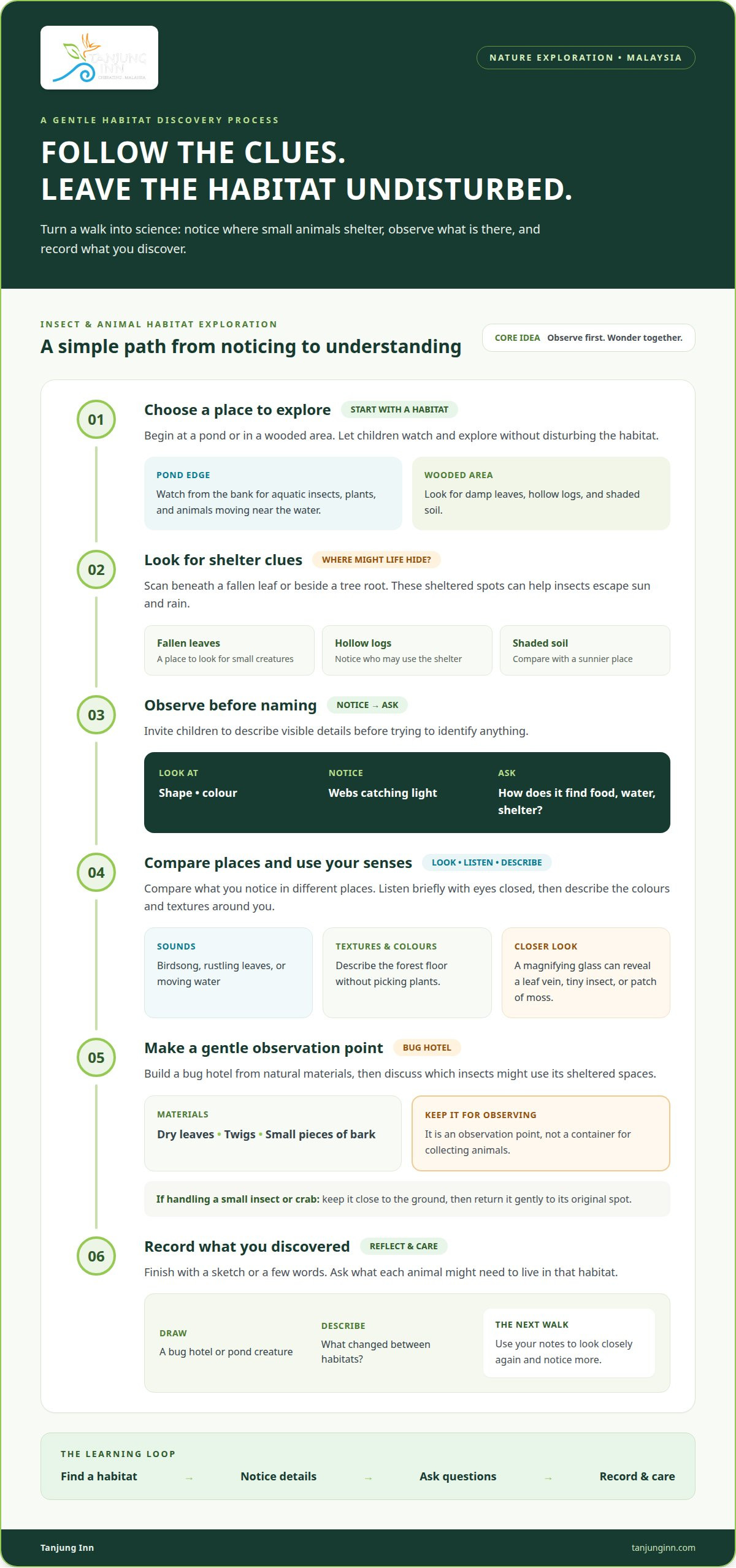
2. Insect and animal habitat exploration
Look beneath a fallen leaf or beside a tree root, where insects may shelter from sun and rain. Before naming anything, ask children what they notice: a beetle’s shape, an ant’s colour, or the way a spider’s web catches the light. This simple pause turns a walk into science. Children practise observing first, then asking how small animals find food, water, and shelter.
Follow a habitat without disturbing it. At a pond, watch from the bank for aquatic insects, plants, and animals moving near the water. In a wooded area, notice whether damp leaves, hollow logs, or shaded soil attract different creatures. Encourage children to compare what they see in each place. If they handle a small insect or crab, keep it close to the ground, where a fall is less likely to cause injury. Return it gently to its original spot.
Play can make discoveries memorable. Invite children to build a bug hotel from natural materials such as dry leaves, twigs, and small pieces of bark, then discuss which insects might use its sheltered spaces. The structure offers a glimpse of biodiversity: different creatures need different places to rest and hide. Treat it as an observation point, not a container for collecting animals. Children can draw any visitors they spot and compare their shapes later.
Use the senses to guide learning. Ask children to close their eyes briefly and name the sounds they hear, such as birdsong, rustling leaves, or moving water. Then invite them to describe the colours and textures of the forest floor without picking plants or lifting every log. A magnifying glass can bring a leaf vein, tiny insect, or patch of moss into view. These details encourage curiosity while leaving living things in their habitat.
Turn the walk into a gentle habitat detective game. Choose one question, such as “Where might a small animal find shade?” and look for clues together. A damp patch, a cluster of fallen leaves, or a hollow in a tree can prompt children to explain their thinking. Let them suggest answers before offering yours. If you find an unfamiliar beetle, describe its visible features and identify its name later.
End with a simple record of what your family discovered. Children can sketch a bug hotel, draw a pond creature, or describe the difference between a sunny path and shaded forest soil. Ask what each animal might need to live there. This brief reflection connects playful exploration with care for habitats and gives children a reason to look closely on their next walk.
3. Birdwatching and tree identification
Choose a quiet place where children can watch birds without following or disturbing them. Invite them to notice colour, size, movement, and sound. A bird with a bright breast may look different from one with muted feathers, while a short call differs from a drawn-out song. Ask what the bird might be doing: searching for food, resting, or moving between branches. These observations make birdwatching a calm, shared adventure.
For local species identification, bring binoculars and a bird guidebook suited to the area. Start with one visible feature, such as a curved beak or a pale patch on the wing, then compare it with pictures in the guide. Children can sketch the bird or note where it appeared, such as near a pond or high in a tree. If its name remains uncertain, record its features and look it up later.
Identify trees using three clues: leaf shape, bark texture, and branching pattern. Compare a broad leaf with a narrow one, or notice the difference between smooth and deeply ridged bark. Ask children whether the tree stands in open sunlight or in a shaded habitat. These details connect what they learn about plants at school with a real outdoor setting, without requiring them to memorise names straight away.
Tree rings offer another way to read the past. If a fallen trunk or exposed stump is already present, examine its rings without damaging a living tree. Narrow spacing may point to drought or pest disturbance; wider spacing can suggest plentiful rainfall, sunlight, and nutrients. Ask children to compare the rings, then consider how growing conditions might have changed over time. The rings offer a quiet record of a tree’s life.
Look closely at butterflies and insects with a magnifying glass and an identification book. Children can compare a butterfly’s wing pattern, an insect’s body shape, or its visible legs, while leaving each creature in its natural habitat. Rather than catching it, observe where it rests and what it visits. A butterfly landing on a flower, for example, can prompt questions about plants and pollination.
Keep the activity light during a summer walk. Choose one focus, such as listening for bird calls or comparing leaves, and let children switch when their attention moves on. A school science notebook can hold a quick sketch, a description of a sound, and the place where each observation was made. Over several stops, children may begin to spot patterns: which birds favour open spaces and which plants grow beneath taller trees.
4. Nature scavenger hunts
A scavenger hunt gives children a purpose for looking closely without turning a walk into a race. Choose a few clues before setting out, then invite them to find something that fits each description. A feather, smooth rock, or fallen leaf can prompt questions about colour, texture, and where each object was found. The aim is to notice and describe, not to collect.
Make the clues about qualities rather than exact species. Ask children to find something rough, something with a pattern, or a sign that an insect has visited. In a garden or wooded path in Malaysia, they might notice a leaf with tiny holes, a curled seed pod, or a trail of ants. These discoveries encourage problem-solving: children compare details, explain their choices, and decide whether an object fits the clue.
- Something smooth: compare a rounded stone with a fallen seed pod.
- A sign of insects: look for a leaf with holes or a web between branches.
- Two shades of green: notice how leaves differ in colour.
- A natural sound: pause and identify rustling leaves or a bird call.
- A shape in nature: find a curled leaf or a branching twig on the ground.
Keep the hunt flexible. If children become interested in a beetle or a group of ants, pause and observe instead of moving on to the next clue. Let them describe what the insects are doing and where they are. A notebook or simple drawing can record the discovery without removing a living creature from its habitat. This turns the hunt into a small field investigation.
Building with natural materials adds a hands-on challenge after the search. Invite children to use fallen leaves, twigs, and stones to make a low shelter or a tiny bridge on bare ground. Ask what makes the structure stand, which materials bend, and how its shape changes when a twig moves. Children explore engineering ideas through trial and adjustment. Keep the construction small and temporary, then return the materials when play ends.
Use the finished structure to prompt more questions. Could a small insect pass beneath the bridge? Would a leaf roof keep a toy dry in a light sprinkle? Ask children to explain their predictions, test them gently, and describe what happened. The activity links creative play with observation and simple science, while drawing attention to materials and their properties.
Close by revisiting the clues together. Children can name their most surprising find, sketch its shape, or explain how they recognised it. If your family repeats the activity on another walk, change the clues to suit the new surroundings. The same simple plan can reveal different plants, textures, and signs of wildlife, making each outing feel like a fresh discovery.
5. Nature walks and wildlife observation
Choose a path with a clear place to pause, such as a garden edge, pond, or shaded trail. Ask children to observe one detail at a time: a leaf’s colour, a bird’s call, or the texture of tree bark. This focused approach builds observation skills and keeps a walk engaging without turning every sight into a lesson.
Are guided nature walks or wildlife tours available for families in Malaysia, and how much do they cost? Availability and fees vary by site, route, duration, and whether a guide is included. These factors affect the cost, so plan around an activity and location that suit your family. If your family is inspired to expand your nature journeys further afield in the region, cultural and adventure tour providers like Best of PNG offer an example of how guided itineraries can help travellers experience extraordinary wildlife and pristine landscapes.
Bring a camera or let children use a phone with adult supervision. Encourage them to photograph a seed pod, a line of ants, or a bird perched in the distance, then describe what they captured. A photo can prompt useful questions: What was moving? Which colours stood out? Where was the animal in relation to its habitat? Choosing a subject and framing it also lets children practise creativity outdoors.
A simple weather journal makes changing conditions easier to notice. In the morning, children can draw the sky, note whether the air feels warm or cool, and record signs such as clouds gathering above the garden. Later, compare the page with what they see. Did the light change? Did the leaves move in the wind? These observations help children connect the weather with the conditions around them.
Use a nature journal to collect small discoveries. Children can draw an insect they saw, describe a bird’s sound, or add a leaf shape from memory. Older children might write where they spotted an animal and what it was doing. Rather than aiming for a perfect record, encourage specific details that may help them recognise patterns on another walk.
- Look: compare the colours and shapes of two plants.
- Listen: identify a bird call, rustling leaves, or flowing water.
- Notice movement: watch how a butterfly or lizard travels without following it.
- Record: sketch one detail and add the place where it appeared.
Pause when a child notices something unexpected. A trail of ants crossing a path, for example, can lead to questions about their direction and what lies nearby. Stay at a respectful distance from wildlife, and leave plants and natural objects where they are. The goal is to observe living things in their surroundings, not move them closer.
At the end of the walk, invite each child to share one discovery from a photo or journal page. Comparing a bird’s call with a sketch, or a cloudy morning with an afternoon drawing, helps turn a brief outing into a story to remember.
Tanjung Inn
Tanjung Inn offers family accommodation across Malaysia, providing an ideal base for travellers planning time outdoors with children. After choosing nature walks, birdwatching, or a simple habitat activity, a comfortable place to stay can give your family room to pause between outings and reflect on the day’s discoveries.
Families can choose from options such as the Family Villa 4 for 4 Pax, Family Villa 5 for 5 Pax, or Grand Villa for 6 Pax. These different capacities help match the stay to your group as you plan a nature-focused holiday together.
For details about staying at Tanjung Inn, contact Tanjung Inn.
Let Curiosity Set the Pace
Let your next family holiday leave room for an unplanned pause. A child may remember the quiet moment when a bird landed nearby, or the question that came from watching rain gather on a leaf. Teaching kids about nature on vacation isn’t about covering every topic; it’s about giving curiosity time to take root. Keep a small notebook close, welcome questions, and let children choose what to notice next.
As you plan, consider what kind of stay will help your family settle into a gentler rhythm between outdoor moments. Tanjung Inn offers accommodation options for different family group sizes, making it a possible base for a nature-focused holiday in Cherating. Let the landscape set the pace, and allow each day to hold one small discovery.
Contact Tanjung Inn about your stay, then look forward to the details your family will notice together.
Frequently Asked Questions
So, when can you start outdoor activities with children?
You can begin when you feel ready, even with a baby. Choose a comfortable outdoor setting close to familiar routines, such as a shaded garden bench, and make the first visit easy to end. For a toddler, a short wander with time to stop and look may work better than a planned route. Let your child’s energy and comfort guide the pace, then build from there.
What are the best outdoor summer activities for kids to learn about nature?
Choose an activity that gives children something clear to notice or try. Cloud watching can inspire them to describe changing shapes, while a quiet sit outdoors helps them pick out nearby sounds. They can also compare a sunny spot with a shaded one, noticing differences in light and temperature. Keep the activity open-ended, so children can follow a discovery rather than work towards a finished result.
What are fun ways to teach kids about nature while on vacation?
Make the surroundings part of a playful story. Ask children to imagine where a tiny forest creature might travel, then invent a gentle tale based on the path, plants, and sounds around them. While teaching kids about nature on vacation, invite a child to choose a “small wonder” to share over dinner, such as an unusual cloud or a leaf-shaped shadow. These details become part of the trip’s memories.
How can families plan a nature-focused vacation with children in Malaysia?
Build the plan around your children’s energy, the weather, and the kind of landscape they enjoy. Leave open time between activities, and choose outings with a comfortable place to pause or turn back. Before visiting a managed nature area, read its visitor instructions and plan around its access arrangements. Keep a simple indoor alternative ready, such as sketching remembered birds if rain interrupts an outing.
What nature activities are suitable for different age groups of children?
Babies can watch leaves move or listen to outdoor sounds from a comfortable spot. Toddlers often enjoy pointing out colours and textures, while preschoolers can make up stories about clouds or shadows. Older children may enjoy keeping a field notebook, comparing observations, or taking photographs with supervision. These are flexible ideas, not age rules: attention span, mobility, and interest matter more than a birthday.
How can parents teach children to observe wildlife without disturbing it?
Model quiet observation: pause, lower your voices, and watch from a respectful distance. Use binoculars or zoom rather than moving closer, and avoid flash photography around animals. Keep to established paths, never block an animal’s movement, and don’t call or chase it for a better view. If wildlife moves away, let it go. The shared lesson is that patient watching leaves animals in control of their space.
How can families make nature learning engaging without screens or worksheets?
Turn everyday moments into small invitations: listen for the first bird call, invent a story about a fallen seed, or ask each person to describe one detail the others missed. Let children lead with their questions, and answer what you can in the moment. If something is unfamiliar, make a note to explore it later. A conversation on a walk can be enough; no worksheet is needed.
Which national parks, nature reserves, and wildlife centres in Malaysia are family-friendly?
Choose a site with a manageable route, places to pause, and plants or wildlife children can observe without approaching. A short nature trail, garden, or visitor area may suit young children better than a long walk.


