

A holiday tradition doesn’t have to stay the same to bring a family together. In fact, creating family traditions on holiday can mean reshaping a familiar ritual so every person, across different ages, beliefs and family arrangements, feels welcome. The meaning matters more than repeating every detail.
Shared rituals give children a sense of continuity and help families pass on values such as kindness, gratitude and connection. They don’t need to be elaborate. A favourite meal, a quiet moment outdoors or a simple act of giving can feel meaningful when it reflects what matters to the people taking part.
This guide explores why holiday traditions matter and how to create them in ways that include everyone. You’ll find ideas for welcoming seasonal language and activities, ways to distinguish everyday routines from meaningful rituals, and practical approaches to adapting traditions as families change. Start with what feels comfortable, invite each person to take part in their own way, and let the tradition grow at its own pace.
Key Takeaways
- Choose traditions that reflect the holiday’s meaning and the values your family wants to nurture.
- Use welcoming seasonal language and activities that let people share their customs without comparison.
- Give everyday routines a shared purpose to turn familiar moments into meaningful rituals.
- Adapt traditions as family members’ needs, schedules and circumstances change; participation can take different forms.
- Start with one or two simple activities your family enjoys, then keep the ones that feel worth repeating.
1. Why are holiday traditions important for families?
A recurring family ritual gives children a familiar point of connection when holidays arrive. Decorating a Christmas tree together, for example, creates a shared moment each year. Children may remember choosing an ornament, hanging it beside a favourite decoration and helping prepare the room for the celebration.
In Malaysia, Christmas traditions may include decorating a tree, sharing a festive meal or singing carols together. New Year’s Eve might bring a family meal, a countdown or time to reflect on the year. Families can choose what fits their beliefs and circumstances instead of following a single pattern.
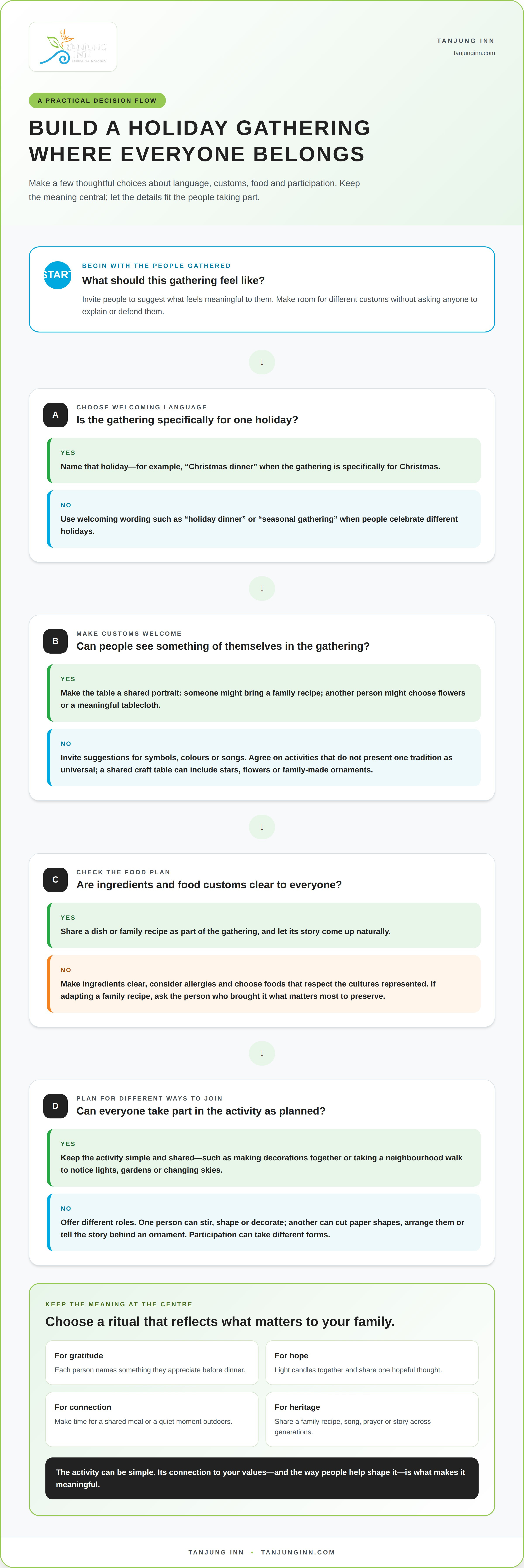
Meaning gives a tradition its centre. If a holiday represents hope, a family might light candles together and share one hopeful thought. If gratitude matters most, each person could name something they appreciate before dinner. The activity can be simple; its connection to the holiday is what makes it memorable.
Start by writing down two or three values you want the season to express. Kindness, generosity, faith, gratitude and friendship are possible choices. Then choose a tradition that reflects at least one value. A family that values giving might prepare a care package together, while one that values connection could make time for a shared meal.
Choosing a Christmas tree together can also create family meaning. Give each child a role, such as picking the tree, placing the star or choosing an ornament. Invite relatives to contribute decorations that reflect their own memories. The tree becomes more than a seasonal display: it brings together small stories from different generations.
Make the decision together, especially when children are old enough to express preferences. Ask what they enjoy about the holiday, then offer a few realistic choices. One child might choose a story, another a favourite recipe, and an adult a quiet moment outdoors. Shared decisions help everyone feel they belong in the ritual.
Connect the tradition to what your family celebrates, rather than copying an activity without its meaning. For a holiday centred on remembrance, relatives could share stories about someone they miss. For a celebration of renewal, family members might plant seeds or write intentions. These specific actions help children understand family values.
Traditions can pass cultural and religious heritage through ordinary, enjoyable moments. A family recipe, song, prayer or story can share knowledge between generations without turning the gathering into a lesson. Invite children to ask who first shared the recipe or why the family sings that song.
Choose a ritual that fits your family’s values, holiday and daily rhythm. It might be decorating a tree together, sharing a candlelit reflection or preparing a meal side by side. When everyone helps shape it, the activity becomes a shared way to celebrate, remember and belong.
2. Using inclusive seasonal decorations and language
Use decorations and words that welcome everyone gathered for the season. A “holiday dinner” or “seasonal gathering” can include relatives who celebrate different holidays, while “Christmas dinner” remains fitting when the gathering is specifically for Christmas. In November, invite family members to suggest symbols, colours, or songs that feel meaningful to them.
Make the table a shared portrait of the people around it. One relative might bring a family recipe, while another chooses flowers or a tablecloth connected to a celebration they observe. Make room for different customs without asking anyone to explain or defend them. Stories can emerge naturally as people share what a dish or decoration means to them.
Natural decorations bring garden textures indoors. Gather fallen leaves, seed pods or small branches, then arrange them in a bowl or along the table. Add reusable fabric ribbons or paper stars made from saved wrapping paper. Let children choose the arrangement, and leave gathered materials outdoors if they are protected, unfamiliar or unsuitable to handle.
How can families create meaningful holiday traditions on a budget? Reuse decorations, make ornaments from paper you already have, or take an evening walk to enjoy seasonal lights. The lasting part is spending time together, not buying something new.
For baking, choose a recipe that gives everyone a way to join in. Children can stir batter, shape dough or decorate cookies with simple toppings. Make ingredients clear, consider allergies and choose foods that respect the cultures represented. If a family recipe needs adapting, ask the person who brought it what matters most to preserve.
How can families adapt holiday traditions for different cultures and religions? Invite each person to share a preferred greeting, food or decoration, then agree on language and activities that don’t present one tradition as universal. A shared craft table can include stars, flowers or family-made ornaments without assigning religious meaning to them.
Choose crafts that offer different ways to participate. One child can cut paper shapes, another can arrange them, and someone else can tell the story behind an ornament. Keep supplies simple, such as reused card, fabric scraps and washable colour. Make decorations together each year, then let everyone decide whether to display or save their creation.
What are low-cost outdoor holiday activities families can make traditions? Take a neighbourhood walk to notice lights, gardens or changing skies, or bring a shared snack to a nearby park. Choose a familiar route and let each person point out one detail they want to remember.
Matching the activity to the family matters more than matching a picture-perfect celebration. For an outdoor gathering near Cherating, a nature-oriented family stay can offer a change of setting for shared moments, without requiring elaborate decorations.
3. Family routines versus meaningful rituals
A routine helps a household run smoothly; a ritual gives a familiar action shared meaning. Making hot chocolate after dinner may begin as a winter routine. It becomes a ritual when family members gather around the same table, take turns choosing a story and pause to share one good moment from the day.
A 2002 American Psychological Association review covered 50 years of research on family routines and rituals. The distinction is useful at home: routines offer a dependable pattern, while rituals add intention, connection, or symbolism. For example, a regular meal becomes more meaningful when everyone contributes one part and welcomes a relative who joins by video.
Choose a simple action that suits the holiday and your family’s schedule. Set out a favourite drink, read a particular book or share a moment of giving. Keep the steps familiar: prepare the drink, gather together and let each person contribute. A short ritual is easier to repeat than an elaborate plan that needs special supplies.
How can families make a new holiday tradition memorable and easy to repeat? Pair one clear action with a sensory detail, such as a familiar song, a special cup or a story read aloud. Add the activity to the calendar and use the same simple cue each time, such as lighting a candle before dinner.
Meaningful objects can make family history part of a ritual. A handed-down pie recipe might sit beside a child’s drawing, while a menorah made by a family member can have a place in a holiday gathering. Invite its owner to tell the story, then let younger family members add their own memories.
Collecting ornaments is another way to mark changing family moments. Choose or make one connected to a shared experience, such as a first home, a new family member or a favourite trip. Write the year and a short memory on a small tag. When you decorate, take turns recalling what each ornament represents.
How can families balance old traditions with new ones? Keep a familiar ritual that still feels meaningful, then make room for a new activity alongside it. For instance, preserve an annual family recipe while inviting children to choose a new song or ornament. Ask family members what they value, and let the tradition evolve with their answers.
Objects don’t need to be precious to carry meaning. A recipe card, a well-used serving bowl or a handmade paper star can become part of a family ritual. Store these items together after the celebration, then bring them out at the next gathering. Their familiar presence can connect past moments with new ones.
When the next celebration arrives, families can once again include meaningful objects in their traditions, such as a handed-down pie recipe or a menorah made by a child. Let each object prompt a brief story about who made it, where it came from, or why it matters to the family. This keeps the focus on shared meaning while leaving room for new objects and memories to join the tradition over time.
4. Adapting traditions for different family structures
A tradition should suit the people who can take part now. In a blended family, for example, children may spend holidays across two homes. Keep one familiar ritual in each place, such as sharing a recipe or choosing a song, rather than expecting every household to celebrate identically. The shared meaning can travel, even when the details change.
Single-parent households, multigenerational families and relatives living apart all have different rhythms. A gathering might happen before or after the holiday, include chosen family or be smaller than in previous years. Choose a date and activity that work for those involved. If a tradition causes stress or excludes someone, change it or let it go.
What are age-inclusive holiday traditions for children, teens, and adults? Let younger children choose a story or decorate a card, invite older children to share a tradition from another culture, and ask adults about childhood memories they want to pass on. These conversation prompts can suit children aged 2 to 7, children aged 8 to 13, and people aged 14 to 100.
Offer different ways to join, rather than treating one activity as the measure of participation. A toddler might place a napkin on the table, while a teenager selects music and a grandparent shares the story behind a family recipe. Someone who prefers not to speak can contribute a drawing, photograph or favourite song. Each contribution helps keep family identity visible.
For relatives who live far apart, choose a shared activity that works across distance. Family members can read the same story over a video call, exchange recipes or send a short recording of a song. A relative who cannot join live might contribute a photo or written memory beforehand. Keep the format familiar, so connection doesn’t depend on everyone being online at once.
Experiences can make room for different energy levels, mobility needs and sensory preferences. At a family gathering, offer a quiet place alongside a lively game, or let people join a nature walk for only part of the route. When travelling together, choosing flexible excursions—such as customized outings with Blue Hawaii Private Tours—allows both younger children and older relatives to explore at their own pace. The aim is meaningful participation, not identical participation.
When circumstances shift, preserve the part that matters and adjust the rest. If a large annual dinner no longer suits the family, keep the recipe and invite people to share it at smaller gatherings. If travel separates relatives, create a memory exchange instead. Ask what feels essential to the tradition, then build around that answer.
Make the invitation clear and optional. A message might say, “Bring a recipe, photo or story, or simply join us.” This gives relatives a choice while keeping the door open. Traditions remain alive when family members can adapt them as relationships, schedules and needs change.
5. What are easy family holiday traditions to start at home?
Begin with one or two traditions that fit your family’s schedule. Add them to a shared calendar, perhaps as a holiday meal or game night. Choose an activity people already enjoy, such as cooking, making art, listening to music, playing games or exploring nature. Familiar pleasures are easier to return to.
Try a family recipe night. Choose a recipe each month, invite everyone to help with a suitable task, then record it in a family cookbook. Children can draw the finished dish, while adults note who made it and what the family enjoyed. By the next holiday, the book will hold a trail of shared meals.
Let family members take turns choosing a signature dish for one night each month. Keep the meal relaxed: serve breakfast for dinner, dinner for breakfast, or dessert before dinner. An upside-down meal can happen once a month or once a year, depending on what suits your household.
Make a board game or puzzle part of your holiday gathering. Give each child a game or puzzle, then set it out for everyone to enjoy together. For weekly game night, let family members take turns choosing the game. A short, familiar invitation can help the activity feel welcoming, even when someone prefers to watch first.
A gratitude journal can become a quiet seasonal practice. Invite each person to write or draw one reflection, then revisit the pages in years to come. Younger children might dictate a sentence to an adult, while older relatives add a memory. Keep the journal near a familiar gathering place so it naturally returns to the table.
Taking an annual holiday portrait is another meaningful ritual that documents how everyone grows and changes over time. For families looking for a relaxed, low-pressure setting where they can snap private portraits at their own pace, self-photo studios such as photonow.sg provide an easy way to turn photo sessions into an enjoyable tradition.
Choose a small act of kindness that fits everyday family life. Children can make cards, donate gently used toys or help a friend clean up. Make kindness a daily or weekly practice rather than a one-off holiday gesture. A shared habit helps children see giving as something they can do throughout the year.
Keep the first attempt light. Read a particular book on a chosen evening, bake a treat together, or set aside a day each month for a family adventure. Ask children what new tradition they would create. If they suggest a park picnic or a nature walk, add the idea to the calendar and try it together. Creating family traditions on holiday can start with one small activity everyone enjoys.
After trying an activity, note what made it easy to enjoy: the timing, the shared task, or the chance to choose. Repeat the parts that suit your family and let the rest go. A useful approach to creating family traditions on holiday is choosing what feels simple enough to return to. If you’d like a change of setting for shared family moments, plan a family stay amid nature.
Tanjung Inn
Tanjung Inn offers welcoming family accommodations for travelers who want to make time together part of a holiday tradition. A change of setting can give relatives space to share meals, games, and unhurried conversations, while familiar rituals make the visit their own.
Tanjung Inn provides lodging options ranging from the spacious Grand Villa to cozy Budget Chalets to suit different group sizes and budgets. These choices can help families plan a gathering around who is joining, whether relatives are continuing a familiar tradition or beginning a new one.
For your next family getaway focused on creating family traditions on holiday, reach out to Tanjung Inn to discuss your plans.
Make room for the next shared memory
A family tradition doesn’t need a perfect setting. It needs time together and room for everyone to belong. As your family changes, let the way you celebrate change too. A familiar ritual can travel with you, while a new place offers fresh moments to make your own.
For families planning a nature-oriented stay in Cherating, Tanjung Inn offers options for different group sizes, including the Grand Villa for 6 Pax, Family Villa 5 for 5 Pax, and Family Villa 4 for 4 Pax. The right gathering can begin with a simple plan: choose a shared activity, invite everyone to take part in their own way, and leave space for unhurried conversation.
Creating family traditions on holiday is less about getting every detail right and more about returning to what brings you closer. If a family stay feels like a fitting next step, contact Tanjung Inn to discuss your plans. Let the next meaningful moment begin gently.
Frequently Asked Questions
Why are holiday traditions important for families?
Holiday traditions give families shared reference points they can return to as circumstances change. A familiar opening, such as playing the same song before a gathering, can help children recognise the occasion and feel included. Traditions also create opportunities to talk about family identity in everyday language. Over time, repeated details become memories that connect relatives, even when celebrations look different from year to year.
How can families include children in planning holiday traditions?
Give children a genuine choice within clear, manageable limits. Offer two possible activities and let them choose one, then invite them to decide where it fits in the day. A child might vote for a morning nature walk or an evening story, while an adult handles timing and practical needs. Afterwards, ask what they would keep or change, so the next celebration reflects their experience.


