

A quieter workday can begin on a forest boardwalk, then continue beside the coast. Choosing work from nature spots in Malaysia means balancing your work needs with time outdoors. This guide considers the Mossy Forest boardwalk in the Cameron Highlands and a nature stay in Cherating, Pahang. The Mossy Forest is listed as open from 9:00am to 4:00pm, giving you a clear window to plan around.
It’s natural to want a change of scenery without making work or travel plans harder to manage. As you consider work from nature spots in Malaysia, you’ll find guidance on planning around the Mossy Forest visit and choosing a nature-led stay. The article also covers cancellation and rescheduling considerations, helping you understand the booking terms before settling on a plan. Take a breath, and let the landscape shape a gentler working rhythm.
Key Takeaways
- Match your workday to the setting: consider connectivity needs before choosing a forest, park or coastal escape.
- Compare accommodation and coworking costs around nature destinations, and plan your budget around the type of stay you need.
- Learn which national parks and reserves can anchor a nature trip, with nearby stays offering a base for working between outings.
- Use regional differences and seasonal conditions to shape a remote-work itinerary across Peninsular Malaysia, Sabah and Sarawak.
- Explore the Mossy Forest boardwalk and understand how cancellation and rescheduling terms can help keep plans flexible.
3. Which Malaysian nature spots have reliable Wi-Fi and mobile coverage?
Reliable connectivity depends on the exact workspace, not just the name of a nature destination. Wi-Fi at your accommodation and mobile data outdoors are separate considerations. A video call that works in your room may fail along a trail, while a phone signal doesn’t confirm that the property has usable Wi-Fi. When choosing work from nature spots in Malaysia, match each task to a suitable place instead of assuming every scenic setting can support a full workday.
Before relying on a spot for remote work, test the connection where you plan to work. Connect to Wi-Fi and open the services you use, such as email, video meetings, or cloud documents. Test mobile data separately. A brief message checks basic access, while a video call or file upload gives a better sense of performance for demanding tasks. Repeat the test in the room or shared space you’ll use, since a connection can vary across the property.
The Mossy Forest in the Cameron Highlands is listed as open from 9:00am to 4:00pm. That window can help you separate focused work from a visit, but it doesn’t establish connectivity along the boardwalk. Keep essential meetings at a workspace with Wi-Fi you’ve tested, and use the forest visit for a screen-free break. Download documents and maps beforehand if you’ll need them away from your connection.
Forest Research Institute Malaysia sits 15 miles outside central Kuala Lumpur, making it a distinct example of a nature visit near a major city. That location alone doesn’t tell you whether your particular work spot has dependable mobile coverage. Plan by task: schedule calls at a tested indoor base, save reading and writing for offline access, and avoid relying on a live connection during a walk through the grounds.
A full-day nature outing may not suit a workday built around continuous calls. Separate travel, outdoor time, and focused work when shaping the schedule. Before leaving a connected base, download files, save meeting details, and prepare drafts that don’t require a live connection. Planning work from nature spots in Malaysia this way lets you keep essential tasks manageable without assuming forest trails provide Wi-Fi or mobile data.
At any Malaysian nature destination, choose your base to suit the most demanding task on your calendar. Test the actual workspace, keep mobile data as a separate option, and prepare offline materials for time outdoors. If uninterrupted calls are essential, schedule them during a period when you have tested the connection rather than between trail visits. Mossy Forest, FRIM, and Taman Negara offer different settings, but a destination’s name alone cannot tell you how a particular workspace will perform.
No destination guarantees reliable connectivity everywhere. Test Wi-Fi and mobile data separately at the accommodation or shared space where you plan to work, and schedule calls from a tested indoor base.
4. How much do accommodation and coworking spaces cost near Malaysia's nature destinations?
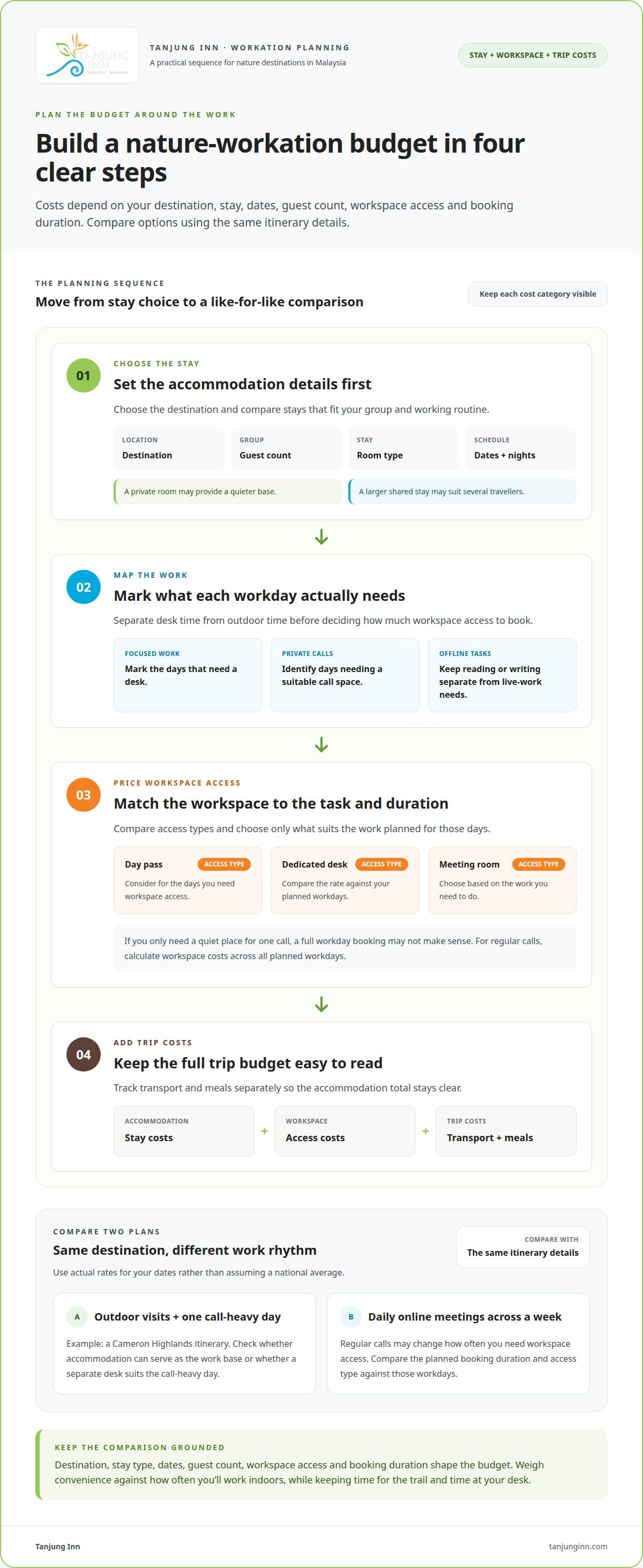
Plan your budget by listing accommodation and workspace costs separately. A room near the Cameron Highlands, for example, serves a different purpose from a desk booked for focused work. Your total depends on the destination, type of accommodation, length of stay, and whether you need a separate workspace. Instead of relying on a single estimate, list the costs that apply to your itinerary.
Start with accommodation. Choose your location, then compare stay options to suit your group and working routine. A private room may provide a quieter base, while a larger shared stay may suit several travellers. Consider room type, guest count, dates, and nights booked. Keep accommodation costs separate from meals and local transport in your budget.
Coworking costs depend on the space and access arrangement. A day pass, dedicated desk, or meeting room may have a different rate, so choose based on the work you need to do. If you only need a quiet place for one call, a full workday booking may not make sense. For regular calls, calculate workspace costs across all the days you plan to work.
For a nature trip around Taman Negara, separate travel and exploration time from the hours reserved for desk work. That can help you avoid paying for workspace access on days spent outdoors. Near Mossy Forest, consider whether your accommodation can serve as your work base or whether your tasks call for a separate desk. Base the choice on your work needs, not the destination name alone.
Use this simple planning sequence for any Malaysian nature destination:
- Choose the stay: Set the destination, guest count, accommodation type, and nights.
- Map the work: Mark the days that need a desk, private calls, or only offline tasks.
- Price workspace access: Compare the access type and duration against those workdays.
- Add trip costs: Keep transport and meals distinct so the accommodation total stays clear.
For example, a Cameron Highlands itinerary with outdoor visits and one call-heavy day may need a different workspace budget from a week of daily online meetings. Compare two plans before choosing: one with a separate desk and one using your accommodation as your work base. Use the actual rates for your dates, rather than assuming a national average.
Accommodation and coworking costs depend on the destination, type of stay, dates, guest count, workspace access, and booking duration. Compare options using the same details, then weigh convenience against how often you’ll work indoors. This helps balance time on the trail, time at your desk, and your overall budget.
5. Which Malaysian national parks or nature reserves allow visitors to work or stay nearby?
Separate the outdoor visit from the work base. Malaysian parks and reserves offer landscapes to explore, but a trail or viewpoint isn’t a dependable desk. Plan focused tasks around a nearby town or accommodation, then visit the protected area during breaks. Forest Research Institute Malaysia, or FRIM, sits 15 miles outside central Kuala Lumpur, making it a nature stop to consider within a city-based itinerary.
Taman Negara suits travellers who want a substantial forest visit, rather than a full day of desk work inside the park. It covers 4,343 square kilometres, and a day trip from Kuala Lumpur lasts 8 hours. Those details make timing central: set aside a separate work block before or after the excursion, and keep the park visit for walking and nature. A schedule packed with calls may fit better around a shorter outing.
In Sarawak, Bako National Park is about 30 minutes by car from Kuching. Its 27 square kilometres include trails through mangrove swamps and dipterocarp forests, with cliff-top viewpoints. That combination makes it possible to pair a city-based work routine with a distinct outdoor visit. Treat Kuching as the practical planning anchor, and arrange work around the time needed for transport and exploring, rather than expecting the trails to support online tasks.
Penang National Park offers another option for a day outdoors. Its first trail is 3.4 kilometres long, while its second trail is about 3.3 kilometres. Use those named routes to shape a walking plan, then keep calls and concentrated screen work for a separate base. A visitor who needs only offline reading can prepare materials beforehand; anyone with scheduled meetings should keep those commitments away from the trail.
Choose a destination based on the balance you want between work access and time in nature. FRIM can be an outing near Kuala Lumpur; Bako pairs a Kuching stay with forest trails; Taman Negara calls for a longer block of time. For each option, plan your accommodation and work hours first, then fit outdoor visits around them. This helps keep travel and park visits from competing with essential work.
- For a Kuala Lumpur base: Consider FRIM and plan the visit around your city workday.
- For a Kuching base: Set aside time for Bako’s forest trails and viewpoints.
- For an extended forest outing: Reserve a dedicated block for Taman Negara rather than scheduling calls throughout the excursion.
- For a Penang walk: Use the trail lengths to plan outdoor time, with screen-based tasks kept separate.
Malaysia’s nature reserves can be part of a work trip, but a practical approach is to use accommodation as your office and visit the park during time outdoors. Match the destination to your route, work commitments, and preferred landscape. At FRIM, Bako, Taman Negara, or Penang National Park, keeping desk time separate from trail time helps you enjoy both.
4. What are the best nature workation spots in Peninsular Malaysia, Sabah, and Sarawak
Choose a workation landscape by the kind of break you want, then keep demanding work in a suitable base. In Peninsular Malaysia, Sungai Sedim’s Tree Top Walk offers a forest canopy experience in Kedah. It stretches over 925 metres and rises up to 26 metres above the forest floor. Its listed opening hours are 9:00am to 5:00pm, giving visitors a defined window for an outdoor visit. Set calls outside that window or away from the walk.
For another Peninsular Malaysia option, consider Langkawi’s Kilim Karst Geoforest Park. It belongs to a group of 99 islands listed as a UNESCO Global Geopark. The park’s limestone landscape dates back 350 to 490 million years, giving the visit a striking geological focus. Build the day around a single outing, and reserve quiet work for a separate base. This suits a schedule that can place outdoor exploration between focused work periods.
In Sabah, Danum Valley Conservation Area offers a deep rainforest setting. Dipterocarp forest makes up about 90% of the area, which has 124 mammal species and around 320 bird species. Its rich wildlife makes it a strong choice for travellers prioritising forest immersion over a packed meeting schedule. Set aside uninterrupted time for the visit, and arrange desk work around it rather than expecting an outdoor reserve to function as an office.
Maliau Basin is another Sabah choice, especially for travellers drawn to remote conservation landscapes. It covers over 145,000 acres and was designated a protected area in 1997. Waterfalls, rare and endangered species, and varied plant life shape its appeal. Treat the journey as a nature-led part of your itinerary. Keep time-sensitive tasks at a stable base, and leave the conservation area for observation and exploration.
Sarawak’s Gunung Mulu National Park offers a very different workation backdrop: a UNESCO World Heritage Site known for its caves. Mulu National Park has at least 295 kilometres of explored caves, according to Sarawak Forestry Corporation. That scale makes the park better suited to a dedicated nature visit than short gaps between calls. Plan a separate work block before or after exploring, and keep the cave experience free from screen-based tasks.
These destinations suit different rhythms. Sungai Sedim and Kilim offer defined outdoor excursions, while Danum Valley, Maliau Basin, and Mulu invite a deeper focus on nature. Before choosing, map your essential work periods, travel time, and preferred landscape. Then select a destination that fits around those commitments. Clear boundaries between desk hours and outdoor time help a Malaysian workation feel spacious without treating a forest trail as a workplace.
5. When is the best season for a remote-work trip to Malaysia's nature spots
There isn’t one best season for every Malaysian nature workation. Peninsular Malaysia, Sabah, and Sarawak offer different landscapes and itineraries, so choose dates that suit your destination and outdoor plans. Rain can affect trail conditions and travel between your work base and a park. Leave room in your schedule to move outdoor activities if the weather changes.
Start by matching your most important work commitments to a dependable indoor setting. Then place flexible activities, such as walks or wildlife viewing, around those commitments. At destinations like Taman Negara, where a Kuala Lumpur day trip lasts 8 hours, a dedicated excursion may suit a day without a packed meeting calendar. Keep travel and exploration separate from time-sensitive calls.
For a cooler highland itinerary, the Cameron Highlands pairs nature visits with a workday based indoors. Set essential calls during your preferred work block, then keep outdoor plans flexible. If rain or mist changes your plans, switch the order of work and exploration rather than trying to follow a rigid timetable. A flexible schedule is useful in any season.
Coastal plans need their own seasonal approach. Around Cherating, leave space in your itinerary for both focused work and time outdoors. Plan one version of the day for clear conditions and another for wet weather, such as moving a walk to a different day. This can help preserve work commitments while keeping the trip relaxed.
Use these steps when choosing travel dates for a work from nature spots in Malaysia experience:
- Choose the region: Decide between Peninsular Malaysia, Sabah, or Sarawak based on the landscape you want.
- Mark fixed work: Place calls and deadlines before adding excursions to your calendar.
- Keep outdoor plans movable: Leave room to shift a walk or visit if conditions change.
- Review your booking terms: Understand the cancellation and rescheduling options before committing to dates.
For example, a trip centred on Mulu National Park may prioritise cave exploration, while a Cameron Highlands visit may centre on highland scenery. In either case, let the activity shape your dates, then protect work hours with a realistic schedule. If a coastal escape fits your plans, explore a nature stay in Cherating as part of your itinerary.
The best timing is what suits your destination, work calendar, and preferred outdoor activities. Choose dates with enough flexibility to adapt, especially if your plans depend on trails, forests, or long excursions. A calm schedule leaves room for both screen time and the natural surroundings.
Some trips call for extra preparation on demanding outings: the described round-trip trek to Sarawak Chamber in Mulu National Park takes 16 hours, while the journey to Rainbow Waterfall in Sungai Lembing includes a 4WD trip through jungle and a short trek.
Tanjung Inn
Tanjung Inn offers nature-oriented accommodation in Cherating, Pahang, for travellers shaping a work trip around Malaysia’s green landscapes and coast. After choosing your destination and planning work around outdoor activities, a stay here can provide a place to return to between excursions. Select from options suited to different group sizes, including the Grand Villa for 6 Pax, Family Villa 5 for 5 Pax, Family Villa 4 for 4 Pax, or Family Villa 3 for 5 Pax.
These stays can suit families or small groups who want to share a Cherating trip while keeping their plans flexible. Choose the option that fits your party, then arrange work and outings around the rhythm of your stay. For a nature-focused escape in Cherating, contact Tanjung Inn to discuss your plans.
Let your next workday find a gentler rhythm
A nature-focused work trip works best when your calendar leaves room to breathe. Decide which tasks need quiet focus, which can wait, and where you want to spend time outdoors. Then choose dates and a pace that bring those plans together without crowding your day. Working from nature spots in Malaysia is less about fitting everything in and more about making space for a calmer routine.
As you shape your stay, consider what kind of setting will help your group settle in between work and time outside. Read the cancellation and rescheduling terms before finalising plans, so you understand the options that apply to your booking. When a Cherating stay fits your next step, contact Tanjung Inn to plan your stay.
Start with a thoughtful plan that leaves room for focused work and the restorative quiet of nature.
Frequently Asked Questions
What are the best nature spots in Malaysia for working remotely?
The best choice is a nature setting paired with accommodation that supports focused indoor work. Tanjung Inn lists a working table among its facilities, giving you a practical place for laptop tasks between outdoor activities. Plan your day around the work you need to complete: use the table for focused tasks, and keep walks and nature breaks separate from work that requires sustained attention.
How accessible are Malaysia's nature workation spots by public transport or car?
Bako National Park is about 30 minutes by car from Kuching, while FRIM is 15 miles outside central Kuala Lumpur. The article gives no public-transport details; a Taman Negara day trip from Kuala Lumpur lasts 8 hours.


