

What if the most restorative trip plan leaves room for doing very little? A nature travel blog can spark ideas through quiet scenes, personal stories and outdoor discoveries, but inspiration scattered across posts and lists can make practical details hard to piece together. A packed itinerary may also leave little time to enjoy the place you came to unwind in.
It makes sense to want both: a little guidance and the freedom to follow the day’s slower rhythm. This guide shows you how to turn travel-blog inspiration into a thoughtful, flexible escape, with time to pause, explore and notice the natural world around you. You’ll learn how to sort useful ideas from a long list of possibilities, shape an itinerary that doesn’t hurry from one stop to the next, and choose a stay that fits your plans. At Tanjung Inn, gardens and ponds create a nature-oriented setting, while villas and chalets accommodate groups of two to six. Let the details come together gently, and leave space for the unexpected.
Key Takeaways
- Use a Cherating travel blog for firsthand atmosphere and practical planning clues, while treating personal recommendations as one perspective.
- Turn inspiration into a flexible itinerary by collecting ideas, checking key details, grouping activities and leaving room to pause.
- Shape a nature-led escape around a few chosen experiences, respectful conduct and time to notice your surroundings.
- Compare accommodation by group size, setting, budget and how much quiet time you want during your stay.
- Match your group to a suitable stay, from the Grand Villa for six to chalets for two, and let your accommodation support an unhurried trip.
What Makes a Travel Blog Useful for Planning a Restful Escape?
A Cherating travel blog can bring a destination to life through firsthand stories, practical guides, sample itineraries and planning advice. The most useful posts do more than describe a beautiful view: they help you picture the pace of a day, understand what an activity involves and decide whether it suits the kind of break you want.
Personal observations create atmosphere. A writer might describe the hush of early morning, the feel of damp air after rain or the way changing light transforms a garden path. Those details can help you picture whether a place invites quiet exploration or a fuller day out. But atmosphere alone won’t answer practical questions. Before building plans around a recommendation, look for context such as when an experience is available, how to reach it, how much time it may take and whether it has specific requirements.
A useful travel blog brings firsthand experience, destination context and practical detail together, so you can turn an appealing idea into a plan that fits. Treat vivid descriptions as inspiration, then look for clear information that helps you act. For general background on the destination and its natural context, explore this destination overview.
Which travel-blog formats answer different planning questions?
Each format serves a different purpose. A destination guide offers a broad introduction to a place’s character and the kinds of experiences to consider. It’s a good starting point when you’re still deciding what you want your trip to feel like.
An itinerary shows how ideas might fit together across a day or several days. Notice the order of activities, the time allowed between them and where the schedule could be eased. A suggested route is a framework, not a promise that every stop will suit your energy or circumstances.
Personal travel stories offer another kind of value: lived perspective. They can reveal small details that a checklist misses, but one writer’s preference isn’t a universal recommendation. Read the story for insight, then decide what feels right for you.
How can a travel blog support slower travel?
Let observations of nature guide the rhythm of your plans. A post describing birdsong at dawn, water moving through a landscape or the shift from bright afternoon to soft evening can suggest a gentle way to spend time without filling every hour. You don’t need to recreate someone else’s day. Use the details as an invitation to notice your own surroundings.
As you browse, save a few ideas that genuinely appeal to you rather than collecting every suggestion. For each one, separate the feeling it inspires from the practical details you’ll need to make it work. Then leave open space around it: time to rest, linger over a meal or follow a path that catches your eye. That’s how ideas from a Cherating travel blog can become a trip with room to breathe.
How to Turn Travel-Blog Inspiration into a Flexible Itinerary
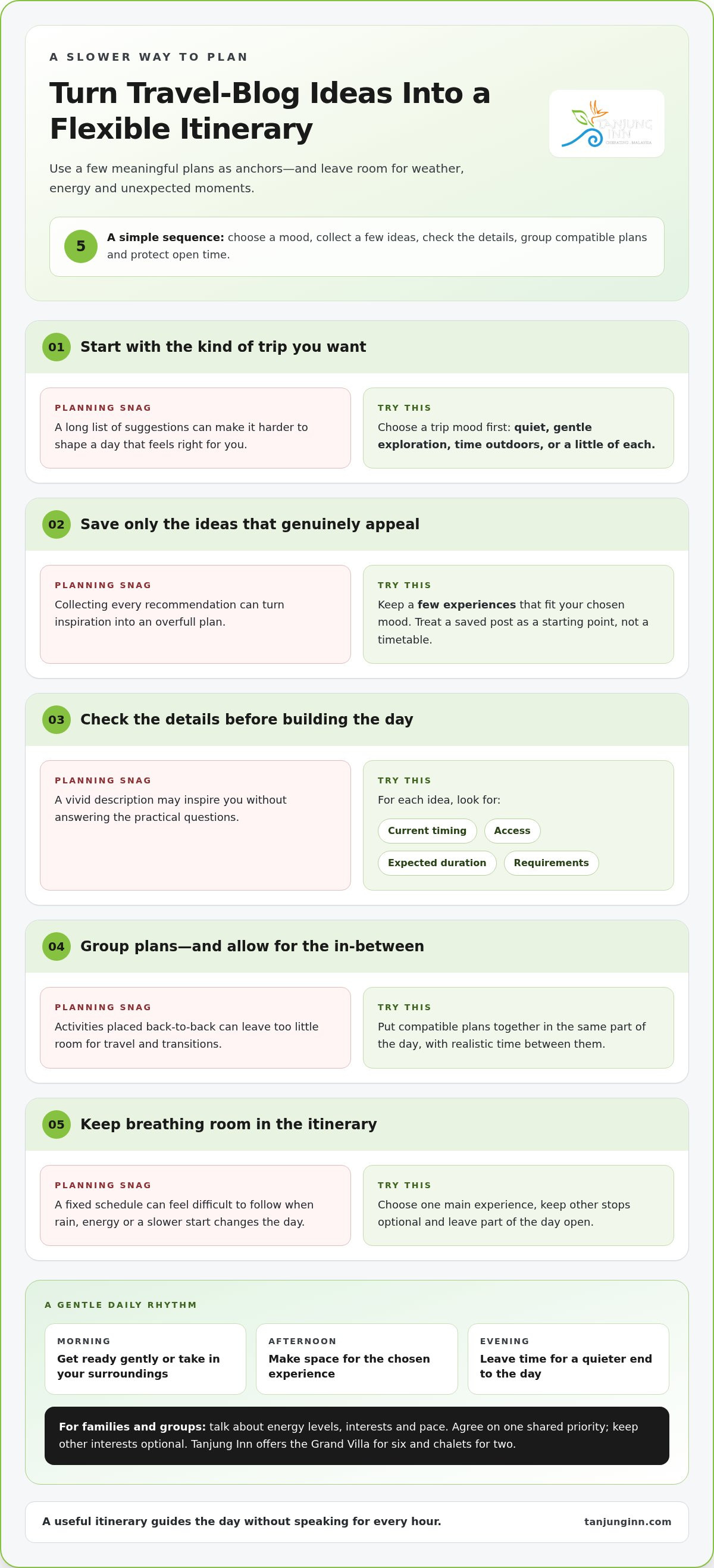
A saved post is a starting point, not a timetable. To make its ideas work for your own escape, shape them around the kind of day you want, then leave enough room for weather, energy and unexpected moments to change the plan. A useful itinerary should guide you without making every hour feel spoken for.
Try this sequence:
- Choose a trip mood. Decide whether you’re hoping for quiet, gentle exploration, time outdoors or a little of each.
- Collect a few ideas. Save the experiences that genuinely appeal to you, rather than every suggestion you find in a Cherating travel blog.
- Check the details. Look for current timing, access, expected duration and any requirements. These details can determine whether an idea fits your day.
- Group compatible plans. Put activities that make sense together in the same part of the day, while allowing realistic time for travel and transitions.
- Leave breathing room. Keep part of the day unplanned so a shower of rain, a slower start or an absorbing view doesn’t turn into a problem.
A flexible itinerary centres on a few anchor activities and leaves open time around them. If a blog suggests several stops, choose the one that matters most and treat the others as optional. You can then adapt the day to the conditions instead of feeling obliged to complete someone else’s schedule.
How do you make a travel itinerary feel unhurried?
Give each day one main experience. Build a simple rhythm around it: a gentle morning to get ready or take in your surroundings, an afternoon for the chosen activity and a quieter evening for rest. Allow space between each part for meals, a pause in the shade or a moment spent watching the light shift. The open spaces matter as much as the plans.
Keep a short backup list for weather changes or low-energy moments, but don’t turn it into a second schedule. If rain makes an outdoor plan less appealing, choose a restful alternative; if everyone feels refreshed, use the spare time to explore at an easy pace. Flexibility is practical, not a lack of preparation.
How should families and groups adapt blog itineraries?
Before adding activities, talk about the group’s different energy levels, interests and preferred pace. Agree on one shared priority, then make other interests optional rather than obligatory. This helps the day feel welcoming to the whole group, even when not everyone wants the same amount of activity.
Accommodation capacity can also make downtime easier to plan. Tanjung Inn offers options for different group sizes, including the Grand Villa for six and chalets for two. Consider your party size when choosing a place to rest between outings. Explore nature-oriented villas and chalets as one part of a balanced plan, then leave room in the itinerary for quiet.
How to Judge Whether a Travel Blog Is Trustworthy and Helpful
A beautiful travel story can make a place feel close, but its usefulness depends on more than vivid writing. Before building plans around a recommendation, consider who wrote it, what they experienced and whether the practical details still apply. A Cherating travel blog can offer a thoughtful starting point, not a substitute for current information.
Use this checklist as you read:
- Publication date: Look for when the post was published and whether it has been updated. Older stories may still offer atmosphere, while practical details can change.
- Firsthand context: Does the writer explain what they personally did, or are they repeating general information?
- Clear scope: Notice who the advice is meant for, such as solo travellers, families or visitors with limited time.
- Practical detail: Look for specifics about timing, effort, access and what an experience involves, rather than praise alone.
- Transparent uncertainty: Trust writing that distinguishes what the author experienced from what they couldn’t verify.
Firsthand perspective can show you what an experience felt like; time-sensitive facts still need checking against current official sources. Verify transport, entry, safety and operating details before relying on them, especially if a post is old or undated. This doesn’t diminish the story. It helps you use each kind of information for the right purpose.
What details make a travel story useful beyond its atmosphere?
Look for the basic context behind the account: what the writer did, when they visited and who might find the experience suitable. Concrete observations help you picture the pace and effort involved. A description of a long walk, for example, is more useful if the author explains how demanding it felt and what made it manageable for them.
Then separate sensory impressions from claims that can change. The sound of rain or the quiet of a morning is a personal observation. Opening times, access arrangements and transport details are factual claims that may need fresh verification. A clear writer helps you tell the difference.
How can readers avoid copying someone else’s trip too literally?
Compare the author’s priorities with your interests, mobility and available time. A packed day may suit someone who enjoys constant activity but feel tiring if you’re seeking a slower escape. Treat recommendations as prompts for further research, not guaranteed outcomes or instructions to recreate every stop.
Keep a short list of adaptable ideas and note why each appeals to you. You might save the feeling of a quiet outdoor hour rather than the exact sequence in someone else’s itinerary. That distinction leaves room for your group’s needs, changing conditions and discoveries that happen when you aren’t following a story line by line.
How to Build a Nature-Led Trip from Travel-Blog Ideas
A nature-led escape doesn’t need a long list of outdoor activities. Begin with a setting that draws you in, then build a gentle plan around what you hope to notice there. A Cherating travel blog may spark ideas, but memorable moments often arrive when the day has room to unfold at its own pace.
Use this four-step approach to turn inspiration into a thoughtful plan:
- Choose a natural setting. Decide what kind of surroundings you’d like to spend time in, such as a leafy garden, a waterside view or an open landscape. Let the setting guide the mood of your day.
- Select a few experiences. Choose a small number of activities that suit your group and interests. An easy walk, time by the water or simply sitting outdoors can be enough.
- Check responsible conduct. Read current, reliable guidance for the place you plan to visit, including posted instructions about access, wildlife or sensitive areas. Don’t assume the same rules apply everywhere.
- Leave open time. Keep space for rest, a change in weather or an observation that catches your attention. The day doesn’t need to be full to feel meaningful.
As you explore, look closely without needing to name everything. Notice how plants shift in the breeze, how birds move through the landscape, how water reflects the sky or how clouds soften the light. These small details can give an outdoor day its own quiet rhythm.
How can a nature itinerary leave room for discovery?
Choose one outdoor focus, then let the rest of the day remain light. You might spend a while observing from an appropriate place, listening to the sounds around you or sketching a scene in a notebook. There’s no need to turn each observation into a destination or activity.
Plan a pause for food and rest, and let your schedule respond to the weather. If conditions make your chosen activity less comfortable, shorten it or shift to a sheltered, restful alternative. A flexible plan helps you enjoy being outdoors without treating the day as a test of endurance. Leave time to return to your surroundings with fresh attention.
What does responsible nature travel look like?
Follow posted guidance and respect wildlife, habitats and other visitors. Keep a comfortable distance from animals, avoid calling, feeding or approaching them, and don’t disturb plants or natural features. Carry out your personal waste, and leave natural objects where you find them.
Responsible observation means being present without expecting a particular sighting or ideal conditions. Wildlife may not appear, and weather can shift; neither makes the experience a failure. Let reliable, current sources guide decisions about access and local conduct, rather than relying on assumptions drawn from an old post.
To give quiet moments a place in your plans, explore a nature-oriented stay with gardens and ponds as one gentle part of the journey.
Choose a Nature-Oriented Stay That Complements the Journey
A place to stay is more than a point between outings. It shapes how easily your group can rest, spend time together and enjoy the surroundings at an unhurried pace. As you turn ideas from a Cherating travel blog into a real plan, compare accommodation by group capacity, setting, privacy needs, budget and how much downtime you want.
Start with the people travelling, then consider what kind of stay will help everyone feel at ease. Capacity is a practical first filter: a space suited to your group can make shared time and rest between activities simpler to plan. Privacy matters too, but it can mean different things to different travellers. Some value a quiet retreat after a full day; others want a comfortable base where the group can spend time together. Set a budget that feels comfortable for your trip, then weigh it alongside setting and pace.
How do you match accommodation to your travel group?
For a couple or two friends, a smaller chalet option for two may suit a compact stay. Families and larger parties can consider options sized for their group, including the Grand Villa for six guests. Think beyond headcount: consider whether you’ll gather often, prefer more individual quiet or want a balance of both. The right match supports the way your group hopes to spend its time.
| Trip scenario | Stay priorities to consider |
|---|---|
| Couple seeking a slower break | Capacity for two, a nature-oriented setting and room in the plan for downtime |
| Family travelling together | Capacity suited to the group, comfortable shared time and an easy rhythm between outings |
| Larger group sharing a trip | Group capacity, preferred balance of togetherness and quiet, and budget comfort |
| Nature-focused escape | A setting connected with nature and time to pause between planned activities |
How can a stay support a slower travel rhythm?
A nature-oriented base can make it easier to treat rest as part of the journey, rather than a gap to fill with another activity. At Tanjung Inn, gardens and ponds offer a setting for quiet pauses between outings. Notice the water, changing light or movement in the garden, then let the next part of the day arrive without rushing.
Choose accommodation that fits your group and the kind of quiet you’re seeking. Tanjung Inn’s villas and chalets include options for different group sizes, from the Grand Villa for six to chalet stays for two. A considered base can ease the pressure to be out every hour and help your itinerary feel more spacious. Explore a calm, nature-oriented stay and find a setting that suits your group.
Let Your Next Escape Take Shape
Let your plans begin with one small choice: the feeling you want to carry home. A Cherating travel blog can open the door to ideas, but your own pace will shape the journey. Choose one moment to look forward to, then give the rest of the trip room to surprise you. The quiet between plans may become the part you remember most.
A restful escape also begins with a place that feels in tune with your intentions. Tanjung Inn is a family-owned resort with a nature-oriented setting that offers a gentle backdrop for slowing down. Let your choice of stay support the way you want to travel, whether you’re sharing the journey or seeking a little space to yourself.
Explore Tanjung Inn’s nature-oriented villas and chalets and begin shaping a stay that feels right for your group. Take your time, leave a little space in the plan and let the journey unfold gently.
Frequently Asked Questions
What is a travel blog, and how is it different from a travel guide?
A travel blog usually shares an individual’s experiences and perspective, while a travel guide is generally organised to help readers find information about a destination or topic. A blog may describe what surprised its author on a day out; a guide may arrange practical details by activity or area. Use a blog to discover questions worth asking, then use guide-style sources to fill gaps in your planning.
How do I know if a travel blog is trustworthy?
Look for a clear author, a dated account and a distinction between personal experience and general advice. Then trace important practical claims to their original source. For example, if a post mentions an entry condition or an operating schedule, check the relevant official source before making plans. A thoughtful writer will make limits clear rather than presenting one visit as proof that every traveller will have the same experience.
Can I use a travel blogger's itinerary exactly as written?
You can use it as a template, but copying it hour for hour may not suit your travel day. The writer’s starting point, transport, pace and interests may differ from yours. Mark each suggestion as essential, optional or easy to skip, then check whether the sequence fits your arrangements. If one stop takes longer than expected, let a lower-priority idea go instead of rushing through the experience.
How do I plan a relaxing trip without overfilling the schedule?
Before adding activities, decide what would make the trip feel worthwhile, such as sharing one memorable experience or having time outdoors together. Keep that priority visible as you plan, and resist adding an activity just because there’s an empty space. You can also agree on a natural stopping point for each day, so the group can return to rest before everyone feels tired.
What should I look for in a nature-focused travel blog?
Look for writing that treats the natural setting with care, not just as a backdrop. Useful posts explain how visitors can behave respectfully and distinguish observed conditions from assumptions about wildlife or access. In a Cherating travel blog, for instance, notice whether the writer gives context for when they visited and avoids promising that others will see the same things. Let vivid nature writing inspire curiosity, not certainty.
How do I choose accommodation for a family or group trip?
Start by agreeing on the group’s practical needs: how many people are travelling, how much privacy matters and what kind of shared time you want. Compare each option against those priorities rather than choosing by name or appearance alone. Tanjung Inn offers villas and chalets for different group sizes; consider which arrangement best fits your party and budget.
What makes a travel blog post useful for planning?
A useful post lets you turn an idea into a sensible next step. For any suggestion you might act on, note what you still need to learn: whether it suits your group, what preparation it involves and where current details can be verified. This small habit keeps inspiration from becoming assumption. It also helps you save posts for a clear purpose instead of building an unwieldy collection of possibilities.


