

What if the heart of Cherating isn’t a stop on a sightseeing list, but a slower moment spent noticing how local life unfolds? Cherating cultural activities can lead beyond the shoreline, towards batik made by hand, food rooted in everyday life, and the quiet rhythms of the village.
Finding attractions is easy. Choosing encounters that offer genuine context takes a little more thought. Look for opportunities to learn about a craft or meal, listen without pressing for personal stories, and treat people and their customs as part of everyday life, not as scenery. This guide offers practical ways to approach crafts, food, conversation, photography, and planning with care.
Explore what to notice in batik, how food and village life add context to a visit, and how cultural encounters differ from nature outings. Between outings, return to a quieter pace at Tanjung Inn, a family-owned stay among gardens and ponds. Take your time and notice the details.
Key Takeaways
- See how Cherating cultural activities can reveal living traditions through craft, food, and community life, beyond a beach-focused visit.
- Learn how to approach batik as both a handmade craft and a chance to understand the process behind finished pieces.
- Use local food as a window into ingredients, preparation, and the role of shared meals in everyday life.
- Compare cultural encounters with nature-led experiences, and choose the pace and respectful approach that suit your visit.
- Plan with flexibility, seek permission before taking photos, and make space to reflect between outings.
Cherating Cultural Activities: Look Beyond the Beach
A beach-focused visit might follow the tide: a swim, a stretch of warm sand, then the soft light of evening. A culturally curious visit makes room for another kind of discovery: the hands behind a craft, the stories connected to food, or the everyday rhythms of community life. Cherating cultural activities are less about ticking off attractions and more about paying attention to the people and practices that give a place character.
Here, “cultural activity” can mean an encounter with a living tradition, craft, food, or community. Cherating’s general profile includes a cultural village, traditional textiles, and handicrafts. Cherating's cultural village offers background on this cultural thread. For a visitor, the useful distinction is between seeing an object and learning about how it is made or used. Respect public access and local guidance, and avoid treating a description of a place as a promise of a particular visitor experience.
What counts as a cultural activity in Cherating?
There’s a difference between seeing an object and learning how it came to be. You might admire a finished textile, for example, or learn about the materials, techniques, and choices involved in making it. The first offers a moment of appreciation; the second adds context. Neither needs to be elaborate to feel worthwhile.
Think in broad categories rather than building your plans around one specific format:
- Craft: Notice the tools, patterns, materials, or stages of a handmade piece when they’re shared with visitors.
- Food: Pay attention to ingredients, preparation, and how a meal is enjoyed.
- Village life: Observe the pace of daily routines while remembering that homes and workplaces are also private spaces.
A meaningful encounter may be brief and quiet: a few words from a maker or the chance to watch a process from an appropriate distance. Let local people lead the exchange. Participation isn’t essential, and respectful observation can be enough.
How to choose experiences that feel meaningful
Start with a question that invites context: Who practises this tradition? What materials or skills does it involve? How does it fit into daily life? You don’t need to ask every question aloud. Listening to what someone chooses to share is often more considerate than pressing for a story or treating a conversation as part of a performance.
Choose depth over a crowded itinerary. One craft encounter that helps you understand a process may stay with you longer than several quick stops. With food, notice what is prepared and how it is served, without assuming one dish represents a whole community. During a village visit, stay in spaces open to the public and leave room for ordinary life to continue undisturbed.
Nature tours, such as a river or mangrove outing, can complement cultural discovery by drawing attention to the natural surroundings. They are nature-led experiences, though, not cultural activities by themselves. Keep the distinction clear and let each experience offer its own perspective. Before setting out, check current opening details, visitor access, and arrangements for participation. Flexible plans leave more room to notice.
Discover Batik, Local Food, and Cherating Village Life
Cultural discovery can begin with a patterned length of cloth, continue over a shared meal, and unfold in the unhurried details of village life. These are different ways to notice local knowledge, skills, and routines, when people choose to share them. Focus on what each encounter can teach rather than trying to fit every type of activity into one visit.
What can visitors learn from batik?
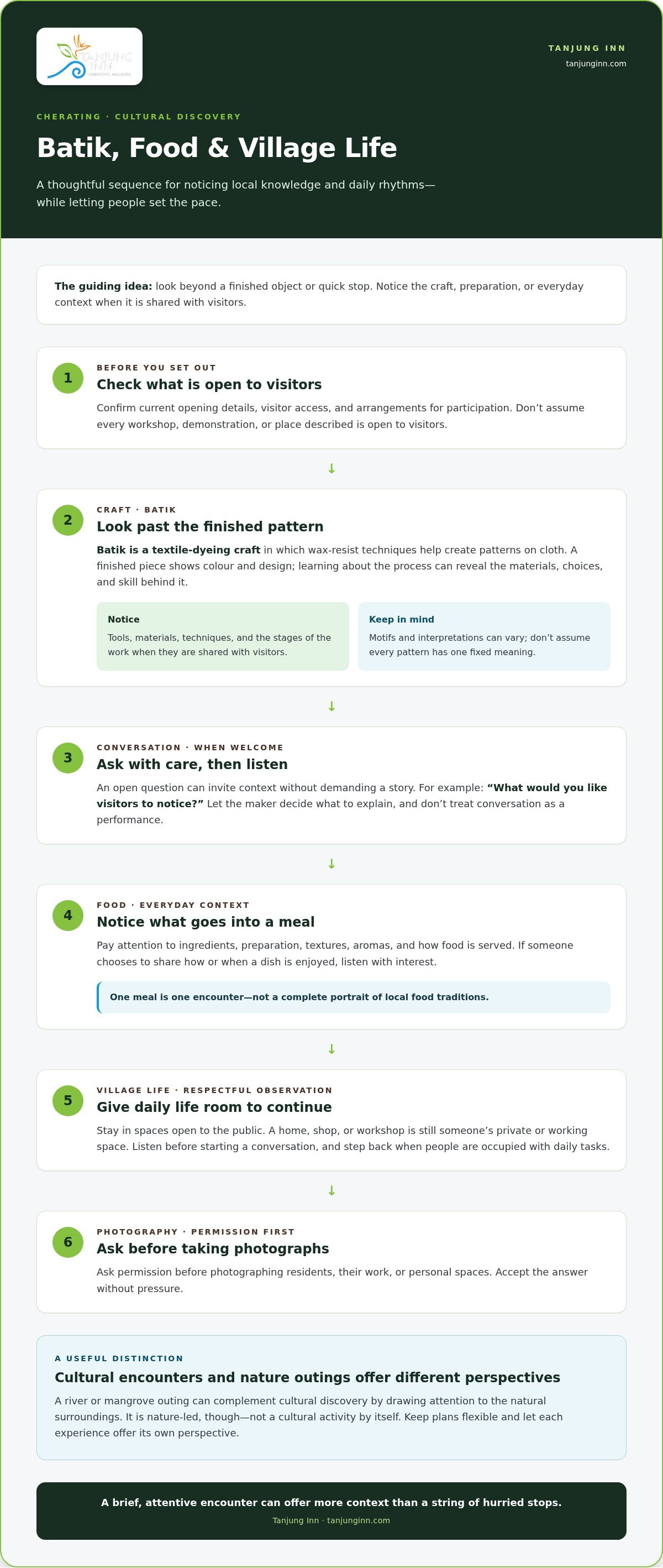
Batik is a textile-dyeing craft in which wax-resist techniques help create patterns on cloth. Looking at a finished piece lets you appreciate its colours and design; learning about the process can reveal the decisions and skill behind it. Buying a piece supports a maker or seller, while a demonstration or class, when offered to visitors, can provide a closer look at how the work is done. One experience doesn’t replace the other.
If you have the opportunity to observe a demonstration, watch how the maker handles the tools and builds a design instead of assuming every pattern has a fixed meaning. Motifs and interpretations can vary. Ask an open, considerate question, such as what the maker would like visitors to notice, and let them decide what to explain. Make plans around current visitor arrangements, rather than assuming that every workshop or demonstration is open to visitors.
Approach local food and village encounters with curiosity
Food can offer cultural insight through its ingredients, preparation, and place in everyday life. Take time to notice textures and aromas. If someone offers to share a story about how a dish is prepared or when it is enjoyed, listen with interest. Avoid treating one meal as a complete portrait of local food traditions. It is one encounter, shaped by the person, household, or setting behind it.
A village visit is not a performance staged for visitors. Move gently, stay in spaces open to the public, and remember that a home, shop, or workshop remains someone’s working or private space. Listen before starting a conversation. Before taking photographs of residents, their work, or personal spaces, ask permission and accept the answer without pressure. If people are occupied with daily tasks, give them room to continue.
These encounters needn’t be long to leave an impression. A few attentive minutes watching a craft, a conversation that happens naturally, or a meal enjoyed without rushing can offer more context than a string of hurried stops. Let local people set the pace, and don’t expect makers or residents to explain every detail.
After a day of exploring, a quieter pause can help the impressions settle. Tanjung Inn’s family-owned villas and chalets sit among gardens and ponds, offering a nature-oriented place to rest between outings. Consider a peaceful stay in Cherating as part of a slower visit.
Compare Cultural Encounters with Cherating’s River and Wildlife
Cultural encounters and river experiences offer different ways to pay attention. One brings you closer to human skills, food, and stories shared by local people; the other invites you to observe waterways, mangroves, and wildlife in their habitat. Both can deepen a visit, but they aren’t the same kind of experience.
Cultural immersion learns from people and their traditions; nature sightseeing observes the living landscape and its wildlife. Neither is more valuable by default. Choose according to what interests you and how you’d like to spend your time.
| Experience | Cultural focus | Nature focus | Likely pace | Respectful approach |
|---|---|---|---|---|
| Craft or food encounter | Skills, ingredients, and stories shared by people | Not the main focus | Conversation or observation, at a local pace | Listen, ask with care, and follow the host’s lead |
| River or mangrove outing | May offer context about local surroundings | Waterways, mangroves, and possible wildlife sightings | Often suited to slow observation | Keep quiet when appropriate and follow wildlife guidance |
What does a river or mangrove experience offer?
A river journey shifts attention to the landscape: the movement of the water, the mangrove edges, and small changes that might otherwise pass unseen. Mangroves are a living ecosystem, not a cultural performance. A cruise may help you understand the natural surroundings, but it isn’t a direct encounter with local traditions or community life.
Wildlife or fireflies may be seen, but sightings can’t be guaranteed. Go for the experience of being on the water, not a promised close-up or a particular animal. Keep your voice low when observing wildlife, avoid drawing attention to animals, and follow the activity host’s guidance. Patience is part of the journey.
Which experience suits your interests and pace?
If you’re drawn to human stories, handmade skills, or the preparation and sharing of food, look for a craft or food encounter where someone is willing to explain their practice. If open water, green banks, and quiet wildlife watching appeal more, a river experience may suit you. Both can belong in a visit, but neither needs to be rushed into a checklist.
For a shorter stay, choose one main experience and leave breathing room around it. A cultural encounter may invite conversation and questions; a river outing calls for patient observation. On a longer visit, make space for both at separate times instead of stacking activities back to back. Cherating cultural activities and nature outings can complement one another when each is approached on its own terms.
Before planning, review current access and arrangements for the experience you have in mind. Then arrive ready to notice, whether that means listening to someone explain a craft or watching the river’s surface change in the light. Let the setting set the pace.
Plan Cherating Cultural Activities with Care and Flexibility
A thoughtful visit doesn’t need a tightly packed schedule. For Cherating cultural activities, leave room for conversations that unfold naturally, changes in opening arrangements, and quiet pauses between outings. A little preparation helps you arrive with curiosity rather than fixed expectations, while flexibility makes it easier to adapt if a planned experience changes.
Check details before setting out
Use this four-step plan to shape your visit without turning it into a checklist:
- Choose an interest. Decide whether you’re most curious about craft, food, or everyday community life. A clear starting point helps you notice more without assuming every experience is open to visitors.
- Review current details. Look for up-to-date information on access, opening arrangements, participation, and seasonal changes before setting out. Don’t build your itinerary around a workshop, demonstration, or performance unless current information supports the plan.
- Allow unhurried time. Leave space for travel between activities, a meal, and rest. If plans shift, breathing room makes it easier to adapt instead of rushing from one stop to the next.
- Reflect afterward. Recall what you learned, what someone chose to share, and what you noticed. Reflection can turn a brief encounter into a more thoughtful memory.
Bring the same flexibility to nature outings. Wildlife and fireflies are possible sightings, not promises, and conditions or access may change. If you’re pairing cultural discovery with time outdoors, the Cherating Beach nature guide can help you consider the surrounding landscape as part of your visit.
Be a considerate guest in cultural spaces
In a workshop, shared public space, or village setting, let the people present guide the interaction. Listen before asking questions, avoid interrupting someone who is working or occupied, and follow any guidance they offer. Adapt your behaviour to the setting rather than assuming one approach suits every place.
Ask permission before taking close-up photographs of people, their craft process, or their work. A camera can make an ordinary moment feel like a performance, so be ready to put it away if someone declines or seems uncomfortable. Respect requests about what may be photographed.
Treat homes, places of worship, and working spaces with particular care. Don’t enter private areas unless you’re clearly invited, and follow local guidance about where to stand, what to touch, or when to keep quiet. Notice the cues around you and respond gently.
After an outing, return to a slower rhythm among Tanjung Inn’s gardens and ponds. Plan a peaceful Cherating stay at Tanjung Inn as a restful pause between cultural discoveries and time in the landscape.
Make Tanjung Inn a Peaceful Base for Cherating Cultural Activities
A day of discovery has its own natural rhythm: a conversation that lingers, a craft process watched with care, a meal enjoyed without watching the clock. A peaceful place to return to gives those moments room to settle. Tanjung Inn is a family-owned accommodation with villas and chalets set among gardens and ponds, offering a nature-oriented place to rest between outings.
Balance discovery with time to rest
Resist the urge to fill every part of the day. Choose a few experiences that genuinely interest you, then leave breathing room for meals, rest, and the unexpected. A less crowded plan lets you arrive with attention to spare, whether you’re listening to someone share a craft or noticing how the landscape changes around you.
This slower pace can make Cherating cultural activities feel less like a checklist. If an opening arrangement changes or an experience takes a different shape than expected, you won’t need to hurry straight to the next stop. Pause, adjust, and allow the day to find its own shape. Sometimes the details you remember most are the ones you had time to notice.
Families can use the same approach: decide together what everyone is curious about, and leave time between outings instead of building a packed schedule. If you’re considering a family stay, the guide to Cherating family chalets can help you think about the kind of accommodation that suits a shared, unhurried visit.
Choose a stay that supports a quieter visit
A stay among gardens and ponds offers a change of pace from time spent exploring. Take a quiet moment outdoors before setting out, or return to a calmer setting afterward and let the day’s impressions settle. The greenery and water provide a nature-oriented backdrop for rest; there’s no need to turn every hour into an activity.
When choosing where to stay, think about how you want the visit to feel as well as what you hope to see. A restful base can help you keep an itinerary flexible, so you can give an encounter your attention without feeling that you must hurry away. Pair cultural discovery with time to enjoy the natural landscape.
Let the visit be spacious. Choose an experience, make time to rest, and stay open to what the day brings. Explore Tanjung Inn’s accommodation as you plan a slower stay, with room for local discovery and quiet pauses among the gardens and ponds.
Let Your Cherating Visit Unfold at an Unhurried Pace
As you plan your next visit, leave a little space in the itinerary for moments you can’t schedule: a conversation that stays with you, a detail you notice on the way back, or a quiet pause after a day of exploring. Cherating cultural activities can be part of a gentler kind of travel, shaped by curiosity and respect rather than by how much you manage to fit in.
Choose a peaceful place to return to, and let the experience continue at a softer pace. Tanjung Inn is family-owned, with villas and chalets set among gardens and ponds, offering a calm, nature-oriented setting between outings. Let the green surroundings give you room to rest and reflect before deciding what you’d like to discover next.
Explore a peaceful stay at Tanjung Inn and begin planning a slower escape. Take your time, stay open to the unexpected, and let the place meet you gently.
Frequently Asked Questions
Is Cherating worth visiting for culture beyond the beach?
Yes, Cherating can appeal to travellers who want more than time by the sea, provided they approach local experiences with curiosity and flexibility. Cherating cultural activities may offer a glimpse of craft, food, or daily life. Think about what you’d most like to understand, then leave room for an encounter to be quieter or shorter than expected.
Can visitors take photographs during cultural activities in Cherating?
Ask permission before taking a photograph, especially if someone is working, speaking with you, or going about an ordinary task. Ask before lifting your camera, rather than after taking a picture. People may have different preferences, even where photography seems common. If you’re unsure whether a photograph is welcome, skip it. Around wildlife, follow the activity host’s guidance and don’t approach or disturb animals for a better image.
How can travellers find out whether a cultural activity is currently available?
Review the activity’s current official information before making it a fixed part of your itinerary. Look for recent details on opening arrangements, visitor access, and participation; older articles may describe conditions that have since changed. Keep a simple alternative in mind, so a changed schedule doesn’t turn the day into a rush.
What should I wear when visiting cultural or community spaces in Cherating?
Choose clean, comfortable clothing that suits the setting, and follow any guidance provided when you arrive. A casual craft space and a place of worship may call for different choices, so avoid assuming one outfit fits every visit. If you’re uncertain, observe how the space is used and ask a host discreetly. Consider bringing an extra layer so you can adjust comfortably as the day changes.
Is English enough for cultural activities in Cherating?
English may be enough for some visitor-facing encounters, but the language used can vary between hosts and settings. Speak clearly, give the other person time to respond, and don’t treat a language difference as an invitation to press for conversation. A simple Malay greeting or “terima kasih” can be a considerate gesture. Notice whether someone is open to chatting, and let them set the pace.
Can families enjoy Cherating cultural activities at a relaxed pace?
Yes, families can shape a visit around a few experiences that suit their shared interests, rather than trying to see everything. Before setting out, consider whether an activity involves watching, listening, or hands-on participation, then decide what will hold the family’s attention. Allow breaks for food and rest, and let children observe without requiring them to join in. A calm plan leaves more room for genuine curiosity.


