

What if the most responsible turtle-watching plan is the one that leaves room for not seeing a turtle at all? Searches for the Malaysian turtle nesting season often lead to a neat date range, but nesting follows natural rhythms, not a visitor’s itinerary.
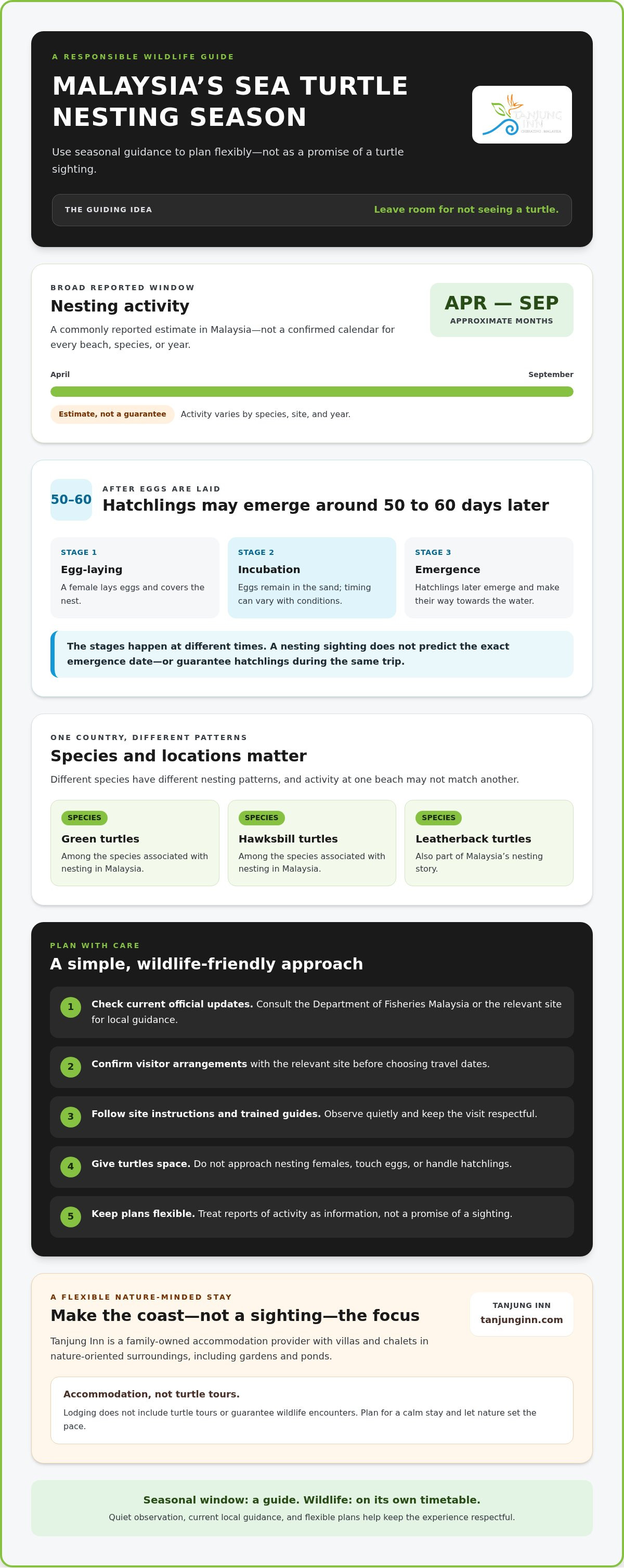
It’s understandable to want clear dates, especially when you’re hoping to witness a rare moment without disturbing the animals. A broad nesting window often runs from April to September, while hatching may follow around 50 to 60 days after eggs are laid. Neither timing guarantees a sighting, and activity can vary by species and location.
This guide explains how to interpret seasonal calendars, why egg-laying and hatchling appearances can’t be predicted precisely, and how to plan around current guidance from relevant authorities. You’ll also find practical ways to observe quietly and choose accommodation that suits a nature-minded trip. Tanjung Inn offers family-owned villas and chalets in nature-oriented surroundings. It provides lodging, not turtle tours or guaranteed wildlife encounters. Go gently, and let the coast set the pace.
Key Takeaways
- The kuantan turtle lay egg season is a guide, not a promise; nesting activity can vary by species, site, and year.
- Green, hawksbill, and leatherback turtles may follow different nesting patterns.
- Before choosing travel dates, check current official updates and confirm visitor arrangements with the relevant site.
- Follow site instructions and trained guides so your visit stays quiet, respectful, and wildlife-friendly.
- Keep your itinerary flexible and choose accommodation that suits a nature-minded trip without relying on a guaranteed turtle sighting.
When Is Sea Turtle Egg-Laying Season in Malaysia?
Sea turtle nesting timing in Malaysia varies by species, nesting site, and year. Before planning a visit, check current guidance from the Department of Fisheries Malaysia or the relevant site. A commonly reported broad window is approximately April to September, but it is an estimate, not a confirmed calendar for every beach or season. The phrase “kuantan turtle lay egg season” may lead you to general seasonal guidance, but only current, site-level updates can clarify what is happening at a particular location.
Nesting season is a variable period of increased turtle activity, not a guaranteed viewing calendar. Use seasonal windows to shape flexible plans, rather than expecting a turtle to come ashore on a chosen night.
Why sea turtle nesting dates are not fixed
Different species have different nesting patterns, and an individual turtle may return to nest more than once during a season. Local environmental conditions can also affect when nesting occurs. A broad national pattern therefore cannot tell you whether a specific beach will have activity on a particular date.
Malaysia is home to several sea turtle species, each part of its wider marine life. Treat month ranges as approximate and check official updates for the precise site you hope to visit. A national overview provides context; local guidance is more useful for current plans.
Nesting season versus hatchling season
Egg-laying and hatchling emergence are separate events. After a female lays eggs, they remain in the nest during incubation before hatchlings emerge. Adult nesting and young turtles reaching the beach therefore happen at different times. Incubation takes weeks, but its duration can vary with conditions, so a nesting sighting cannot tell you the exact emergence date.
For visitors, the distinction matters: a nesting-season estimate doesn’t promise hatchlings during the same visit, and knowing when eggs were laid doesn’t reliably identify the night they’ll emerge. Follow current instructions from the relevant site, and ask its staff or trained guides whether viewing is possible. Nature keeps its own timetable.
How Sea Turtle Species and Nesting Cycles Shape the Season
A nesting season is not one species arriving on cue, night after night. Activity is shaped by different turtles, individual nesting cycles, and conditions at each beach. Understanding those differences helps explain why reports from one site may not match activity elsewhere.
Different species can have different nesting patterns
Green and hawksbill turtles are among the species associated with nesting in Malaysia, while leatherback turtles are also part of the country’s nesting story. Their presence and nesting activity vary by site, so one calendar cannot describe every species or beach. Even where a species is known to nest, that doesn’t mean it will be active on a particular night.
Species-specific patterns matter, but broad labels only tell you so much. Local conservation updates are a better guide to which turtles have been recorded at a site and whether there is current activity. A national picture offers context; the beach itself holds the details.
What happens from nesting to hatchling emergence?
After reaching shore, a nesting female selects a place to lay her eggs, covers the nest, and returns to the sea. The eggs then incubate in the sand. Later, hatchlings emerge and make their way towards the water, though timing and outcome depend on conditions and cannot be reliably predicted from a visitor’s observation of a nest or turtle.
Egg-laying creates the nest, incubation is the waiting period, and hatchling emergence is a later event. Seeing one stage doesn’t guarantee you’ll witness the next. A nesting turtle may not be followed by visible hatchlings during the same trip. Visitors should never approach a nesting female, touch eggs, or handle hatchlings. Follow site instructions and the direction of trained personnel.
Think of the cycle as a quiet natural process, not a nightly spectacle arranged for visitors. If a site reports activity, treat that as information rather than a promise; conditions and wildlife behaviour can change. Respectful distance gives turtles space to complete each stage without interruption.
A flexible, nature-minded trip can leave room for discoveries beyond the shore. Tanjung Inn is a family-owned accommodation provider with villas and chalets in nature-oriented surroundings, including gardens and ponds. It offers lodging, not turtle tours or guaranteed wildlife encounters. If a calm base suits your plans, explore Tanjung Inn accommodation as one part of a wider, unhurried journey.
How to Choose Your Travel Dates Without Expecting a Guaranteed Sighting
Use seasonal information to decide when to start planning, then rely on current local guidance before setting expectations. Even during a period when nesting is more likely, turtles follow natural cycles; no calendar can promise activity on a chosen night. Build flexibility into your plans and allow for a quiet shoreline.
A flexible checklist for planning a turtle-focused visit
Before you travel, work through these steps:
- Check current updates. Look for guidance from the Department of Fisheries Malaysia or the official manager of the site you plan to visit. General seasonal information may not reflect conditions at a particular beach.
- Confirm arrangements directly. Ask the relevant site whether visitors can attend, whether viewing is supervised, and what access arrangements and instructions apply. Verify schedules close to your travel dates instead of relying on older posts or listings.
- Keep your dates flexible. If possible, avoid building the whole trip around a single evening. Seasonal likelihood is not a promise that a turtle will nest while you’re there.
- Plan for more than turtles. Leave time for other nature-focused experiences or quiet rest, so the trip still feels worthwhile if no wildlife appears.
Viewing arrangements can differ from site to site, so don’t assume that public beach access means nesting observation is allowed. Follow the relevant site’s current instructions, and ask whether a trained guide or staff member supervises viewing. Confirm details before setting out rather than relying on an unverified contact, access route, or schedule.
What to expect if no turtles appear
A quiet night is a normal possibility, not proof that you chose the wrong dates or that the visit failed. Wildlife encounters are uncertain by nature. If turtles aren’t visible, use authorized interpretation or educational materials from a conservation organization or site manager to learn about local species and protection efforts.
Keep the experience respectful. Egg-laying and hatchling emergence are stages of a natural cycle, not events visitors can arrange on demand. Never approach a turtle or nest in search of a better view, and let official guidance determine whether observation is appropriate.
A flexible itinerary pairs naturally with a restful place to stay. Tanjung Inn is a family-owned provider of villas and chalets in nature-oriented surroundings, including gardens and ponds. It offers accommodation, not turtle tours or guaranteed sightings. For a calm base between nature-focused plans, explore villa and chalet accommodation.
How to Observe Nesting Turtles Responsibly
A turtle encounter is most meaningful when the animal can continue its natural behaviour without being crowded or startled. During the kuantan turtle lay egg season, follow guidance from the responsible site and any authorized guide or staff member. Viewing practices and access arrangements can differ, so don’t assume advice for one beach applies everywhere.
Before and during a supervised viewing
Before joining an observation, ask who is responsible for guiding visitors and what instructions apply. Follow those directions throughout, even if they differ from general advice you’ve read elsewhere. Keep a respectful distance, stay quiet, and use a torch or other light only if the guide explicitly permits it.
- Give the turtle space. Don’t approach, surround, block, or follow a nesting female. Leave her a clear path back to the sea.
- Keep the shoreline calm. Avoid loud conversations, sudden movement, and crowding around the animal or nest.
- Never handle wildlife. Don’t touch turtles, eggs, nests, or hatchlings, and don’t move anything to improve a view or photograph.
- Follow local instructions. Ask site staff where visitors may stand and whether photography or lighting is allowed. If the guidance is unclear, check before acting.
Bright lights, noise, and close approaches can disturb wildlife, which is why conservation guidance commonly emphasizes quiet, careful observation. The responsible site’s instructions come first: don’t treat general tips as permission to enter a restricted area or view a nest without supervision.
Conservation-first choices visitors can make
Choose an experience only after confirming that it is organized or approved by the responsible site or a conservation group. Check who leads it, what visitors are permitted to do, and whether current access arrangements have changed. Avoid relying on old listings or informal promises of a close encounter.
Protect sensitive locations, too. Don’t post precise nest locations or directions that could encourage unaccompanied visits. For more information, look for educational material from an official site manager or conservation organization. You can have a meaningful visit without seeing a turtle up close. The quiet shoreline, the care taken to protect it, and the chance to learn are part of the experience.
Tanjung Inn provides family-owned villa and chalet accommodation in nature-oriented surroundings, not turtle tours or guaranteed wildlife encounters. For a restful base between plans, explore accommodation options.
Choose a Restful Nature Stay for a Flexible Wildlife Journey
Wildlife follows its own rhythm, so a comfortable stay can help make a turtle-focused journey feel rewarding even when no sighting is certain. Instead of arranging every day around one possible evening encounter, leave space in your itinerary for changes, rest, and other nature-minded moments. This is especially useful when planning around the kuantan turtle lay egg season, since seasonal timing alone can’t confirm activity on a particular date or at a particular site.
What to look for in accommodation when wildlife timing is uncertain
Look for a stay that fits your group and gives you a comfortable place to return to if plans shift or an evening is quiet. Before booking, check the accommodation’s current details directly, including room capacity, booking information, and any practical arrangements you need for your trip. Don’t assume a property is near a nesting beach or official viewing site unless you have independently confirmed the location.
A flexible plan might leave one evening open for a supervised viewing if a relevant site confirms visitors can attend, while keeping the rest of the trip enjoyable without it. Confirm visitor arrangements with the site itself, not your accommodation provider, unless the provider explicitly states otherwise. This keeps the roles clear and avoids relying on outdated schedules or unverified access information.
A quiet base for time spent in nature
Tanjung Inn is a family-owned accommodation business offering villas and chalets for different group sizes. Its nature-oriented grounds include gardens and ponds, creating a calm setting for time spent at the property. These features are part of the stay, not an indication of access to turtle nesting locations or wildlife sightings.
Plan gently. Leave room for an unhurried morning, a change in the day’s arrangements, or time to settle in after travelling. A restful base can support a nature-minded trip without turning every hour into a search for wildlife.
Tanjung Inn provides lodging only. It isn’t a turtle tour operator, conservation service, or source of guaranteed encounters, so check official site guidance separately for wildlife-viewing plans. If a family-run villa or chalet stay suits your journey, explore Tanjung Inn accommodation and confirm current booking details directly.
Plan a Flexible, Turtle-Friendly Journey
The kuantan turtle lay egg season is best treated as a broad planning guide, not a promise of activity on a particular night. Nesting patterns vary, and hatchlings emerge later, so check current guidance from relevant authorities or site managers before travelling. Keep your dates flexible, confirm visitor arrangements directly, and follow trained guides’ instructions to give turtles space.
A meaningful nature trip doesn’t depend on a close encounter. Build in time to rest and enjoy the surroundings, whether or not turtles appear. Tanjung Inn is a family-owned accommodation provider with villa and chalet options for different group sizes, set among gardens and ponds. It offers lodging, not turtle tours, conservation services, or guaranteed sightings.
For a calm place to return to between nature-focused plans, explore Tanjung Inn’s nature-oriented villas and chalets. Travel gently, stay open to the unexpected, and let respect for wildlife shape the journey.
Frequently Asked Questions
Can you see turtles laying eggs during the nesting season?
Possibly, but being there during a reported nesting period doesn’t guarantee a sighting. Turtles don’t follow visitor schedules, and viewing may only be possible under arrangements set by the relevant site. Check whether observation is permitted and supervised before you go, then follow the guide or staff instructions. Keep your distance and don’t approach a turtle independently for a closer view.
How long after eggs are laid do hatchlings emerge?
Hatchlings often emerge around 50 to 60 days after eggs are laid, but this is an approximate range, not a date you can calculate precisely for a nest. Incubation conditions and local guidance matter. Seeing a turtle nest doesn’t mean you’ll witness hatchlings during the same visit, so don’t approach or disturb a nest to check on it. Follow instructions from the responsible site or conservation staff.
Are sea turtles in Malaysia active all year?
Nesting activity isn’t expected at the same level throughout the year. A broad reported nesting window is approximately April to September, though species and sites can differ. This doesn’t mean turtles are absent from the sea outside those months, nor does it predict when one will come ashore. Check current official or site-level updates for the place and dates you’re considering.
Is it safe to use a camera or flashlight near nesting turtles?
Don’t assume a camera flash or flashlight is permitted. Bright lights and sudden activity can disturb turtles, so follow the relevant site’s instructions and use lighting or photography only if explicitly allowed by authorized staff or a trained guide. If you aren’t sure, keep the device off. A quiet, distant observation is more respectful than moving closer or using a flash to capture a detailed image.
What should I do if I find turtle eggs or hatchlings?
Keep your distance and don’t touch, move, uncover, or handle the eggs, nest, or hatchlings. Avoid drawing a crowd or sharing precise location details that could encourage others to approach. Contact the responsible site staff or relevant wildlife authority and follow their directions. If you’re at a supervised viewing, alert your guide quietly and let trained personnel decide what action, if any, is needed.
Can I plan a trip around a guaranteed turtle sighting?
No. Nesting seasons indicate when activity may be more likely, but no date guarantees a turtle will lay eggs or hatchlings will emerge during your visit. Check current updates, confirm viewing arrangements directly with the relevant site, and keep your itinerary flexible. Plan other nature-focused activities and choose accommodation for comfort, not an assumed wildlife encounter. Turtles follow their own rhythm, and respectful visitors leave room for that uncertainty.


