

What if the best nature escape isn’t the one with the most dramatic view, but the one that leaves the lightest trace? When exploring eco-tourism destinations in Malaysia, scenery is only part of the story. How an experience treats wildlife, habitats and local communities matters just as much.
It’s natural to want a peaceful, memorable trip and to wonder whether an activity is genuinely responsible or simply wrapped in green language. A forest walk, a wildlife-focused visit or a community-led experience can each offer a different kind of connection. The right choice depends on your interests, available time and the care taken on the ground.
This guide explains how to compare nature-based experiences, look for signs of thoughtful stewardship and plan around visitor rules, seasonal conditions and local guidance. It also covers how to choose a restful nature-oriented stay between outings. Tanjung Inn offers villas and chalets for different group sizes, from two-person chalets to a Grand Villa for six. A slower-paced trip begins with choices that suit both your group and the places you visit.
Key Takeaways
- Look for evidence of responsible care for habitats and host communities; attractive scenery alone isn’t proof.
- Compare eco-tourism destinations in Pahang by the landscapes and activities that interest you, from forest trails to coastal and freshwater habitats.
- Check current access, opening arrangements, permits, seasonal conditions and visitor rules with reliable sources before setting out.
- Prepare with suitable clothing, water and reusable essentials, then follow site guidance and leave wildlife undisturbed.
- Choose a restful base that fits your group and leaves room in the itinerary to pause between nature experiences.
What Makes an Eco-Tourism Destination Worth Visiting?
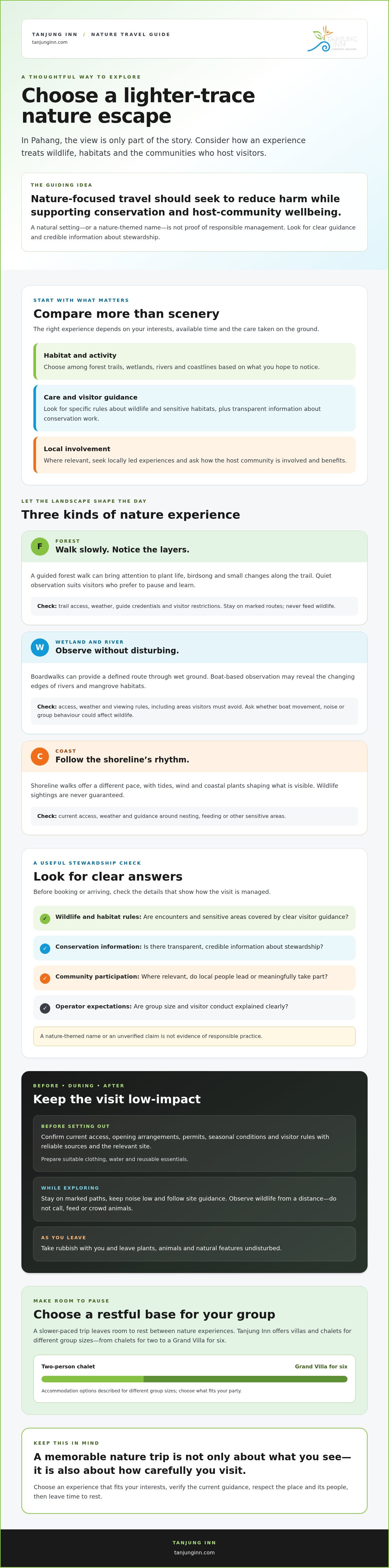
Green hills, clear water and birdsong can make a place feel close to nature. But a beautiful setting doesn’t show how tourism is managed or whether visitors are encouraged to protect the habitat they’ve come to enjoy. When comparing eco-tourism destinations in Pahang, look beyond the view: consider how an experience treats wildlife, supports conservation and shares benefits with host communities.
Eco-tourism is nature-focused travel that seeks to reduce harm while supporting conservation and the wellbeing of host communities. Use this as a standard to guide your questions, not as a label every nature attraction automatically earns. A destination may offer time among forests, rivers or coastlines without verified responsible management. Look for clear visitor guidance and credible information about stewardship rather than assuming the natural setting tells the whole story.
Travel can affect fragile places. Staying on marked paths helps limit trampling, while taking litter away keeps it from becoming a hazard to wildlife. Respectful viewing means observing animals from a distance and following site rules, not calling, feeding or crowding them for a closer look. Also consider whether local people have a meaningful role and benefit, rather than being treated as part of the scenery.
For context, the overview of a major Malaysian national park describes a place with rich biodiversity and visitor attractions. Natural appeal may be a reason to visit, but current site rules and management information are what travellers should check before deciding how to explore.
How Is Eco-Tourism Different from Nature Tourism?
Nature tourism describes the setting or activity, such as a forest walk, a river outing or time spent observing wetland birds. Eco-tourism also considers the impact of the visit and the steps taken to reduce it. Choose marked routes, keep noise low, take rubbish with you and leave plants, animals and natural features undisturbed. These are practical visitor choices, not proof that an attraction or operator is certified.
What Should Responsible Visitors Look For?
Before booking or arriving, check whether visitor rules cover wildlife encounters and sensitive habitats, and look for transparent information about conservation work. Where relevant, seek experiences led by local people and ask how the community is involved. It’s reasonable to ask operators how they manage group size and what conduct they expect from visitors. Clear, specific answers help you make an informed choice. A nature-themed name or an unverified claim isn’t evidence of responsible practice.
Eco-Tourism Experiences to Seek Across Forests, Wetlands, and Coasts
Let the habitat shape the day. Forest trails invite patient discovery, wetlands reward quiet observation, and rivers and shorelines show how water connects living landscapes. The best fit depends on what you hope to notice, how much time you have and which activities can be enjoyed without disturbing the place. These habitat-based ideas can help you research eco-tourism destinations in Pahang without assuming every activity is available year-round.
Rainforest and Highland Forest Experiences
A guided forest walk can draw attention to layers of plant life, birdsong and small changes along the trail that are easy to miss when rushing. Quiet observation may suit visitors who prefer to pause and learn rather than seek close wildlife encounters. Before setting out, verify trail access, weather conditions, guide credentials and visitor restrictions. Stay on marked routes and never feed wildlife.
Forest conditions and access can change, so check current information before travelling. An official tourism site can be a useful starting point for exploring nature attractions. Confirm specific opening arrangements and visitor guidance with the relevant site before making plans.
Wetland, River, and Coastal Nature Experiences
Boardwalks can provide a defined route through wet ground, while boat-based observation may reveal the changing edges of a river or mangrove habitat. Shoreline walks offer a different rhythm, with tides, wind and coastal plants shaping what’s visible. Each can be rewarding without a guaranteed wildlife sighting. Check access, weather and viewing rules, especially whether visitors must keep clear of nesting, feeding or other sensitive areas.
For freshwater habitats, look for experiences that allow time to notice the water, bankside vegetation and surrounding life without entering restricted areas. Ask whether boat movement, noise or group behaviour could affect wildlife, and follow local guidance on where to walk or pause. Never assume a particular species will appear or that a route will remain open in every season. Verify current conditions before setting out.
Choose an outing that suits your group. A shorter, quieter visit may work better than a long excursion if you’re travelling with young children or someone who prefers easy access. Ask who leads the experience, what visitor conduct is expected and whether the activity is adapted to protect the habitat. The answers help you compare options on more than scenery alone.
After a day outdoors, a restful base can leave room for an unhurried itinerary. Tanjung Inn offers villas and chalets for different group sizes, with gardens and ponds on the property. Find details about the nature-oriented stay at Tanjung Inn as you consider where to rest between outings.
How to Compare Eco-Tourism Destinations Beyond the Scenery
A lush backdrop can make an experience look inviting, but nature-themed marketing isn’t proof of responsible tourism. When comparing eco-tourism destinations in Pahang, weigh four factors together: the habitat you’re interested in, how visitor impact is managed, how practical the visit is to arrange, and whether the activity suits your group. Trust sustainability claims only when they’re supported by current, specific evidence.
Use the table to keep your comparison practical. Treat missing or vague answers as a reason to verify details, not as proof of poor practice.
| Experience type | Questions to ask | Details to verify |
|---|---|---|
| Forest walk | Who leads it, and how are visitors kept to appropriate routes? | Trail access, weather conditions, guide credentials and restrictions |
| Wetland or river observation | How are wildlife and sensitive areas protected during visits? | Access arrangements, group size, viewing rules and seasonal conditions |
| Coastal nature outing | Are visitors guided away from nesting or feeding areas? | Current access, permitted routes and wildlife-viewing guidance |
Questions to Ask Before Choosing an Experience
Ask who leads the activity and how they manage visitor behaviour. Find out whether group size, access routes and wildlife rules are explained before you commit. Clear answers should help you understand what to expect, not promise a close encounter or a particular sighting. Check operating details directly with the relevant site or operator, since access and conditions can change.
Match the Experience to Your Group and Travel Style
Look beyond the activity name. Compare walking effort, time commitment, weather exposure and accessibility with what your group can comfortably manage. If you prefer an unhurried visit, consider quiet, observation-based experiences focused on noticing the habitat rather than covering ground quickly. Families and groups should check age, safety and supervision guidance in advance, then choose an outing everyone can enjoy responsibly.
Consider whether getting there and following the visit’s rules fit your plans. The best match isn’t necessarily the most dramatic option. It’s the one that lets you appreciate the habitat at a suitable pace, with clear guidance and care for the place you came to see.
Plan a Lower-Impact Eco-Tourism Trip from Arrival to Departure
A thoughtful trip begins before you reach the trail, river or shore. Choose an experience that suits your interests, verify the arrangements, prepare for the conditions, then let local guidance shape your visit. Access, permits, safety advice and seasonal conditions can vary, so confirm current details with the relevant site or operator before travelling.
Prepare Before You Travel
Start with the activity, not a packed itinerary. Check how to reach the site, whether access is open, what the weather may bring and whether permissions or advance arrangements are needed. If transport involves more than one leg, confirm each part rather than assuming connections or services are available. Leave room for delays and rest. A slower day can be kinder to you and the place you’ve come to experience.
Pack for the terrain and forecast: suitable clothing, enough drinking water and reusable essentials such as a refillable bottle or container. Bring only what you’ll use, and plan how to carry your rubbish back if disposal points aren’t available. Before departure, review safety advice and the latest visitor instructions. Conditions can change, so an old itinerary or online post may not reflect what’s possible now.
Leave the Habitat as You Found It
At the site, let its rules guide your pace. Keep to marked paths and approved access routes, speak quietly near wildlife and maintain a respectful distance. Never feed or touch animals, even if they appear calm. Follow photography restrictions and instructions from site staff or guides. These small acts help limit disturbance and allow others to enjoy the habitat without adding pressure.
Carry your rubbish out and avoid taking plants, shells or other natural materials as souvenirs. If an area is closed or a viewing point is restricted, don’t look for another way in. Access rules can protect especially sensitive places, and respecting them is part of the visit, not an inconvenience.
- Before you go: Choose an activity, then verify access, weather, transport, permissions and safety guidance.
- On the day: Follow local instructions, use permitted routes and observe wildlife without approaching it.
- Before you leave: Check that you’ve taken your belongings and rubbish with you.
A nature-focused stay can give your itinerary space to breathe between outings. Tanjung Inn offers villas and chalets for different group sizes, with gardens and ponds on the property. You can review Tanjung Inn accommodation while planning a restful base for your trip.
Make a Nature-Oriented Stay Part of a More Restful Trip
A nature-focused getaway doesn’t need to be filled from dawn to dusk. A comfortable base can create time between outings to rest, reset and enjoy a slower rhythm. A stay surrounded by gardens and ponds offers a different setting from a forest trail or waterside visit, but that alone doesn’t establish eco-certification or specific sustainability practices. Consider accommodation as part of your trip’s pace, not proof of its environmental impact.
Choose Accommodation That Suits the Shape of Your Trip
Start with your group size and how you want to spend time together. Tanjung Inn offers villas and chalets for different group sizes, from two-person chalets to a Grand Villa for six. Smaller options may suit a couple or solo traveller, while a larger villa can give a family or group a shared place to return to after the day’s activities. Check the listed capacity against your actual group rather than assuming a room type will fit.
Before deciding, confirm current availability, facilities and booking conditions directly with the accommodation. If you’re planning outdoor activities, consider practical details too: how much time you’ll spend away, whether you want a place to gather between outings and how much flexibility your group needs. Tanjung Inn’s gardens and ponds are features of the property, but don’t assume they guarantee wildlife sightings or particular environmental benefits.
Keep the Itinerary Gentle and Flexible
Plan one main outing at a time, then leave room to rest or notice your surroundings. A slower schedule can help a group enjoy each experience without turning the trip into a race between stops. It also leaves space to adapt if the weather changes, access arrangements shift or site guidance calls for a different plan. Keep current information close at hand and be willing to change course.
For travellers considering eco-tourism destinations in Pahang, accommodation can support a more restful journey when it suits the people travelling and the pace they want. It needn’t make claims about conservation to be a useful base. Choose thoughtfully, verify practical details and let the landscape set an unhurried rhythm.
When choosing a stay, compare the available villa and chalet options with your group size and plans for the trip.
Choose a Gentler Way to Explore Nature
The most rewarding eco-tourism destinations in Pahang offer more than beautiful surroundings. Thoughtful visitors also consider how activities affect habitats, wildlife and host communities. Choose experiences that suit your interests and travel group, check current access and visitor guidance, and follow local rules once you arrive. Small choices, from staying on permitted routes to carrying your rubbish out, help make a nature-focused trip more considerate.
A restful place to return to can give the itinerary room to breathe. Tanjung Inn is a family-owned and operated resort, with villas and chalets for different group sizes and a property setting with gardens and ponds. These features may make it a suitable base between outings, without implying that the accommodation is eco-certified or provides nature activities.
For a restful base between outings, explore Tanjung Inn’s villas and chalets and choose an option that fits your group.
Frequently Asked Questions
What makes a destination an eco-tourism destination?
An eco-tourism destination combines nature-focused experiences with efforts to reduce visitor impact and support conservation and host communities. A forest, river or coastline isn’t automatically eco-tourism simply because it’s scenic. Look for clear visitor rules, credible information about habitat care and, where relevant, evidence of local involvement. These details help distinguish a nature outing from an experience that takes responsibility for how tourism affects the place.
How do I choose an eco-tourism experience responsibly?
Choose an experience with clear guidance on wildlife, visitor conduct and access. Ask who leads it, how group size is managed and whether routes avoid sensitive areas. Match the activity to your interests, available time and travel group. Before setting out, confirm current opening arrangements, weather conditions, permits or other permissions, and safety advice directly with the relevant site or operator.
Are nature destinations always eco-friendly?
No. Natural surroundings don’t prove that tourism is managed responsibly or that an attraction is eco-certified. Look for current, specific information about habitat protection, wildlife-viewing rules and local community involvement. Treat broad claims such as “green” or “sustainable” as a starting point for questions, not confirmation. If evidence or visitor guidance is unclear, verify the details before deciding whether the experience suits your values.
What should I pack for an eco-tourism trip?
Pack for the activity and forecast, including suitable clothing, drinking water and any personal essentials recommended by the site. A refillable bottle and reusable containers can help reduce disposable packaging. Take all rubbish with you if disposal facilities aren’t available. Check the route and visitor advice before leaving so you don’t bring unnecessary gear. For outdoor trips, review weather and access conditions close to departure, as plans may need to change.
Can families enjoy eco-tourism activities?
Yes, families can enjoy nature experiences when the activity suits everyone’s abilities and comfort. Before choosing, check walking effort, duration, accessibility, weather exposure and any age, safety or supervision guidance provided by the operator. Quieter observation or a shorter route may suit a family better than a demanding outing. Explain site rules to children in advance, especially the need to stay on permitted paths and observe wildlife without approaching or feeding it.
How can visitors avoid disturbing wildlife?
Observe animals quietly from a respectful distance, and never feed, touch, chase or crowd them. Stay on marked paths, follow staff or guide instructions, and obey photography restrictions. Keep noise low, especially near places where wildlife may be nesting or feeding. Don’t try to create a sighting by calling animals or leaving food behind. If a viewing area is closed or an animal moves away, give it space and follow the site’s guidance.
How do I verify an eco-tourism operator's sustainability claims?
Ask for specific, current information rather than relying on nature-themed marketing. Find out what the operator does to protect habitats, manage visitor behaviour and involve local communities, then check whether the explanation is clear and supported by reliable information. If certification is claimed, verify its name, scope and current status with the issuing organisation. Also confirm operating arrangements, access, permits, seasonal conditions and wildlife rules directly before travelling.


