
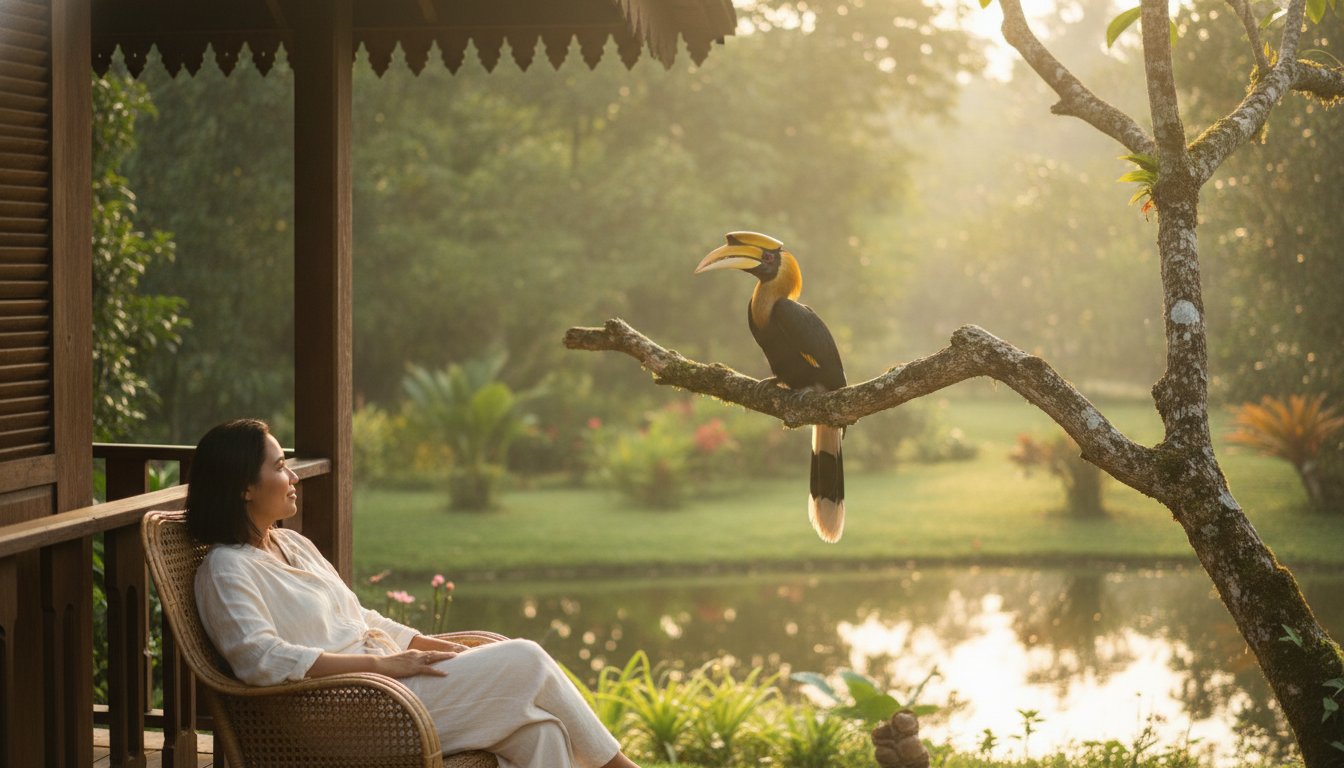
What if the most profound conversation you have this weekend isn't spoken in words, but heard in the rhythmic beat of wings against a salt-kissed breeze? When you begin planning a cherating bird watching stay, you're looking for more than just a hobby; you're seeking a way to lower your heart rate and breathe. You've likely felt the exhaustion of loud, busy resorts that promise nature but deliver only noise. It's frustrating when technical birding guides make the simple act of observation feel like a chore. You deserve a sanctuary where the wildlife doesn't flee and the soul finally rests.
Discover how to plan a restorative escape that connects you with the rhythmic pulse of the coastal canopy. This guide provides a practical path for beginners to find spiritual renewal among the ancient trees. We will explore the quietest observation spots, help you identify exotic species like the majestic Hornbill without the confusing terminology, and share a simple plan for your mindful weekend retreat. Look. Listen. Wake up to the garden's song.
Key Takeaways
- Understand why a bird-watching stay is a holistic ritual of presence, allowing you to sync your internal rhythm with the coastal ecosystem.
- Identify iconic residents like the Hornbill by focusing on their unique colors and calls rather than technical jargon.
- Learn to navigate the "golden hours" of light and timing to ensure your observations are both peaceful and productive.
- Select a cherating bird watching stay that offers "interstitial spaces" like verandas, where you can watch the canopy from the comfort of your own sanctuary.
- Explore how pond-side villas and garden chalets provide the necessary quietude to attract diverse wildlife and soothe the soul.
Why a Cherating Bird Watching Stay is the Ultimate Nature Retreat
A Cherating bird watching stay is far more than a simple holiday; it's a profound immersion into the quiet, steady pulse of the natural world. Unlike a transactional tour where you're hurried from one sighting to the next, this stay invites you to become part of the landscape. It's a holistic experience that begins the moment you step onto your veranda and ends only when the last evening call fades into the stars. You aren't just visiting the forest. You are living within it. This is the essence of slow travel. It's an invitation to stop counting sightings and start feeling the rhythm of the canopy. Slow down. Breathe deeply.
The Biological Richness of the Coastal Sanctuary
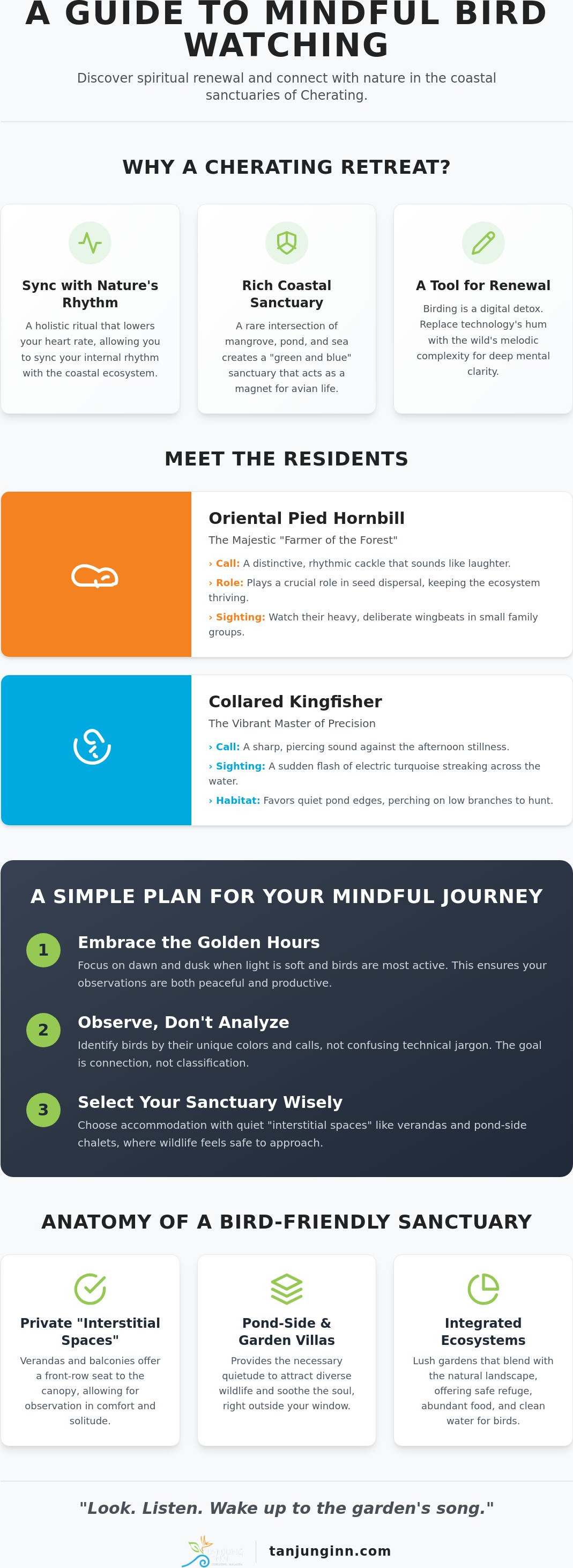
Life here moves in vibrant, overlapping layers. The biological richness of this coastal sanctuary is found in its intricate ecosystems, stretching from the salt-dusted mudflats where waders gather to the towering heights of the tropical canopy. These coastal gardens are a rare intersection of mangrove, pond, and sea, creating a "green and blue" sanctuary that acts as a magnet for avian life. Birds are drawn to the safety and abundance of these specific habitats, finding refuge in the dense foliage and the clean, brackish waters. You might witness a kingfisher's sudden dive or the graceful flight of a heron across the pond. Every tree and every pool of water serves a purpose in this delicate balance. Observe the movement in the shadows. Listen for the rustle of wings.
Birding as a Tool for Spiritual Renewal
Engaging in birding serves as a powerful tool for spiritual renewal. The patience required to spot a shy resident or wait for a specific call naturally lowers the heart rate, grounding you in the present moment. This focus facilitates a deep digital detox retreat cherating, where the constant hum of technology is replaced by the melodic complexity of the wild. A cherating beach stay allows you to experience the shoreline not just as a place for recreation, but as a living cathedral. There is a unique mental clarity found in the rhythmic bird calls that echo across the ponds at dawn. Waking to this "song of the wild" is a restorative ritual that standard resorts simply cannot replicate. It is a gift of time. Peace is found here.
Identifying the Residents: Bird Species You’ll Encounter During Your Stay
The beauty of a cherating bird watching stay lies in the lack of distance between you and the wild. You don't need to trek for hours through dense undergrowth to witness the vibrant life of the coast. Often, the most spectacular displays happen right before your eyes as you sip tea on your veranda. This region is a vital part of the broader landscape for birding in Peninsular Malaysia, acting as a bridge between the mangrove forests and the open sea. Here, the birds aren't just statistics in a guide; they are your neighbors. Listen to the rustle of the leaves. Watch the shadows move. The canopy is alive.
The Majestic Oriental Pied Hornbill
You'll likely hear the Oriental Pied Hornbill long before you see it. Their call is a distinctive, rhythmic cackle that sounds remarkably like laughter echoing through the taller fruiting trees. These birds are the "farmers of the forest," playing a crucial role in seed dispersal that keeps the ecosystem thriving and green. From your villa, you can watch their heavy, deliberate wingbeats as they move in small family groups. Their large, ivory-colored casques and black-and-white plumage make them unmistakable even for a beginner. They are graceful yet playful. Truly majestic residents.
The Vibrant Kingfishers of the Pond
A sudden flash of electric turquoise streaks across the surface of the water, leaving a small ripple in its wake. This is the Collared Kingfisher, a master of patience and precision. These birds favor the quiet edges of the garden ponds, where they perch on low-hanging branches to scan for movement below. Their sharp, piercing calls act as a rhythmic pulse against the stillness of the afternoon. Staying in a pond-side sanctuary gives you a front-row seat to their hunting rituals, allowing you to observe their surgical dives from the comfort of your room. It is a masterclass in focus. Stop and watch.
Eagles and Herons: The Coastal Sentinels
Look up toward the horizon to see the true sentinels of the sky. The White-bellied Sea Eagle is a frequent sight, circling high on the thermal currents that rise from the warm beach sands. Their broad, white wings catch the light as they survey the coast with predatory grace. Closer to the ground, the Grey Heron maintains a statuesque posture in the shallows of the marshy areas. It can remain perfectly still for minutes, a grey silhouette against the green reeds, before striking with lightning speed. These birds represent the transition from the sheltered garden to the wilder coastal edge. They are patient. They are powerful. During your cherating bird watching stay, these sightings become a daily ritual of peace.
How to Plan Your Birding Journey: A Step-by-Step Guide for Beginners
A cherating bird watching stay is not a checklist of sightings; it is a ritual of returning to the self through the observation of others. To truly see, you must first learn to be still. This transition from a frantic traveler to a mindful observer happens in small, deliberate steps. It's about honoring the environment and adopting the "leave no trace" ethic, ensuring that your presence never disturbs the delicate balance of the canopy. Prepare your spirit as much as your gear. Listen to the silence before the song begins.
Step 1: The Golden Hour Ritual
Timing is the most vital element of your birding ritual. Between 6:30 AM and 8:30 AM, the garden enters its "symphony hour," a window of time when the air is cool and the residents are most vocal. The soft morning light acts as a natural filter, revealing the true depth of a wing’s iridescent blue or the warm gold of a breast. Move in slow motion. Speak only in whispers. By syncing your heartbeat with the early morning light, you become part of the scenery rather than an intruder. The forest rewards the patient.
Step 2: Essential Gear for the Mindful Observer
Keep your tools simple to avoid the distraction of technical complexity. For a beginner, a pair of lightweight binoculars is enough to bring the treetops into focus without weighing you down. We recommend carrying a physical field guide or a simple paper notebook instead of a smartphone. Presence is found in the texture of paper, not the glow of a screen. This mindful approach ensures your cherating bird watching stay remains a restorative escape rather than a technical chore.
- Earth Tones: Dress in olives, browns, or muted greys to blend into the shadows of the garden.
- Quiet Fabrics: Avoid rustling synthetics that might startle a shy Kingfisher or a nesting Hornbill.
- A Simple Notebook: Use this to record the feelings of the moment, not just the names of the species.
Step 3: Documenting the Experience
Practice the art of "sound mapping" before you ever raise your binoculars. Close your eyes and identify where the calls are coming from, whether they originate in the high canopy, the low shrubs, or the water’s edge. This auditory grounding helps you locate birds with far more accuracy. When you do find a subject, try sketching its silhouette or journaling its behavior. Avoid the "camera trap" of viewing everything through a lens. Look with your eyes first. Feel the connection second. Capture the memory third. Be here now.
Selecting Your Sanctuary: What Makes a Bird-Friendly Accommodation?
Choosing the right environment for your cherating bird watching stay is a functional decision that dictates the quality of your peace. For the birds to remain, the human world must grow quiet. This is why the absence of loud facilities, such as high-energy pools or transactional spas, is not a lack of service but a deliberate feature of a sanctuary. When the volume of modern life is turned down, the volume of the natural world is finally allowed to rise. Staying in a family-owned resort ensures that the land is managed with a sense of stewardship and heritage. It is a place where the trees are older than the buildings. The soul feels this. It's time to rest.
The Porch as an Observation Deck
The most effective birding doesn't always happen on a trail; it happens in the "interstitial spaces" of your lodging. A private veranda or porch acts as a natural blind, allowing you to observe the canopy without being perceived as a threat. By remaining seated and still, you eventually become a "still object" in the birds' environment. They begin to move closer, landing on nearby railings or low-hanging branches as they grow accustomed to your presence. For those seeking a quiet connection, the comfort of a romantic chalet for 2 provides an intimate window into these daily rituals. Watch the world from your chair. Let the wild come to you.
Ponds and Gardens: The Natural Magnets
Water is the social hub of the avian world. Garden ponds and marshy edges attract a diverse range of species that require hydration and a place to hunt. There is a profound difference between sterile "resort landscaping" and a "living garden" filled with native flora. Native plants provide the specific fruits, nectar, and nesting materials that local birds have relied on for generations. A bird-friendly sanctuary prioritizes these messy, vibrant ecosystems over perfectly manicured lawns. This biological diversity, combined with the absence of loud music and artificial noise, encourages even the shyest species to nest nearby. The true value of a mindful cherating bird watching stay lies in this undisturbed harmony.
If you are ready to trade the noise of the city for the rhythmic pulse of the garden, browse our available sanctuaries and find your place in the canopy.
Finding Peace in the Canopy: The Tanjung Inn Bird Watching Experience
At Tanjung Inn, your cherating bird watching stay becomes a living narrative written in the movement of the trees. It's a place where the architecture bows to the environment, offering a variety of sanctuaries designed to bridge the gap between human comfort and wild presence. You aren't just an observer here; you're a guest in a home that has been nurtured for generations. Whether you seek the elevated perspective of a villa or the grounded simplicity of a chalet, you're positioned at the very heart of the coastal pulse. Every morning offers a new opportunity to listen. Every evening provides a chance to reflect. The soul finds its way back to center.
Nesting in the Grand Villa or Family Chalets
For families who wish to share the quiet thrill of discovery, the cherating villa for 6 pax serves as an ideal base for multi-generational birding. These spacious retreats, including our various Family Villas, allow everyone to gather on the veranda to witness the morning symphony together. The expansive gardens surrounding the villas act as a private reserve, where the high canopy meets the sheltered edge of the garden. It's a space where children can learn the value of silence and elders can find the peace they've long sought. If you prefer a more humble, direct connection to the soil, the Budget Chalet offers an accessible way to stay close to the earth. It is simple, honest, and perfectly situated for those who want to wake up to the sound of the wild. Look up. The trees are full of life.
The Pond-Side Stillness
The Director Chalet and our pond-view sanctuaries, such as Villa 5 and Villa 6, offer a front-row seat to the water's edge. Here, the stillness is absolute, broken only by the sudden dive of a resident kingfisher or the slow, rhythmic steps of a grey heron in the shallows. These spaces are specifically designed for serious enthusiasts who value the quietude of the water. The porch becomes a permanent observation deck where the reflection of the trees in the water creates a mirror of the sky, doubling the visual beauty of every flight. It's a meditative experience that requires nothing but your presence. Before you arrive, we encourage you to review our mindful booking checklist to prepare your spirit for the journey. This ensures your stay is as restorative as the environment itself. Lower your heart rate. Join the dance of the wings. Your sanctuary is waiting.
Step into the Rhythm of the Canopy
A cherating bird watching stay is an invitation to exchange the frantic pace of modern life for the steady, ancient rhythm of the coastal forest. You've learned that birding is not a technical chore, but a ritual of presence that begins with the golden hour light and ends with the quietude of a private veranda. By selecting a sanctuary that prioritizes native gardens over noisy facilities, you create the space necessary for both wildlife and your own spirit to thrive. The "green and blue" palette of the coast is waiting to soothe your soul. Slow down. The forest is ready to reveal its secrets.
At Tanjung Inn, our family-owned sanctuary is defined by the natural ponds and gardens that surround every escape. From the simple honesty of our Budget Chalets to the expansive peace of our Grand Villas, we provide a variety of spaces where you can become a still object in the birds' world. This is a place where heritage meets harmony, and where every wingbeat tells a story of grace. Begin your journey to stillness at Tanjung Inn. The song of the wild is calling you home. Listen closely.
Frequently Asked Questions
What is the best time of year for a bird watching stay in Cherating?
You can enjoy a cherating bird watching stay at any time of year because our resident species never leave the sanctuary. However, the months between October and March bring migratory visitors that add a new layer to the garden's song. The air is often cooler during these months, and the rhythm of the forest feels particularly vibrant. It's a wonderful time to witness the changing patterns of the canopy.
Do I need professional equipment to enjoy bird watching during my stay?
You don't need professional gear to connect with the birds in our gardens. A simple pair of lightweight binoculars is helpful for seeing details in the high treetops, but your most valuable tools are your eyes and ears. Focus on being still and quiet. The birds will reveal themselves to those who wait patiently, and the experience is more about presence than technical precision.
Are there specific species of birds that are only found in this coastal area?
Our sanctuary is home to coastal specialists that thrive in the intersection of garden, pond, and mangrove ecosystems. While many birds are found across the region, the high concentration of Oriental Pied Hornbills and various Kingfishers is a unique feature of this specific coastal stretch. It's a rare chance to see these guardians of the coast in their natural, undisturbed habitat, moving freely between the trees and the water.
Is a bird watching stay suitable for children or families?
A bird watching stay is a beautiful way for families to bond through the shared ritual of discovery. Our Grand Villa for 6 Pax provides a spacious base where multiple generations can gather on the veranda to watch the morning symphony together. It teaches children the art of patience and the value of observing the small, quiet details of the natural world. It's a gentle, educational escape for all ages.
How long should I stay to get the best birding experience?
We recommend a stay of at least two to three nights to fully sync your internal rhythm with the cycle of the gardens. This duration allows you to experience multiple "golden hours" and increases your chances of seeing shy residents like the White-bellied Sea Eagle. A weekend retreat is often enough to feel the restorative power of the canopy and return home with a cleared mind and a settled heart.
Can I see hornbills directly from the villas at Tanjung Inn?
Yes, you can often see Oriental Pied Hornbills directly from the porch of your villa or chalet. These majestic birds are drawn to the taller fruiting trees that provide shade to our sanctuaries. Wake up early, brew a cup of tea, and wait for their distinctive cackle to echo through the branches right outside your door. It's a profound experience to see them so close to your own living space.
What should I do if I am a complete beginner to birding?
If you're a beginner, start by simply listening to the soundscape before you try to find a bird with your eyes. This "sound mapping" helps you locate where the life is hidden in the leaves and grounds you in the moment. Don't worry about technical names or complex gear; just focus on the colors, the calls, and the feeling of being present in the wild. Let the garden be your teacher.
Are there quiet hours at the resort to ensure bird activity is not disturbed?
We maintain a natural ethos of quietude throughout the resort to ensure that both our guests and the wildlife remain undisturbed. We don't host loud events or play amplified music, as these sounds would drive away the very creatures we seek to protect. This commitment to silence is what makes a cherating bird watching stay here so restorative. It allows the natural world to speak without being drowned out by modern noise.


